Editor’s Note:
Want a Ukrainian tiger, crocodile or camel to greet you every day of the year?
We’re announcing our new 2026 Wild Animals of War calendar! If you’re a free subscriber, upgrade to an annual plan today and get one for free. We’re printing a limited run only:
Already a paid subscriber but still want a calendar?
Snag one for a suggested donation of $90. (Our printing/mailing costs are about $25). Get one here!
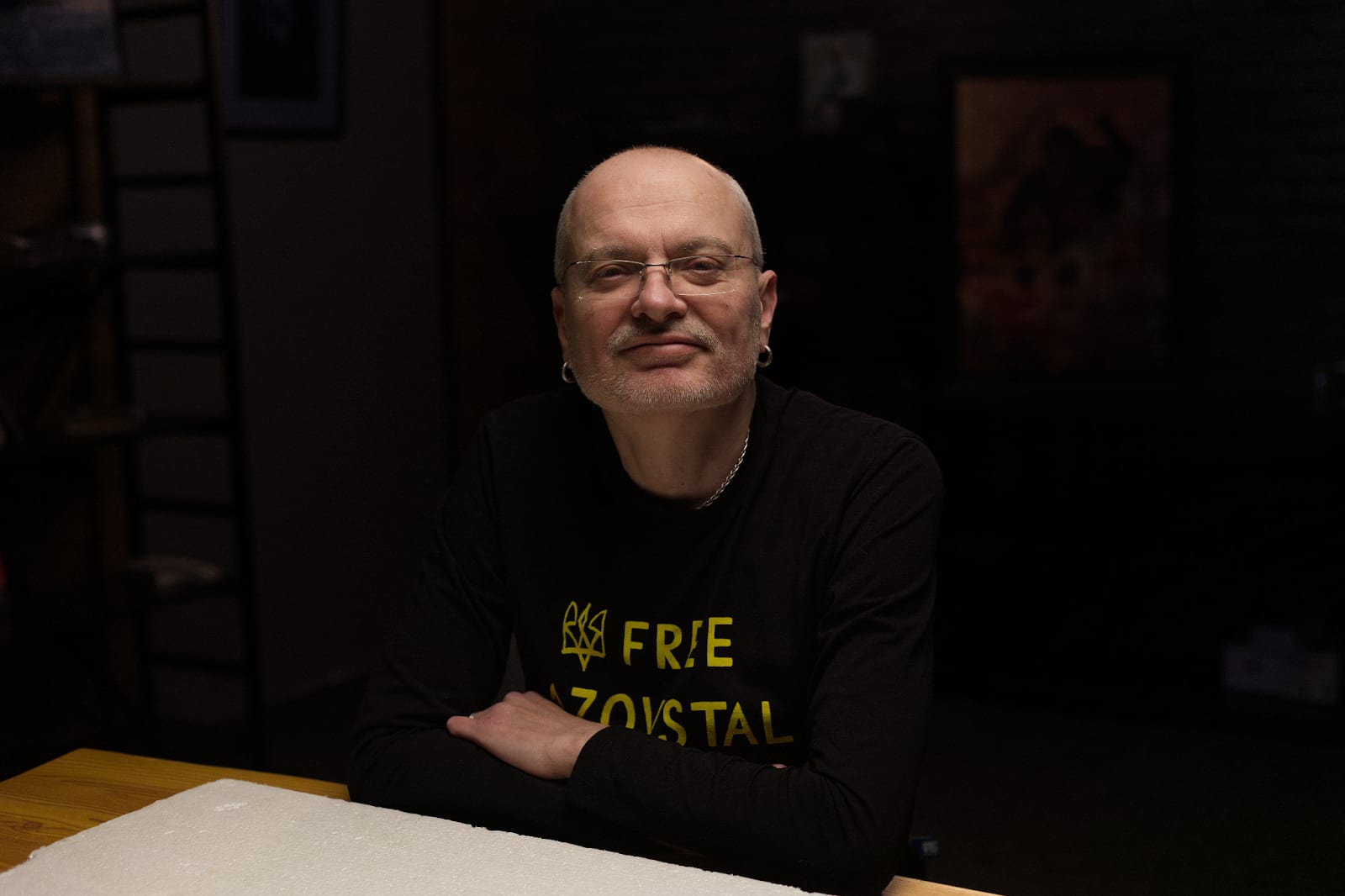
“I try not to say the word [elections] at all. It’s evil,” said political consultant Oleksii Kovzhun. “Still, no one is waiting for them more than me.”
When people ask him these days what he does for a living, he says he’s “unemployed.”
For him, elections held during the war have become a taboo subject. Yet, for the past 20 years, he was deeply involved in Ukrainian presidential elections behind the scenes.
The topic of Ukrainian presidential elections has taken center stage again after Donald Trump declared that “it’s time” for Kyiv to select a new president, even though Ukraine’s constitution prohibits legislative elections in times of war.
In response, Ukrainian President Volodymyr Zelenskyy for the first time stated that he is prepared to hold presidential elections under martial law and instructed members of parliament to draft proposals to that end. He also appealed to the U.S. and other partners to provide security guarantees for the elections. Once these two conditions are met, he said, elections could be held within the next two or three months.
However, if elections are indeed held under martial law, the vote would demonstrate Washington’s desire to replace the president and pressure Kyiv rather than encouraging Ukrainians to exercise democratic choice. Such pressure on Zelenskyy risks further fueling a crisis.
It’s weighty issues like these that Oleksii is used to.
When you imagine a political consultant, the first image that probably comes to mind is a serious-looking man in a suit.
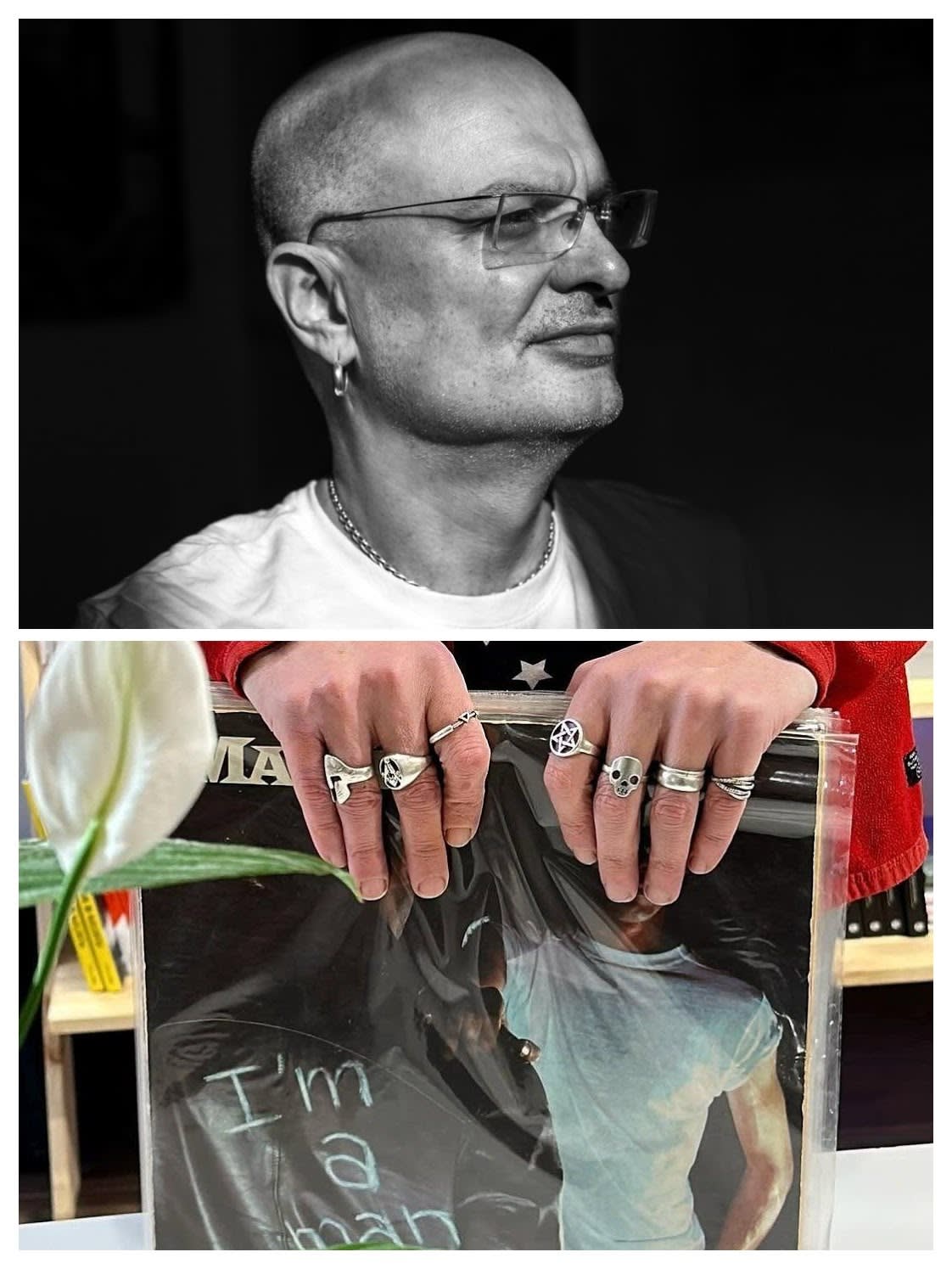
Forget about that. None of that describes Oleksii, who even at 60 rides a scooter, wears gothic rings and earrings, and constantly reminisces about his wild youth.
Since his early years, Oleksii had been an anti-USSR rebel. He organized rock festivals and concerts, became a hippie, and smoked marijuana. Due to his long hair and ripped jeans, he spent many days at the police station in the 1980s, as Soviet authorities often would pick him up just because of how he looked.
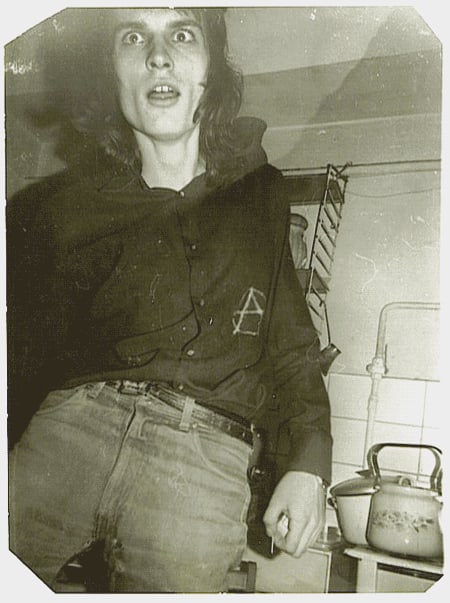
“I believed all this crap [the USSR] wouldn’t last forever. It was impossible to live in such a system. I was preparing myself that I might die in prison [for my beliefs],” Oleksii said.
But his wild streak ultimately outlived the Soviet Union. Then, starting in the 2000s, he slowly shifted from working in a concert organization and ad agency to political consulting.
He didn’t care if he was crafting ads for beer, airlines, mobile operators, or politicians.
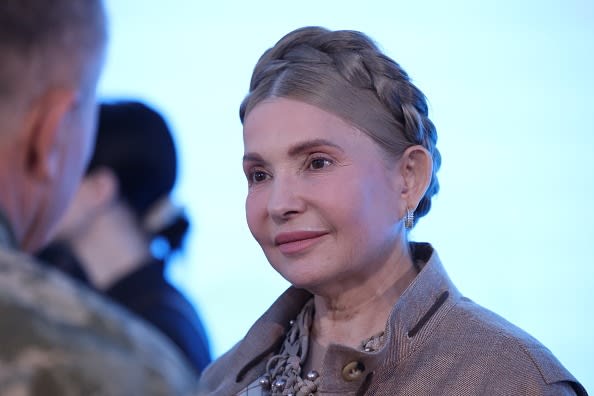
Eventually, he became a consultant to one of Ukraine’s most divisive and controversial political figures, former Prime Minister Yulia Tymoshenko, whose career has been marked by recurring corruption scandals. Oleksii is among those credited with shaping her iconic image, including the crown braid that people around the world have come to recognize.
Russians have tried to influence Ukraine’s politics since its first days of independence. Oleksii realized this as soon as he started working on elections. The Kremlin always sent its top political strategists to ensure Ukrainians would elect presidents loyal to Moscow. Oleksii recalled that he would even joke with a friend about the “need to practice the Moscow accent” to get paid more because Russians got enormous sums to boost pro-Russian candidates.
During the first clashes between the pro-Ukraine coalition and Kremlin puppet Viktor Yanukovych in the 2004 presidential election, candidate Viktor Yushchenko was poisoned. Russians had no red lines when it came to eliminating opponents.
“It was both fun and terrifying,” Oleksii recalled.
Fun because he came up with all sorts of ways to mock the Kremlin candidate, like a satirical political series. But terrifying, because he understood that the Russians could come for him at any moment, so he made sure that no one knew he was the original idea creator.
One of the mocking episodes of the ‘Veseli Yaycia’ (‘Funny eggs’) series, 2004.
Yushchenko survived his assassination attempt and wound up winning the election after months of protests against electoral fraud and corruption. The year of 2004 was thus the first time that Moscow’s candidate, Yanukovych, did not win.
Ukraine is under much more strain from Russia now. It’s not mere political influence that’s dropping in Kyiv, it’s bombs and drones – and Ukraine is now preparing to hold elections under these extreme circumstances. Recent examples from elections in the United States and European countries — where Russian bots flooded the information space and influenced outcomes — show that Ukraine could be next.
“Everyone waits for the elections, as many people want to leave the parliament. But everyone is fully aware that they cannot happen without the most important thing. That’s what the president meant: security first,” Roman Hryshchuk, an MP from Zelenskyy’s Servant of the People party, told The Counteroffensive.
Ukraine was supposed to hold parliamentary elections in 2023 and presidential elections last year, when Zelenskyy’s five-year term ended. But neither took place due to martial law. Ukrainian law prohibits any elections while martial law is in effect. Similarly, according to the constitution, parliamentarians must continue their mandates until a new Verkhovna Rada is elected once martial law ends.
While parliamentary elections are constitutionally impossible under the current circumstances, there is still a chance at least to lay the legislative groundwork for a presidential transition.
Working groups have already been set up in parliament to draft changes to the law. However, according to MP Yaroslav Yurchyshyn, Zelenskyy has not set any deadlines for presenting proposals, so they are unlikely to be ready before the first quarter of 2026.
“MPs are in no hurry to actively push for updates to election legislation… society does not accept such initiatives during the hot phase of the war,” said Roman Lozynskyi, an MP from the Holos faction.
All of The Counteroffensive’s sources in parliament have questioned how security would even be possible if elections were to be held now.
Almost six million Ukrainians have left the country due to shelling or the occupation of their homes since the start of the full-scale war. Those citizens would be unable to take part in physical voting, because Ukraine simply doesn’t have the resources to open enough polling stations and consular offices abroad.
Similarly, nearly four million Ukrainians are registered as internally displaced and would need to change their voting addresses to cast a vote. The same number applies to those currently living under Russian occupation, disenfranchising them.
Almost one million Ukrainians are also currently serving in the Armed Forces, making it physically impossible for them to campaign, run for office, or cast their vote.
This strikes Oleksii as especially infuriating, because he has friends on the front lines defending the country who arguably have the strongest moral claim to shaping its political future. At least a few of them had wanted to run in the elections, he said, but they won’t be able to, since no one in the military can be released during active combat.
“Ukraine is now forced to play a game, not to say ‘no’ to America… They tell us about elections. We say: ‘Okay, but for that we need…’ And then we set conditions that they cannot meet,” Oleksii said.
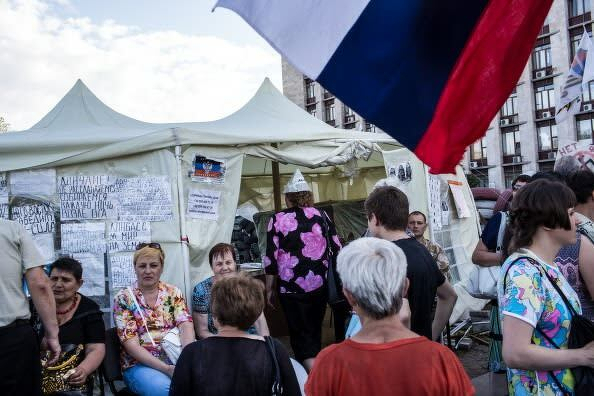
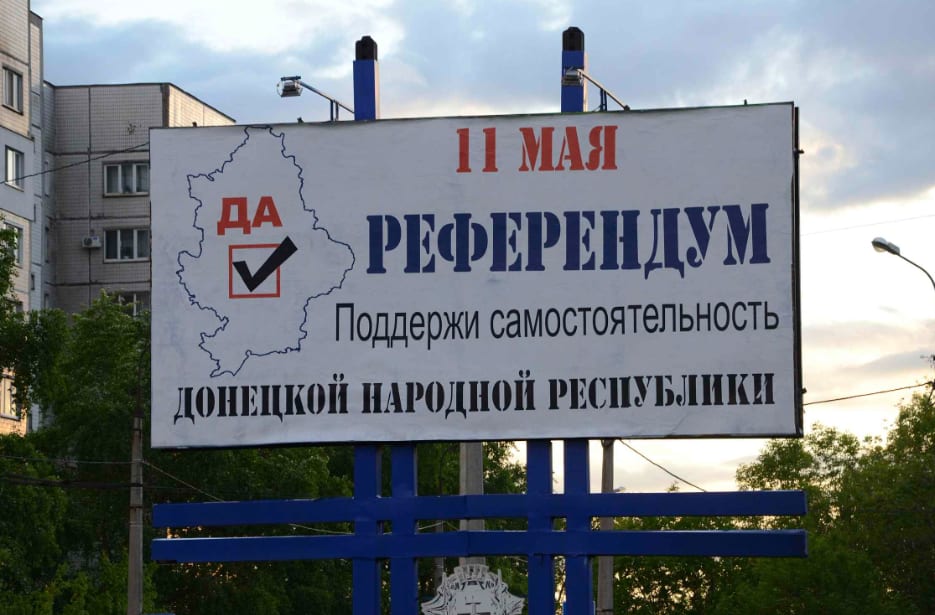
Ukraine held elections during the early months of the war with Russia in 2014, when Russian forces had already seized Crimea and were advancing in the Donetsk and Luhansk regions.
Oleksii had helped organize elections in Donetsk at the time, serving as a communications advisor to the local governor. Back then, Russian security forces were already attempting to disrupt elections throughout the whole region. Twenty two polling stations were initially planned for Donetsk, but only eight received votes from Ukrainians. The rest never opened due to a shortage of ballots, interference from security forces, and the abduction of election commission members by Russians. In Donetsk itself, a city of nearly one million people in 2014, it was ultimately impossible to hold elections.
“There was a phone on the table, with someone from the election commission nearby, and I heard: ‘Seryoga, some bastards [Russians] have arrived with guns, cancel polling station 39.’ Bad words [followed],” Oleksii recalled.
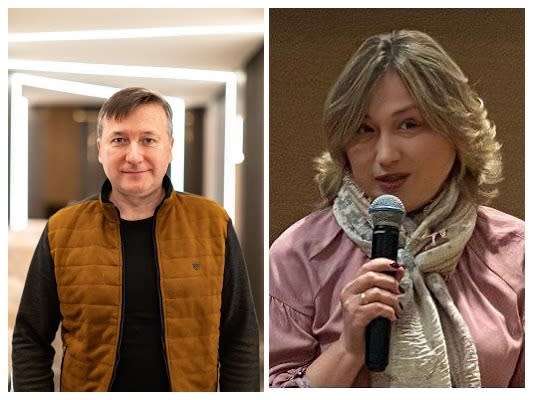
Serhii and Svitlana Tkachenko are two others who were at the center of those chaotic events.
Together with their colleagues from the Donetsk Committee of Voters of Ukraine, they served as independent election observers.
“Many members of the committee tried to go to the [Donetsk] airport to collect the ballots that had been delivered by plane, but some got captured right in the airport. Some suffered a concussion, some had their abdomen cut,” Serhii Tkachenko said about the day of the election in 2014 and efforts to hold elections in Donetsk.
Around 10 p.m., a colleague went outside of the hotel they were staying at for a smoke and inadvertently saved the rest of the team, he recalled. He used a code word they had all jokingly invented the day before in case of danger they hadn’t fully realized yet.
“Let’s buy roses!” is what Tkachenko’s colleague shouted over the phone. He’d seen armed officers getting out of black vehicles that had pulled up at the hotel, searching for ‘where people vote for Ukraine.’
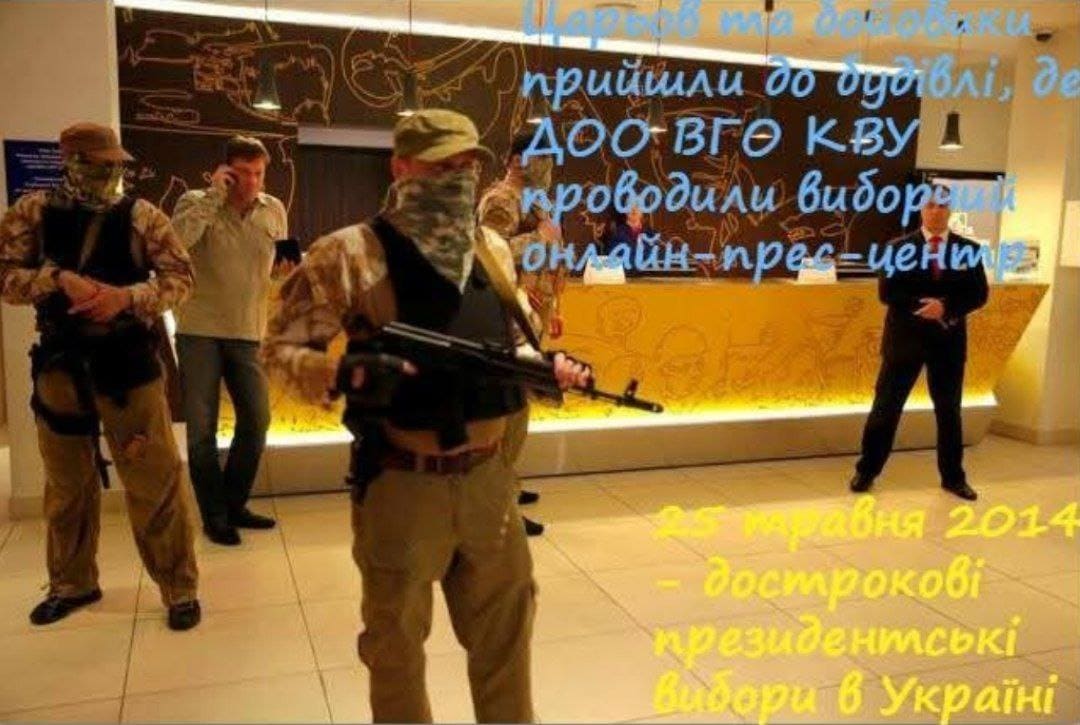
The situation is even more dire now, as the entire country, not just three regions, is at risk of Russian attacks. The reality for Ukrainians is that a ballistic missile can reach a crowded area within minutes, in any area of the country.
Among Ukrainians, including members of parliament, no one can really fathom how elections could be organized in the middle of a war. No democratic country in the past decades has faced the conditions in which such a wide array of weapons is being used so intensively. And even if elections do take place, how legitimate can they be if millions of people are unable to cast their votes?
The ball appears to be in Trump’s court. Many Ukrainians believe he is the one who now needs to find a way to ensure security.
Meanwhile, Oleksii remains “unemployed,” turning away any politicians who come to him for consultations. Even if peace is reached and elections are held, Russian forces will probably still seek political revenge in Ukraine.
“A new world will come. What kind? Who knows,” Oleksii said. “It’s like a supernova explosion. And what happens after that, we don’t know. It’s beyond the sequence of events.”
Editor’s Note:
Want a Ukrainian tiger, crocodile or camel to greet you every day of the year?
We’re announcing our new 2026 Wild Animals of War calendar! If you’re a free subscriber, upgrade to an annual plan today and get one for free. We’re printing a limited run only:
Already a paid subscriber but still want a calendar?
Snag one for a suggested donation of $90. (Our printing/mailing costs are about $25). Get one here!
NEWS OF THE DAY:
By Tania Novakivska
THE CZECH REPUBLIC SUPPLIED UKRAINE WITH 1.8 MILLION PIECES OF LARGE-CALIBER AMMUNITION: The Czech Republic has achieved its goal of transferring Ukraine 1.8 million rounds of high-caliber ammunition, former PM Petr Fiala posted on X. The Czech Republic, along with the US and the UK, has become one of the leading suppliers of ammunition to Ukraine.
RUSSIA DEPLOYES ORESHNIK COMPLEXES IN BELARUS, TARGETING EU: The construction of military facilities in Belarus for launching an Orshenik missile is underway, Oleg Ivashchenko, head of Ukraine’s Foreign Intelligence Service, said. The Oreshnik missile is a Russian medium-range ballistic missile that is difficult to intercept, equipped with six warheads, and capable of speeds exceeding 12,300 km/h.
RUSSIAN OIL EXPORTS DECLINE: Although Russia continues to increase its crude oil shipments, sanctions and market restrictions are contributing to a downward trend in its maritime exports, according to the Foreign Intelligence Service of Ukraine. This comes as prices for Russian oil are falling, which reduces their overall profitability. A large amount of Russia’s cargo goes unloaded, and the US sanctions against Rosneft and Lukoil have caused the demand from the Global South to decrease. This all comes as inspections at Chinese and Russian refineries are increasing.
DOG OF WAR:
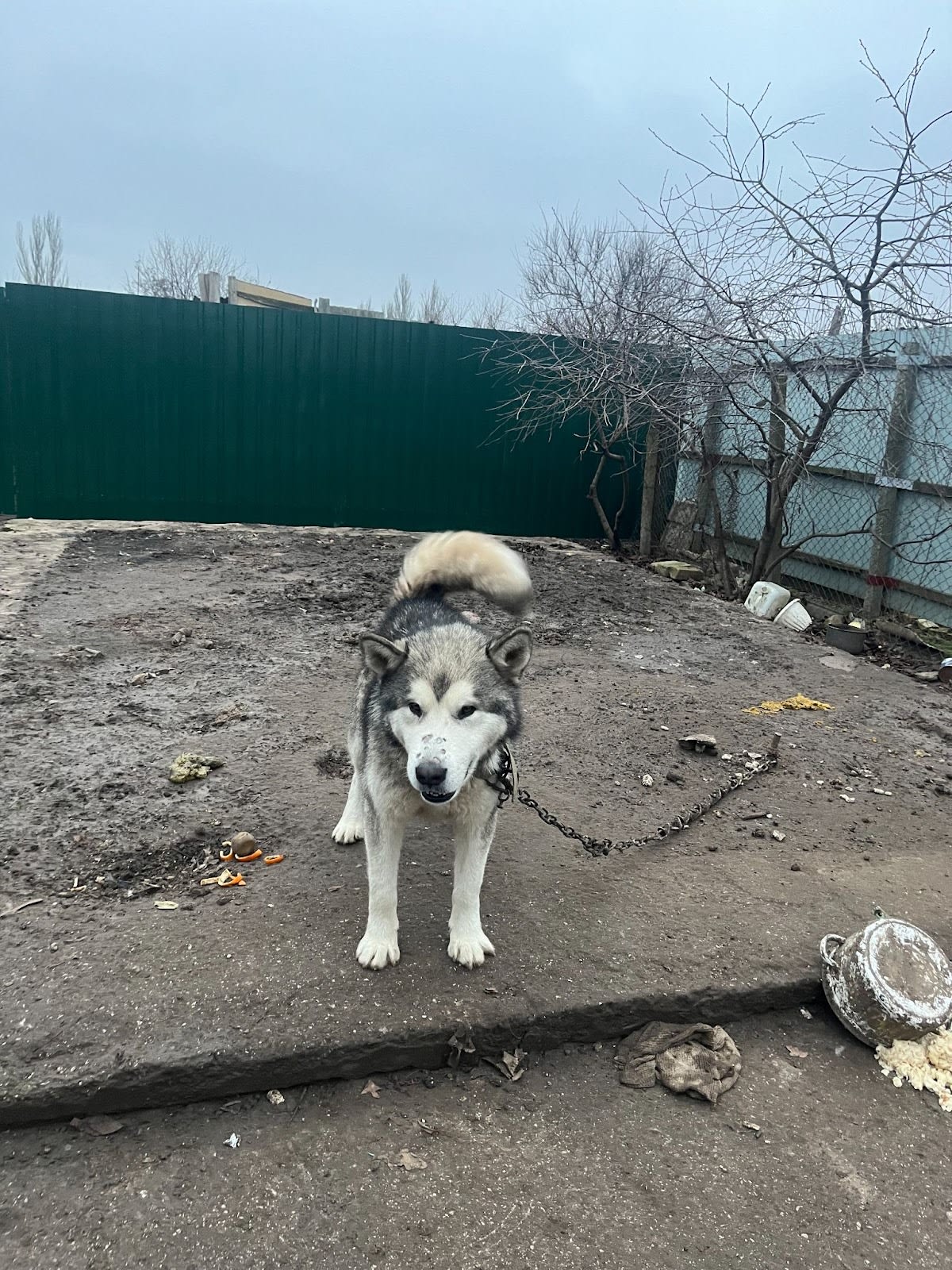
Tania met this cute pup last year around Christmas in the de-occupied village in Ukraine’s south. Despite his size and the scars on his face, he was one of the sweetest dogs she had ever known.
Stay safe out there.
Best,
Mariana and Nastia