
Editor’s Note:
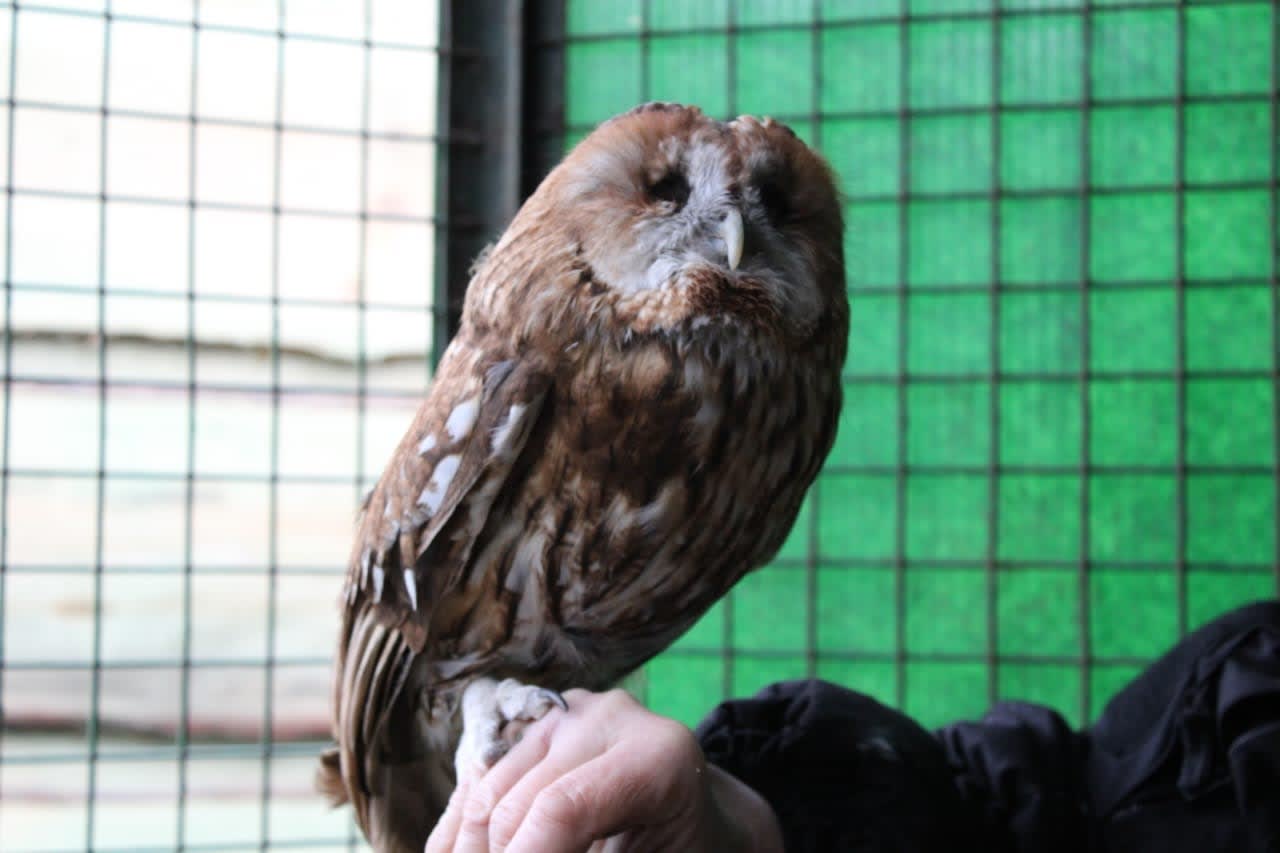
Want a Ukrainian tiger, crocodile or camel to greet you every day of the year?
We’re announcing our new 2026 Wild Animals of War calendar! If you’re a free subscriber, upgrade to an annual plan today and get one for free. We’re printing a limited run only.
Already a paid subscriber but still want a calendar?
Snag one for a suggested donation of $90. (Our printing/mailing costs are about $25). Get one here!
“The hardest thing is to imagine that his body was there the whole time, in a refrigerator, alone,” Dmytro said.
He paused. “That’s what I hate the most.”
His brother, Yevhen, was killed in 2022 when Russians shot down the medical helicopter that was evacuating him over occupied Mariupol. It took two years to identify the body. By that time, according to Dmytro, there was nothing left to bury. So Dmytro decided to cremate his remains.
Yevhen’s family belongs to the growing number of Ukrainians choosing cremation in place of traditional burials. In 2020, only 8 percent of people in Ukraine were cremated. Today, this number is significantly higher: Oleksandr Babin, who works at Relikvia, a funeral home in Kyiv, estimated that around 80 percent of his clients now opt for cremation over a traditional burial.
As Russia and Ukraine battle over Pokrovsk, one of the last key cities of the Donetsk Region still held by Ukraine, the war threatens a surge of casualties. Before the full-scale invasion, space in Ukraine’s cemeteries was already strained, the war has deeply exacerbated Ukraine’s shortage of burial plots. This crisis is a direct reflection of the vast scale and brutality of this war.
Poll: Which option is more common in your area: burial or cremation? Share your thoughts in the comments!
“I was the quieter one, Yevhen wasn’t like that… he was the one always falling off his motorcycle or having some kind of adventure. It was always like that with him,” Dmytro said.
Although they were different, Dmytro and Yevhen were best friends who spoke on the phone almost every day.
It was Dmytro that joined the military first in 2015 after Russia occupied his hometown in the Luhansk Region in 2014.
A year later, Yevhen joined the Azov brigade, fighting without official registration until Dmytro took him into his sniper platoon.
“I was tougher on him than the other men because I felt responsible for him… and I wanted him to be the best,” Dmytro said. “Eventually, he understood and thanked me for it.”
Yevhen’s service was not easy. He had several serious concussions, the worst of which happened when the building he was in was destroyed by a Russian tank. After losing consciousness and being dug out of the rubble, Yevhen was back on the battlefield within 3 days. Dmytro tried to persuade his brother that he should rest more, but Yevhen insisted that he had to keep fighting with his men.
After six years of active combat, when Yevhen was ready to hand in his paperwork and end his time in Azov, his plans were interrupted by the full-scale invasion. Yevhen’s second stint in Azov did not last long.
In March 2022, Yevhen called Dmytro — he was seriously injured in Mariupol, and had been scheduled for evacuation to a hospital in Dnipro the next day.
Dmytro never heard his brother’s voice again.
As Dmytro and Yevhen’s girlfriend rushed to the hospital the next morning, they discussed his future. They knew his leg had now been amputated and talked about getting him a really high quality prosthesis. “We wanted to make him feel whole again,” Dmytro recalled.
Dmytro’s eyes searched through the wounded, asking if anybody had seen Ryasik (Yevhen’s call-sign). That’s when he learned that one of the evacuation planes was shot down, and he realised that he would not find Yevhen amongst these men.
Dmytro was not able to say goodbye to his brother until Yevhen’s cremation two years later.
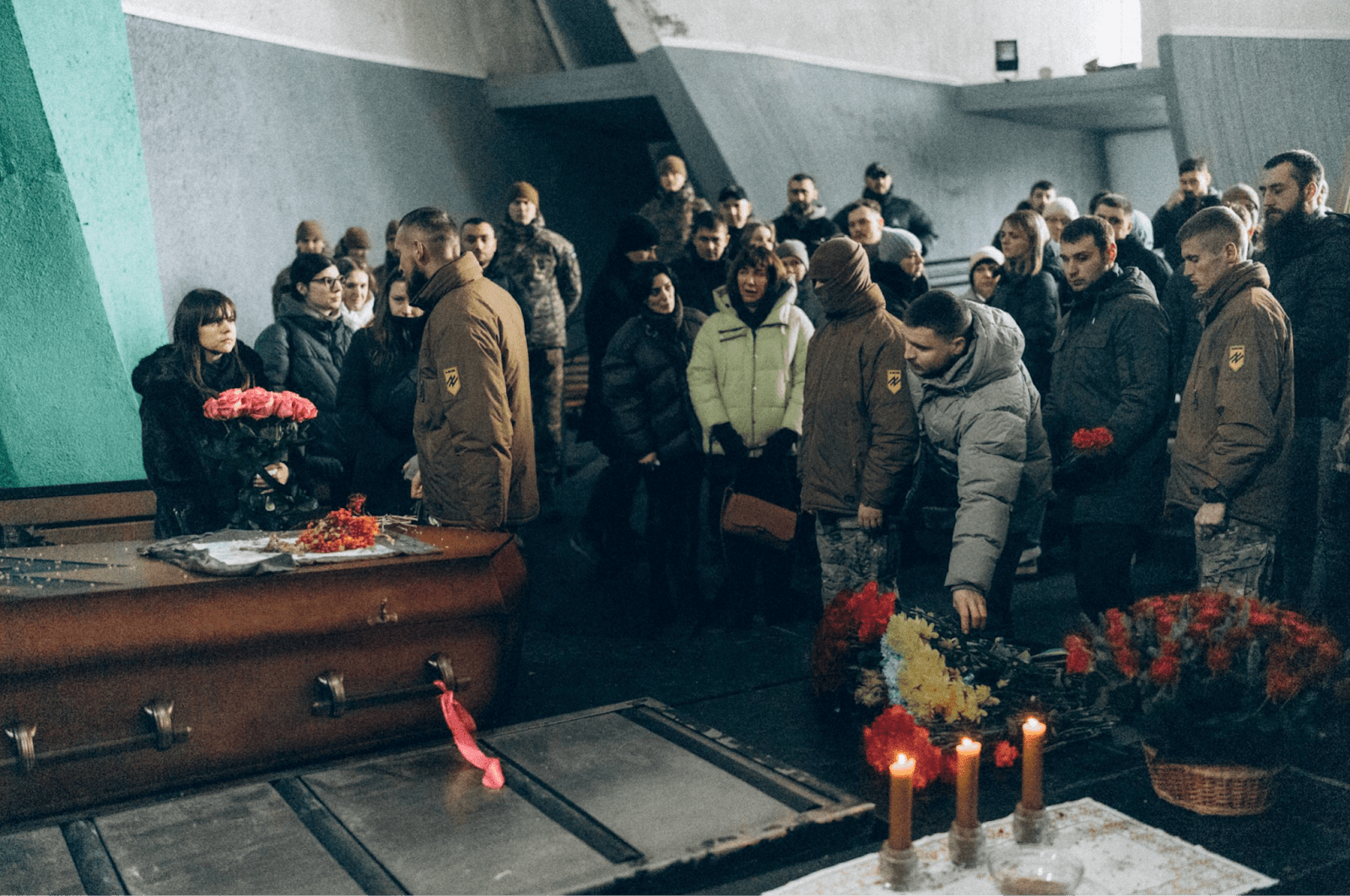
“Yevhen helped everybody, which is no small feat since he had a lot of friends,” Dmytro said. Despite his premature death, about 100 people came to Yevhen’s cremation.
“His brothers-in-arms were also there, the ones who remained from his platoon,” Dmytro explained with a heavy voice. Very few were still alive, he said.
Just last month, local authorities reported that Lviv’s famous Lychakiv Military Cemetery only had 20 burial plots left, forcing the cemetery to expand and create new burial plots. In 2023, the same cemetery responded to a shortage of burial plots by exhuming bodies, many of which had come from Ukraine’s previous wars, according to The Economist.
The lack of cemetery space is worsening, and the task of expanding is more challenging for lesser known cemeteries.
The search for burial space in Kozyatin, a town in central Ukraine’s Vinnytsiya region, had become so difficult that people were found illegally burying the dead on a local resident’s property since 2021. In other places, like Zaturyne in the Polatava region, there have been protests against the expansion of the local cemetery, which was already overfilling and contaminating the local water supply.
Expanding cemeteries seemed to be creating new problems, so the decision was made to build crematoriums to use the land more effectively. Ukrainians would be able to store the ashes of their loved ones in a columbarium, which would take up a fraction of the space needed for a traditional burial.
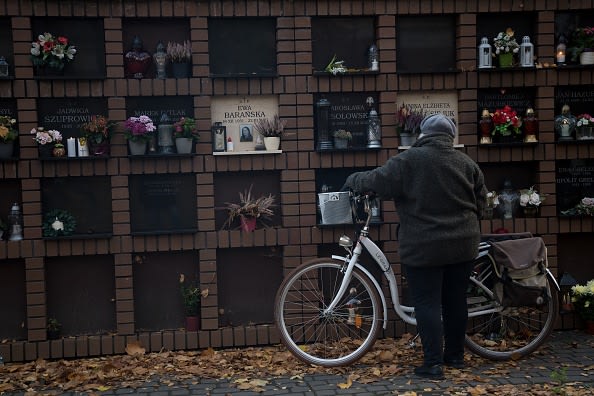
For some Christians, cremation remains a contentious issue. A traditional earth burial was one of the ways Christianity set itself apart from Paganism and other religions, where historically the remains of the deceased were burned, according to Priest Zaharii Zaliznyi of the Orthodox Church of Ukraine. Some Christians fear that when Christ returns, those who have been cremated won’t be able to be resurrected, but there is no official ruling in the Bible against or for cremation, Zaharii explained.
Yevhen, who died at 28, never had the chance to decide what he wanted for his funeral.
All Yevhen’s family had was an off-hand comment that Yevhen once made: he didn’t want a priest at his funeral. Like a lot of Azov fighters, he was interested in Scandinavian mythology.
”He believed in multiple Gods, he had all sorts of tattoos of them,” Dmytro explained.
One of the reasons people opt for cremation is the cost, according to Zaharii. A traditional burial can cost up to $3,500, while a cremation costs around $85.
For some people like Dmytro, the decision to cremate his brother had to do with the decayed state of his remains after being held in a morgue for two years.
“By the time I came to identify it, it wasn’t really his body, it was more… a pile of nothing… a pile of dirt,” he said.
The process of identifying the remains of soldiers is often arduous, and requires several teams to return the remains and organise DNA testing.
For now, Ukraine only has three functioning crematoriums in Kyiv, Kharkiv and Odesa — far less than expected for a country of its size. Neighbouring Poland, for example, has 52 crematoriums, and the United Kingdom has 300.
Before 2022, new crematoriums were planned to be built in Zaporizhzhia, Mariupol, Dnipro and Lviv. Only the project in Lviv took shape after the full-scale invasion, and it is now nearing its final stages. The project has modern furnaces which will be able to carry out 10 cremations a day.
Without a local crematorium in Lviv, bodies have to be transported 600-900 kilometers to be cremated, said Maksym Putrya, Director of Lviv’s Municipal Ceremonial Service. Despite this, he added, the number of traditional burials in Lviv has actually decreased by ten percent from 2021-2024.
After Yevhen was cremated in Kyiv, Dmytro decided to keep Yevhen’s ashes in an urn in a Kyiv columbarium. Even though Dmytro’s family has relocated to Dnipro, a city in southeastern Ukraine, they are still haunted by the threat of occupation.
“Right now the frontline is moving in [our] direction…if there are no negotiations or they don’t bring peace somehow. It is obvious Russia will at some point get to Dnipro, it will be very difficult then to get his body back,” Dmytro said.
The issue of reburying soldiers from frontline areas was more prominent before Pokrovsk itself became part of the front, when reburial was feasible. Many families from frontline areas have sought to relocate the remains of their loved ones, since cemeteries are often targeted after Russian occupation, with troops often erecting their own monuments and desecrating the graves of Ukrainian soldiers.
Many frontline communities like Kramatorsk or Pokrovsk will foot the bill for a soldier’s burial, but not the reburial. The process can be expensive and obtaining the right legal documentation can be a lengthy process.
In November, Zelenskyy signed a bill which will provide money for the reburial of about 500 soldiers who defended Ukraine’s independence. These funds will cover the reburial of soldiers buried before they were identified who were later identified.
According to Dmytro, cremation was particularly widespread among his fallen brothers-in-arms.
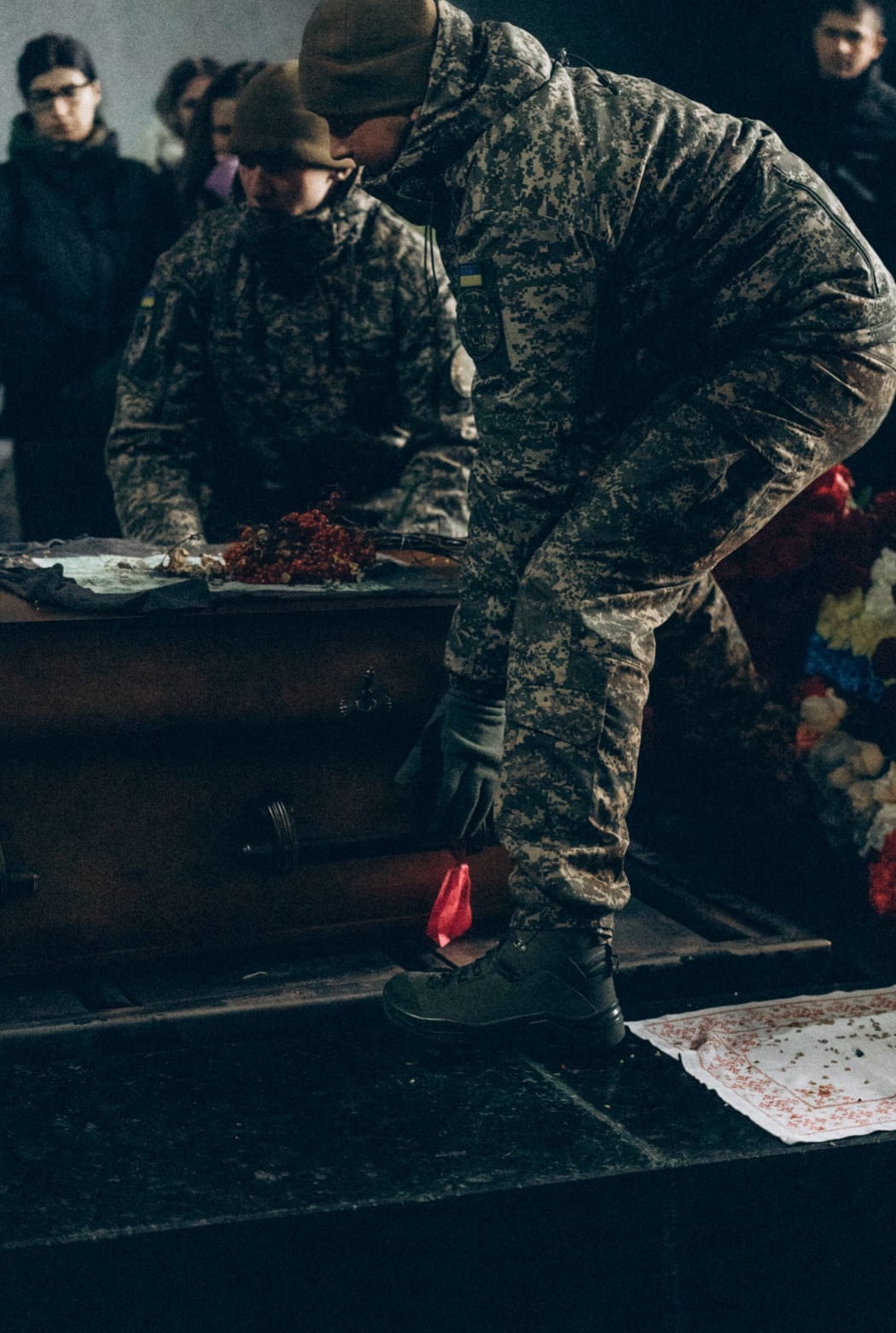
“I wouldn’t want my brother’s body to be left again on the frontline or in occupied territory,” said Dmytro, his voice growing heavy. “He’s not at home...when you can be buried on your own territory… where your people are, there is no problem.”
Editor’s Note:
Want a Ukrainian tiger, crocodile or camel to greet you every day of the year?
We’re announcing our new 2026 Wild Animals of War calendar! If you’re a free subscriber, upgrade to an annual plan today and get one for free. We’re printing a limited run only.
Already a paid subscriber but still want a calendar?
Snag one for a suggested donation of $90. (Our printing/mailing costs are about $25). Get one here!
Tim Mak and Steven Beschloss
NEWS OF THE DAY:
By Oksana Stepura
Good morning to readers; Kyiv remains in Ukrainian hands.
EU UNVEILS SECURITY PLANS FOR UKRAINE: EU leaders issued a joint statement, committing to long-term military, economic and political support for Ukraine, according to Berlin. It includes security guarantees, reconstruction funding and backing for EU ascension. This comes as Europe fears being sidelined by the U.S. in peace negotiations over Ukraine. The U.S. has repeatedly criticised Europe for not sufficiently supporting Ukraine and has previously threatened to withdraw U.S. support, leading Europe to step up its defense production and support for Ukraine.
FINLAND STATES RUSSIA THREATENS NATO BORDERS: Finland’s Prime Minister has warned about the possibility of Russia deploying its forces towards NATO countries if a peace deal is struck. He urges Europe to give more money to the defense of countries bordering Russia. The Prime Minister stated that it’s of utmost importance for Europe to be ready to defend itself, even with the U.S. support decreasing.
RUSSIA REJECTS CHRISTMAS CEASEFIRE PROPOSAL: Kremlin spokesperson rejected the proposal for a Christmas and New Year ceasefire, stating it would give Ukraine time to regroup in order to continue the war and wouldn’t lead to a peace. Russia has consistently rejected peace deals and obstructed attempts to bring the war to an end.
CAT OF CONFLICT:
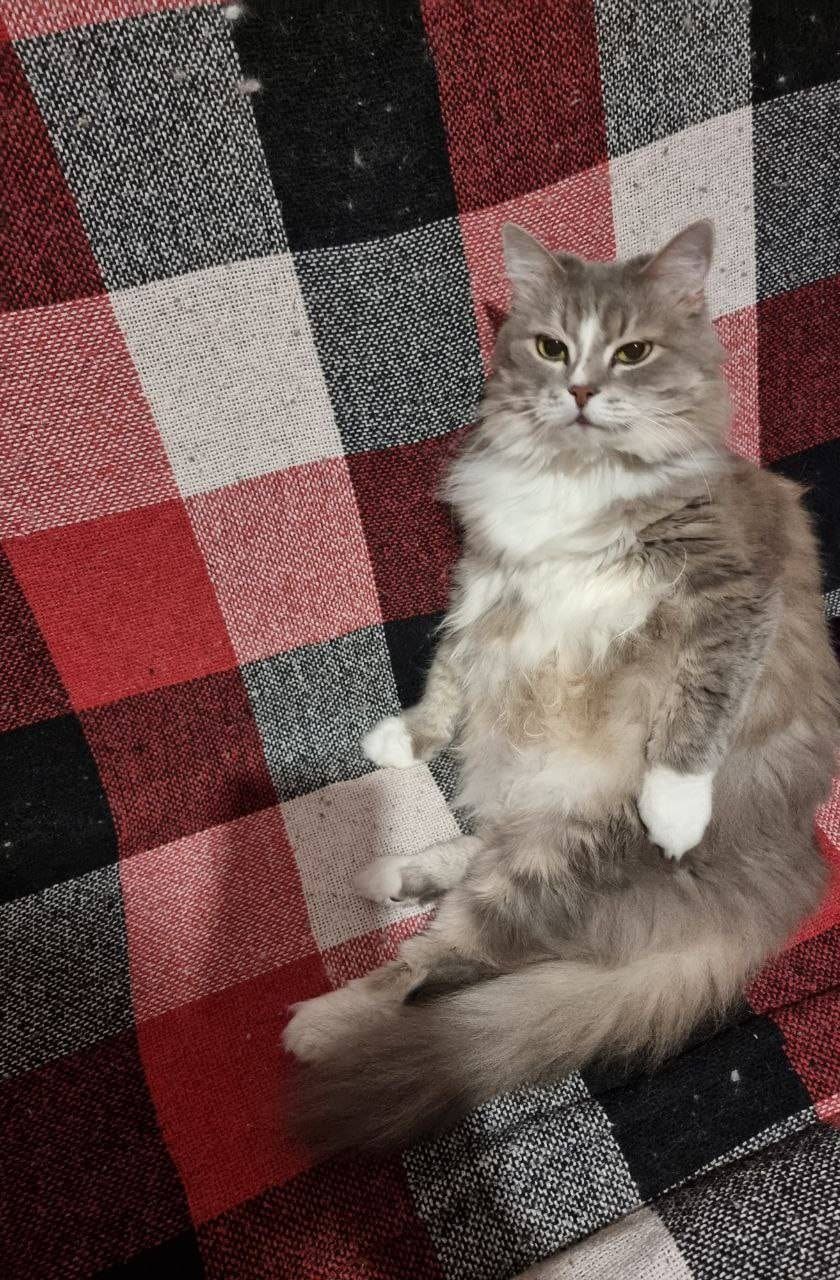
This is Oksana’s cat. This smug old lady has survived 3 tumors while living in wartime Ukraine. She’s very brave.
Stay safe out there.
Best,
Alessandra