Editor’s Note:
LAST CALL!
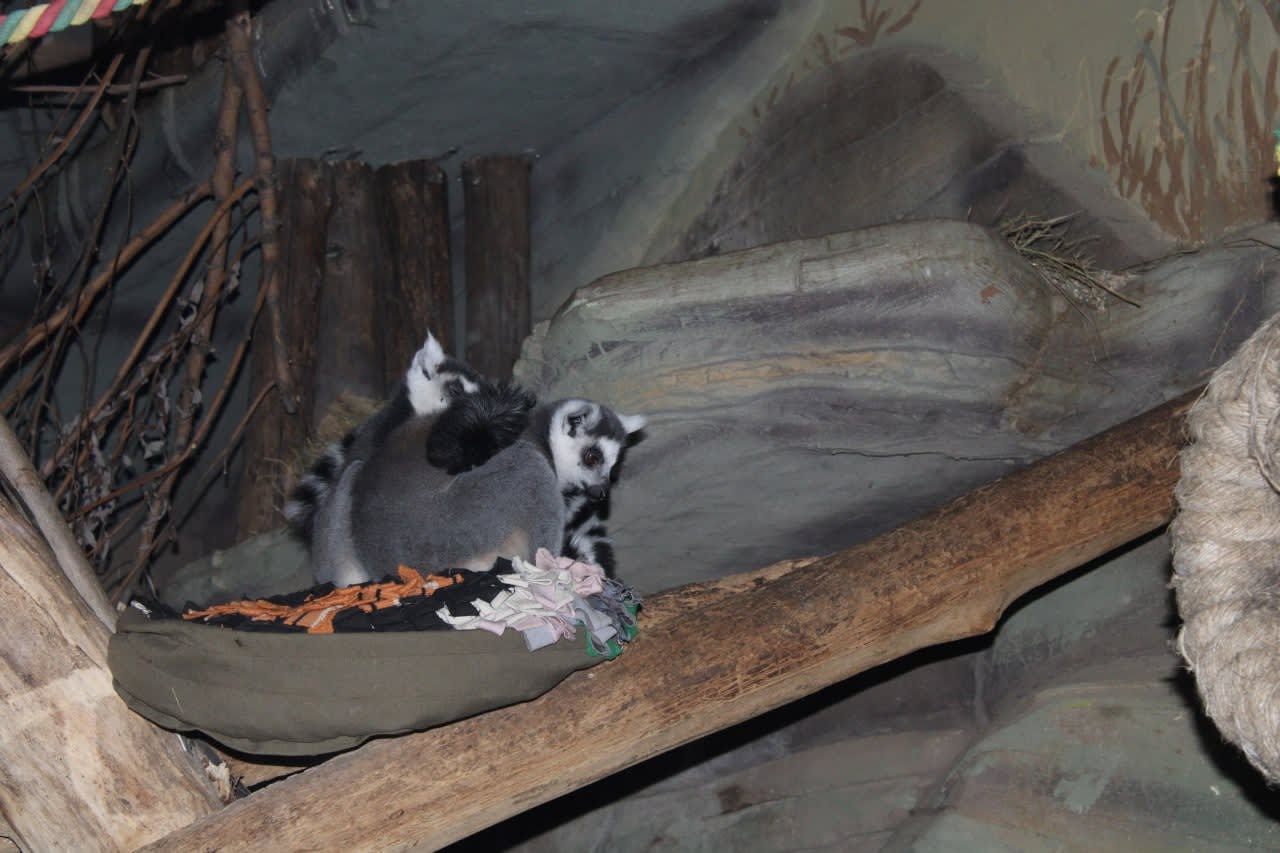
Want a Ukrainian tiger, crocodile or camel to greet you every day of the year?
We’re announcing our new 2026 Wild Animals of War calendar! If you’re a free subscriber, upgrade to an annual plan today and get one for free. We’re printing a limited run only:
Already a paid subscriber but still want a calendar?
LAST CHANCE: Snag one for a suggested donation of $90. (Our printing/mailing costs are about $25). Get one here!
For the past four years, I have loved Christmas. My family reunites in our hometown after long weeks of separation, sets the table with clay dishes, and annoys the neighbors with rumbling laughter.
But the joy is short-lived. My mother’s gaze shifts toward my grandmother, who, instead of a festive dinner, declined to celebrate. Christmas has not yet arrived for her.
Within seconds, accusations will begin: specifically, that my grandmother is continuing the traditions of “Russian agents.”

Most of the world celebrates Christmas on December 25. But Ukraine, until recently, followed Russia’s lead, marking it on January 7. The shared religious calendar was one of the tools used to sustain the myth of Slavic unity, allowing Moscow to maintain its influence long after Ukrainian independence.
The war has accelerated Ukraine’s separation from Russia, including through religion. Celebrating Christmas on December 25 was another step toward aligning with the West. and a process of decolonization.
But this shift came with consequences. For thousands of families, including my own, Christmas is not only a time of reunion but also a source of arguments.
I have personally witnessed how Russian influence can quietly take root, even among those closest to us. It often reveals itself in fierce resistance to returning to our own Ukrainian traditions, even among people who consider themselves patriotic.
There is tragedy in this for every such family: a holiday that typically unites people has instead become a source of division — and a weapon in Russia’s hands.
I witnessed this chasm with my own eyes.
In the spirit of Christmas, this article will not be paywalled. Still, it’s our last call: upgrade to an annual plan and get our 2026 calendar!
My grandmother was never a supporter of pro-Russian ideas.
Still, she remains a parishioner of the ‘Ukrainian’ Orthodox Church, which has never fully severed its ties with Russia.
It’s hard for me to blame her.
My grandparents began attending a church subordinated to the Moscow Patriarchate in the early 2010s, when my grandfather developed serious health problems. At the time, there were few alternatives. My home region, Volyn, had historically been a stronghold of the so-called ‘Ukrainian’ Orthodox Church, which fell under the Moscow Patriarchy.
Nine years ago, my grandfather died. My grandmother’s world collapsed like a house of cards. They had lived together for decades, inseparable and deeply loving. Imagining how to piece herself back together felt impossible.
She found comfort in continuing to attend the church they had once attended together. It was a community of people she still meets for coffee and celebrates holidays with. Older generations often turn to religion for meaning and support — even as churches like hers in Ukraine are now associated with collaborationism and Kremlin mouthpieces.
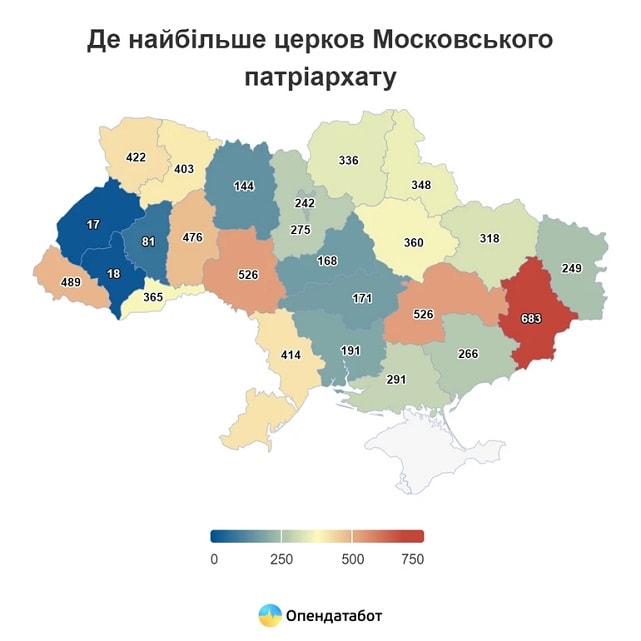
Since the time of the Russian Empire, Ukraine has been under the influence of the Russian Orthodox Church.
The Russian Orthodox church was more than a religious institution; it was a bridge to cement Russian ideology in my country. Even during the Soviet era, priests were recruited to become secret agents, tasked with surveillance and spreading Soviet propaganda.
Before Soviet rule, Ukrainians celebrated Christmas on December 25, drawing them closer to Europe and farther from Russia, which refused to adopt the Gregorian calendar. In 1918, the Soviets returned to the Julian calendars for churches and shifted the holiday to January 7, uniting all occupied territories under a single schedule.
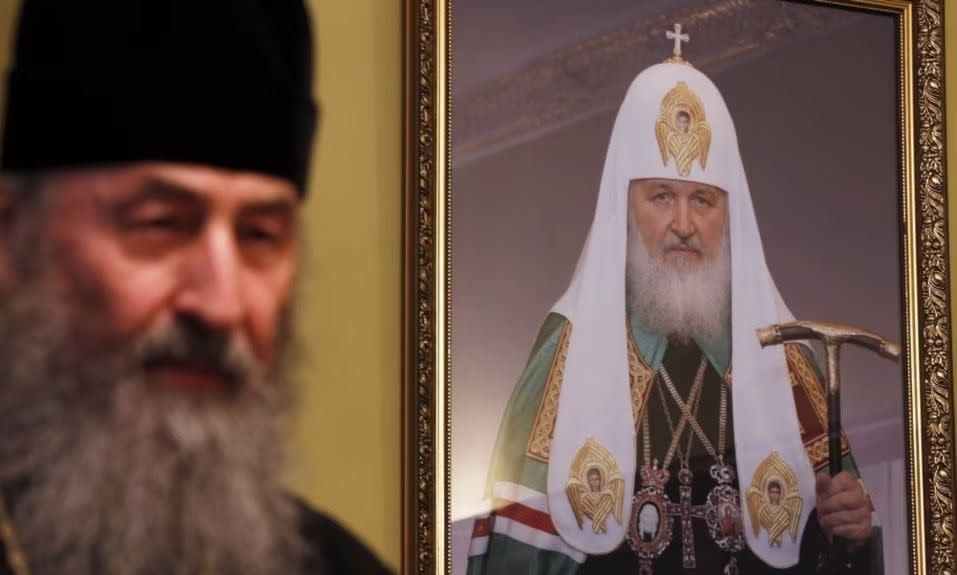
The critical role of the Russian Orthodox Church persisted even after Ukraine gained independence in 1991, as the overwhelming majority of clergy had long-standing ties to Moscow.
Along with the Russian Orthodox Church, Ukraine continued to use the Julian calendar, which reflected its long-standing confrontation with the West, even in matters of faith.
Failing to break those ties was a serious mistake.
In 2014, Vladimir Putin exploited this historical connection between churches, using it as a tool of hybrid aggression to justify the war against Ukraine. Back then, the clergy of the so-called “Ukrainian Orthodox Church” supported separatists in Crimea, Donetsk, and Luhansk, as militants from the pseudo-republics created by Putin openly promoted Moscow Orthodoxy. They framed the conflict in Donbas a “crusade,” with the backing of the Russian Orthodox Church.
Only after three years of war, in 2018, Ukraine finally secured an independent Orthodox Church of Ukraine. Since then, the country has been engulfed in a confrontation over which church is legitimate.
People in my region would go as far as to physically beat each other to assert their beliefs. Now, the Russian Orthodoxy tries to fuel the confrontation, especially on the eve of religious holidays.
In 2024, Ukraine introduced a law which banned religious formations associated with Moscow. Yet, the church continues to be under its influence.
Сlashes between parishioners of the Ukrainian Orthodox Church (Moscow Patriarchy) and the Orthodox Church of Ukraine (independent) in my home region in 2024. Source: https://t.me/IA_VGOLOS/22687
No one in my family had seriously confronted my grandmother about her church until recently.
After February 2022, my grandmother and my mother started arguing more often about religion, as reports mounted of clergy from churches subordinated to the Moscow Patriarchate being exposed as collaborators and participating in repression in the occupied territories. As of August 2025, Ukraine’s Security Service (SBU) was investigating more than 170 cases involving priests linked to Moscow on potential treason.
To be precise, it was my mother who argued. My grandmother cried.
However, even after thousands of quarrels, my grandmother decided to stay in her church, saying it was “different.” She believes her friends, the priests, are pro-Ukrainian, as they support the army with prayers.
After many tiring conversations, our family decided to make the subject taboo. But the crack kept widening whenever the holidays came around.
Before the full-scale invasion, this day did not hold much meaning for me. As a child, I always received presents on New Year’s Eve, a tradition since Soviet times.
Christmas, meanwhile, was treated almost humorously: limping through the twilight along snowy, freezing streets, we could always collect sweets and money from neighbors in exchange for singing carols. It always felt less important, coming only after the New Year.
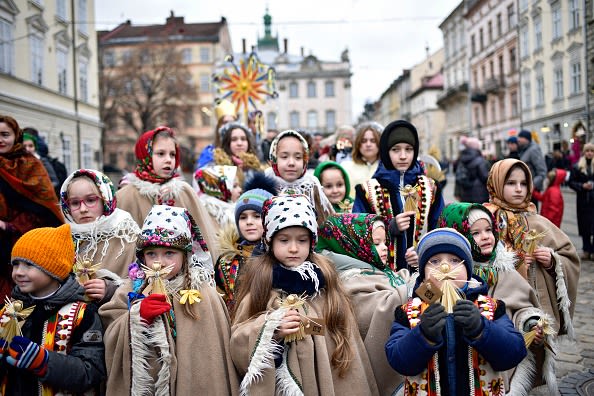
But the war changed my relationship to Christmas.
Now, even for someone as secular as myself, Christmas has become the most important family holiday of the year. The moment when I can finally catch my breath and travel back to my hometown to see everyone I love.
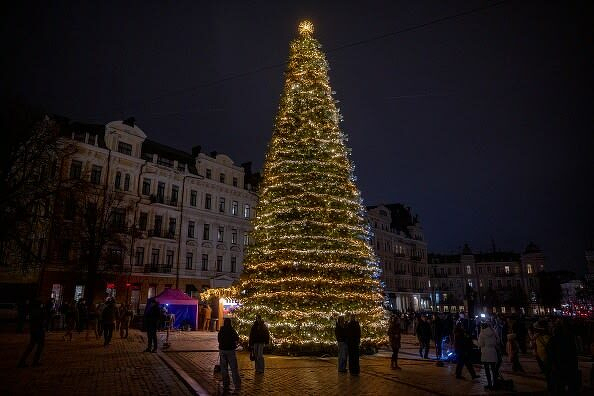
In 2023, we already celebrated Christmas on December 25 for the second time, after this date became the official one in Ukraine. We also started the tradition of exchanging gifts under the Christmas tree.
“It feels like we’ve brought real Christmas back,” my mother said as she cleared the festive table that year.
Everyone felt that way — except for my grandmother.
That 2023 Christmas, she wanted to celebrate it without us. Her church, which continued to observe Christmas according to the old calendar, considered the new date incorrect.
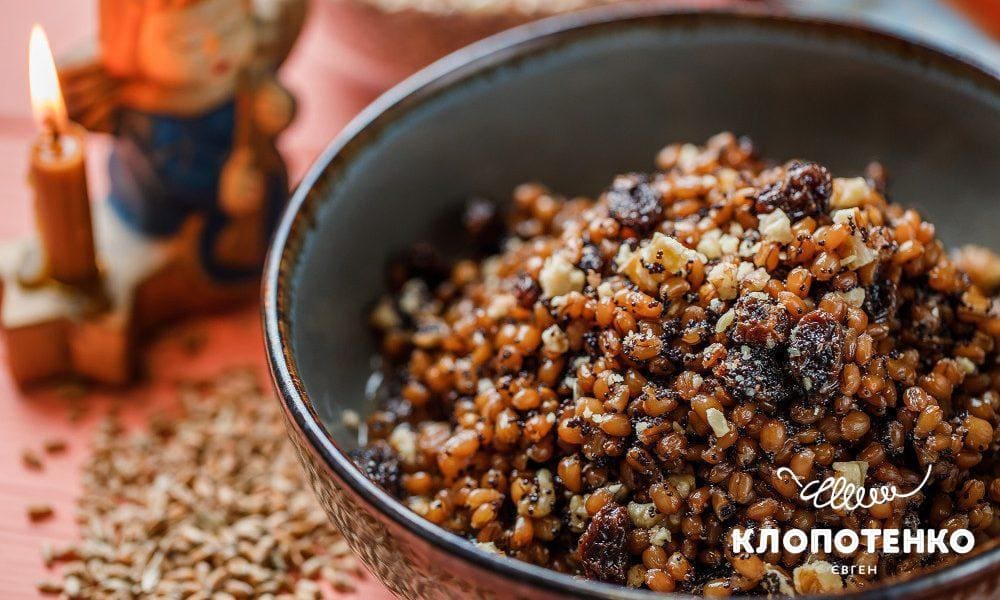
We were already eating kutia, singing carols, and drinking wine. My grandmother, meanwhile, was observing a strict fast which usually goes before Christmas. There was no celebration, no drinking, and no meat allowed for her, so she just ate plain vegetable dishes.
Late in the evening, she would eventually return from church, and the conversation would inevitably grow heated. The familiar arguments would begin again, stretching late into the night.
But two years ago, she finally agreed to join our festive meal after my mom asked her not to “spoil the holiday.”
By 2024, statistics showed that most Ukrainians had adapted to the reform calendar and begun celebrating Christmas on December 25.
I finally feel how it became ours. It was already ours before the Soviets and the Russian Orthodox stole it. Our ancestors celebrated it on December 25 as a way to revive our national identity and separate Kyiv from Moscow.
I tried to explain this to my grandmother.
We never managed to change her mind completely. She still goes to her church and celebrates Christmas on January 7 with her friends there.
But something eventually changed. She decided to mark two Christmases in a year and gave up on her fasting meals when everyone around is celebrating.
She chose, after all, to spend the holiday with us.
Editor’s Note:
LAST CALL!
Want a Ukrainian tiger, crocodile or camel to greet you every day of the year?
We’re announcing our new 2026 Wild Animals of War calendar! If you’re a free subscriber, upgrade to an annual plan today and get one for free. We’re printing a limited run only:
Already a paid subscriber but still want a calendar?
LAST CHANCE: Snag one for a suggested donation of $90. (Our printing/mailing costs are about $25). Get one here!
NEWS OF THE DAY:
By Tim Mak
Good morning to readers; Kyiv remains in Ukrainian hands.
We built today’s News of the Day section using Ground.News, a media literacy tool that helps cut through the fog in this time of disinformation. The website and app filters through thousands of news stories every day, merging them by topic to help show which topics are being covered by left and right.
That’s why we’re partnering with Ground.News for this issue. It features bias detection, provides funding transparency about news outlets, and compares headlines so you can see how different outlets are framing the topic.
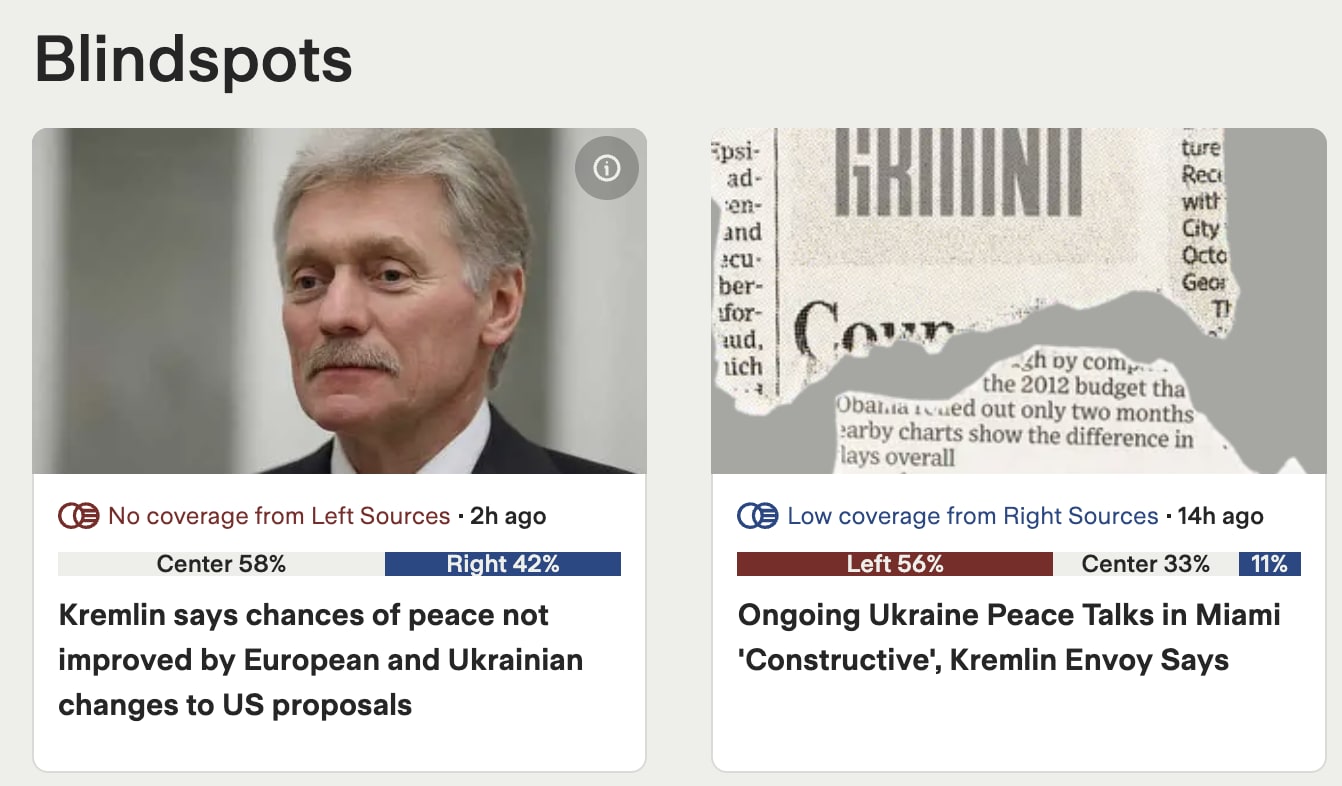
It’s bias detection helped surface the differences between how right-leaning and left-leaning outlets are covering the ongoing peace process through its ‘blindspots’ feature:
Interested in improving your news diet like I have? Subscribe to Ground News and get 40% off their Vantage plan!
RUSSIA MIXED SIGNALS ON PEACE PROCESS: Putin envoy Kirill Dmitriev hailed peace talks in Florida as “constructive,” as he met with Trump representatives Steve Witkoff and Jared Kushner.
At the same time, Putin foreign policy aide Yuri Ushakov slammed changes to the notorious 28 point plan, which the Europeans and Ukrainians have whittled down to 20 points. Ushakov claimed that the revisions “definitely do not improve the document and do not improve the possibility of achieving long-term peace.”
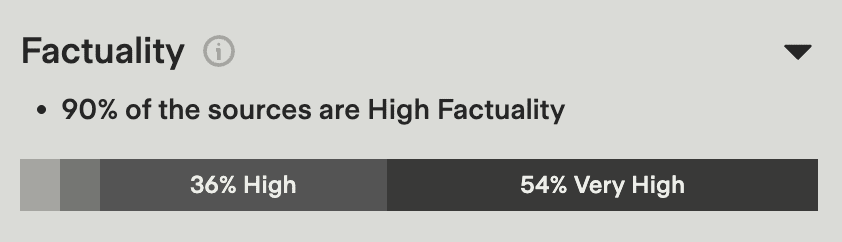
Both stories found on Ground.News, with high factuality:
US INTEL: RUSSIA WANTS ALL UKRAINE: Intelligence from the United States continues to show that Putin’s objectives continue to be the capture of all Ukraine, as well as parts of Europe that were part of the USSR. These assessments have been consistent since 2022, Reuters reports, citing six sources that have familiarity with the intelligence.
…BUT GABBARD DEFLECTS: Director of National Intelligence Tulsi Gabbard said that “warmongers” in the government are promoting a “false narrative to block President Trump’s peace effort.” She claimed that Russia wants to avoid a larger war with NATO and also does not have the ability to conquer all of Ukraine.
The problem with Gabbard’s statement is that she does not contradict the Reuters story.
ZELENSKY SUPPORTS ONLINE VOTING: The Ukrainian president said that presidential elections could permit online voting for Ukrainians abroad, as preparations are made for a possible election campaign even during the war. More at Ground.News.
… AS PUTIN CONSIDERS BALLOT SITE CEASEFIRE: For his part, Putin said he’s considering a ceasefire on election day if Kyiv holds elections that he is pushing for. Russia is “prepared to consider ways to ensure election security in Ukraine, at least by refraining from strikes deep into the country’s territory on election day,” he said.
But he insisted that Ukrainians living in Russia be allowed to vote, and his promises are notably worthless.
CAT OF CONFLICT:
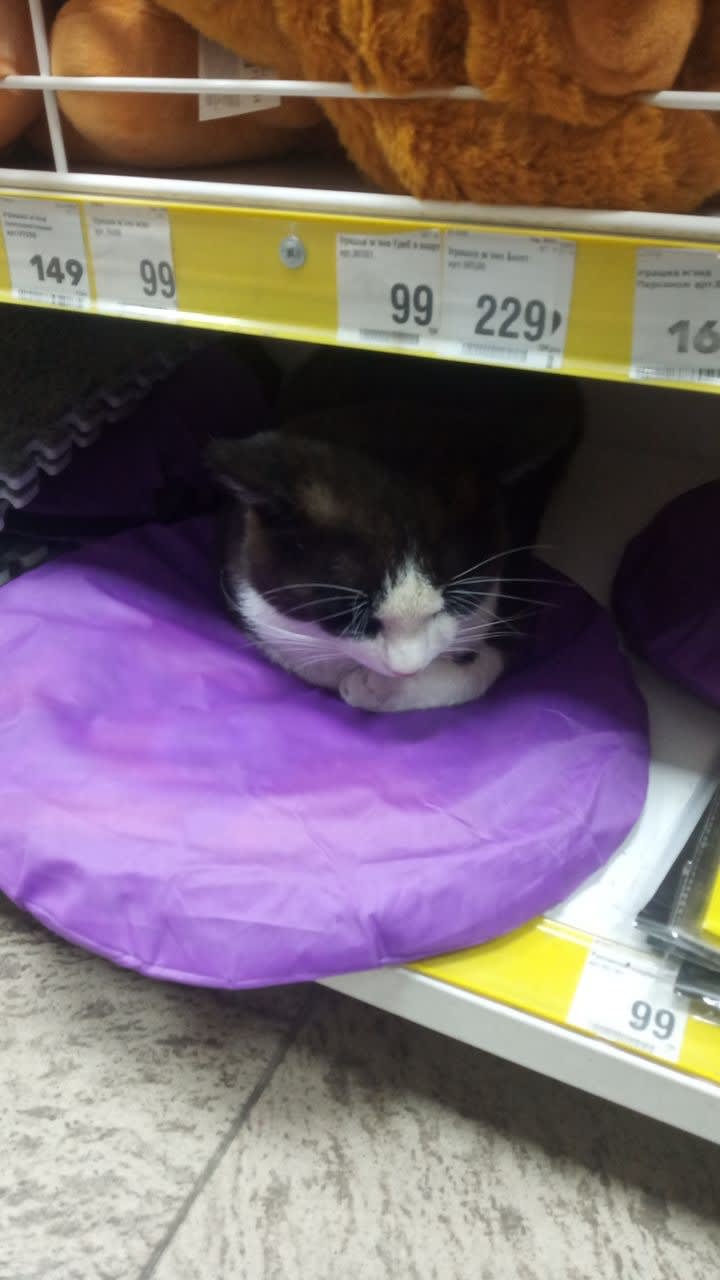
Sasha saw this cat “on sale” at a convenience store. Sometimes he comes there on cold days and lifts everyone’s spirits!
Stay safe out there.
Best,
Mariana