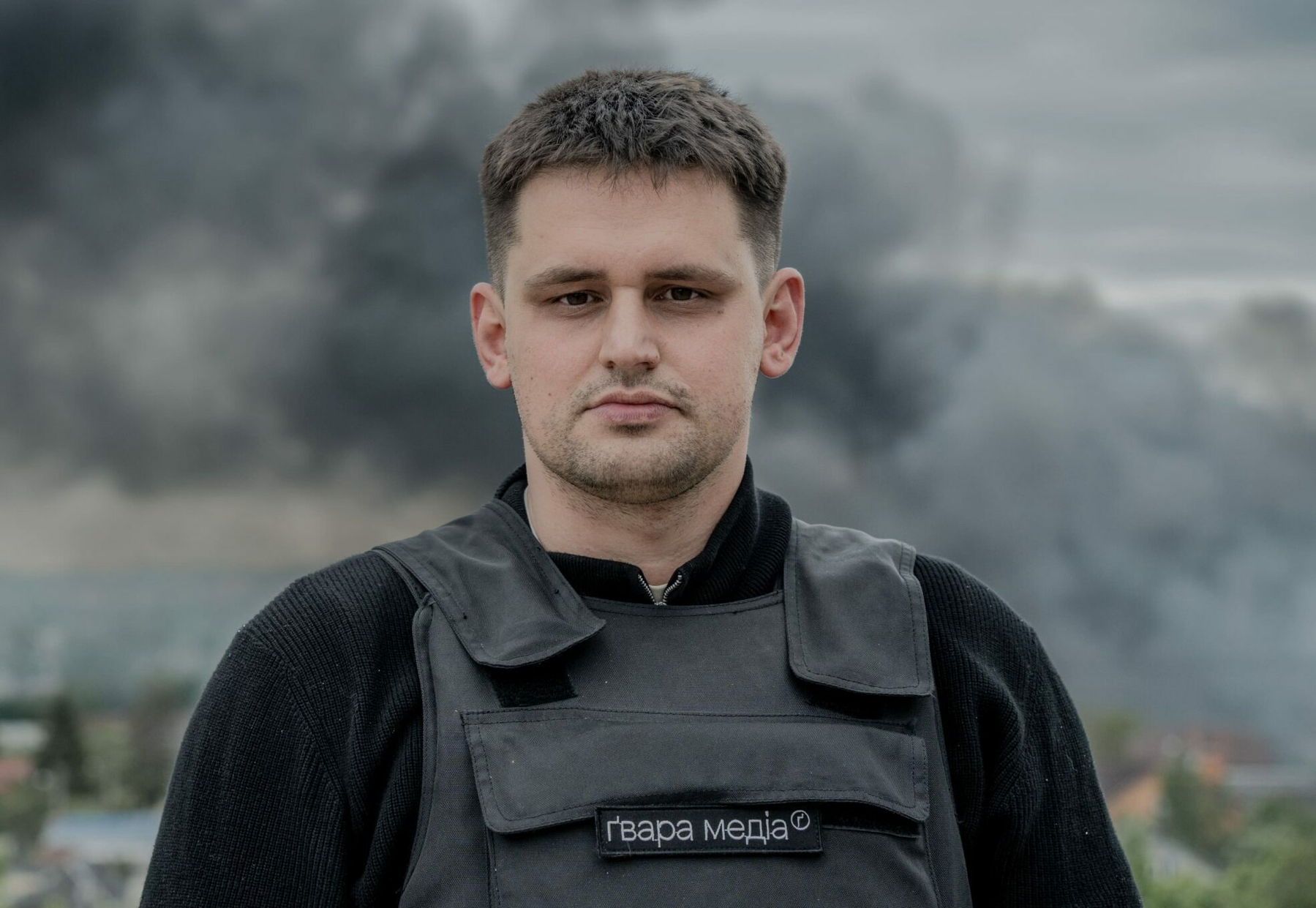
This year, the Gwara Media editorial team received the Free Media Award 2025. This is an A-level European award, and receiving it is real international recognition. We were nominated and informed of our victory after the jury made their decision in the summer.
The Free Media Award is organized by two foundations, ZEIT Stiftung Bucerius (Germany) and the Fritt Ord Foundation (Norway), to honor journalists, newsrooms, and media outlets that work independently under significant risks and pressure in Eastern and Central Europe.
Democracy is only partially inherited. Even in supposedly progressive countries, democracy is not a given. But this award is among the key European awards supporting independent newsrooms in regions where democracy is significantly threatened and rests on those who fight for it every day. It holds institutional significance for us as a local media, especially this year, when Gwara had its 10th anniversary in August.
At different times, the Free Media Award was given to Stanislav Aseiev and the Schemes media investigative project, as well as to Mstyslav Chernov, Evgenii Maloletka, Natalia Humeniuk, Andriy Dubchak, Vladyslav Yesypenko, Sevgil Musaieva, Olena Prytula, and Novoye Vremia newspaper, all of whom were working in Ukraine.
In 2025, the award was given to us, and I kept thinking about the list above and asking myself, "Why us?"
Sevgil Musaieva and Olena Prytula were nominated during the Euromaidan protests. Later, the prize went to institutional newsrooms. In 2022, only Ukrainian journalists were nominated for the award. This indicated that the award recognised war journalism as an international phenomenon. Chernov, Maloletka, Dubchak, Humeniuk, and others shaped the global perception of Russia’s full-scale war in Ukraine.
Gwara Media became the first Ukrainian local outlet to be recognized for work at the intersection of civilian and military life.
Our newsroom was (and is) documenting Russian war crimes against civilians, reporting under relentless airstrikes, and reporting from the frontlines. The appearance of a local newsroom on the Free Media Award list represents a paradigm shift.
For me, this is a signal that small local newsrooms in high-risk zones are becoming primary sources of information for the international community, replacing secondary sources like Telegram channels and competing with big national outlets. It further underscores the importance of local reporting, as the concept of this award was previously centered around nationwide journalism.
At Gwara Media, we dream to break the image of weak local newsrooms and establish a regional media of international caliber. This Award confirms that it's possible.
Awards are usually a celebration. But during a war, an award is a strange thing. You’re not thinking about being recognized. You just try to do good work and survive. Among your decisions: who will go out at night to report on the consequences of a missile strike on the city, in whose car they’ll go to the impact site, and who can and cannot publish a report on the website in the evening.
And then — organizers are telling us that we won the Award. That they want us to come, and they want me to deliver a speech. It was a strange win for my team and me, particularly because, in 2025, the world had become “fatigued” of "war in Ukraine." It was getting harder to keep what Russia does to our home in at least some sort of spotlight.
Five minutes of speaking to a focused audience is an opportunity, though. I wanted to use it to reach the hearts of European partners and, to a degree, teleport them to Kharkiv from the Hamburg City Hall, where the Award Ceremony was held.
I prepared very carefully. A few times in my life, I have had to write a speech, and it has been difficult. You must say something brief yet fulfilling. Be genuine and true, but not overshare. Dignified but not overly solemn. The speech has to be relevant to the moment and the context.
This time, I recalled the recent years and simply wrote from the heart. A speech conveys a state of being in which it is read. I treated it as a point in time where all my experiences came to converge towards one moment.
So, here it is.
Ladies and Gentlemen,
It feels somewhat unusual, even poetic, to stand here, far from the shelling in Kharkiv, far from the frontline, and still feel the war close.
Reality is different from illusions. It lives on the ground, and only glimpses of it can be found in social media posts, photos, or analytical reports. The truth about war exists in the mud, in the ruins of cities. It is held by the people who suffer but don’t give up.
At Gwara Media, we have learned that to find the truth, you must roll up your sleeves and go where it hurts. To stand among the wreckage and ask not only what happened, but why it happened.
All the while hoping that a Russian drone won’t strike your apartment at night — or that an FPV drone won’t target you while you work or go on a field trip. We’ve learned to tell stories that are hard to hear. But they must be told, because silence is dangerous.
Now ends the fourth year of Russia’s full-scale war on Ukraine. We live in constant crisis: under Moscow’s shelling, amidst blackouts, maintaining a fragile balance between despair and hope.
Many Ukrainians today experience an existential crisis of the war’s greyness. Constant horror can become dull, even if the danger never ends. This award gives us a chance to break through that greyness.
Standing here today, I feel your support as the light — the light I can take back home to Kharkiv.
Every day, our team in Kharkiv faces the war not only with texts and cameras, but with faith. Faith that truth and facts still matter. That facts can help to maintain awareness and be conscious of what’s going on when everything around descends into the endless chaos amidst a long war.
I will take your light and bring it back to my team and our readers — to remind everyone why we do this work. I will return home to Kharkiv to keep working, to stand with those who hold the sky and the ground. With people who now fight not only for us, but for everyone who still believes that freedom, dignity, and justice are worth fighting for. We value this award deeply for standing with us, for believing in us.
Because journalism is not only about news. It’s about dignity, freedom, and the courage to call things as they are.
Thank you.
If you want to support Gwara Media's local reporting, please, consider tipping us at buy me a coffee.
The post “Courage to call things as they are” — Founding editor of Gwara Media speaks at Free Media Award Ceremony in Hamburg appeared first on Gwara Media.