

Editor’s note:
D’oh! In a recent email, we included the wrong URL to upgrade to a paid subscription.
When we tried to fix it, the whole website crashed, preventing upgrades.
This is the peril of operating a small independent news organization!
Are you able to upgrade now? PLEASE consider clicking here.
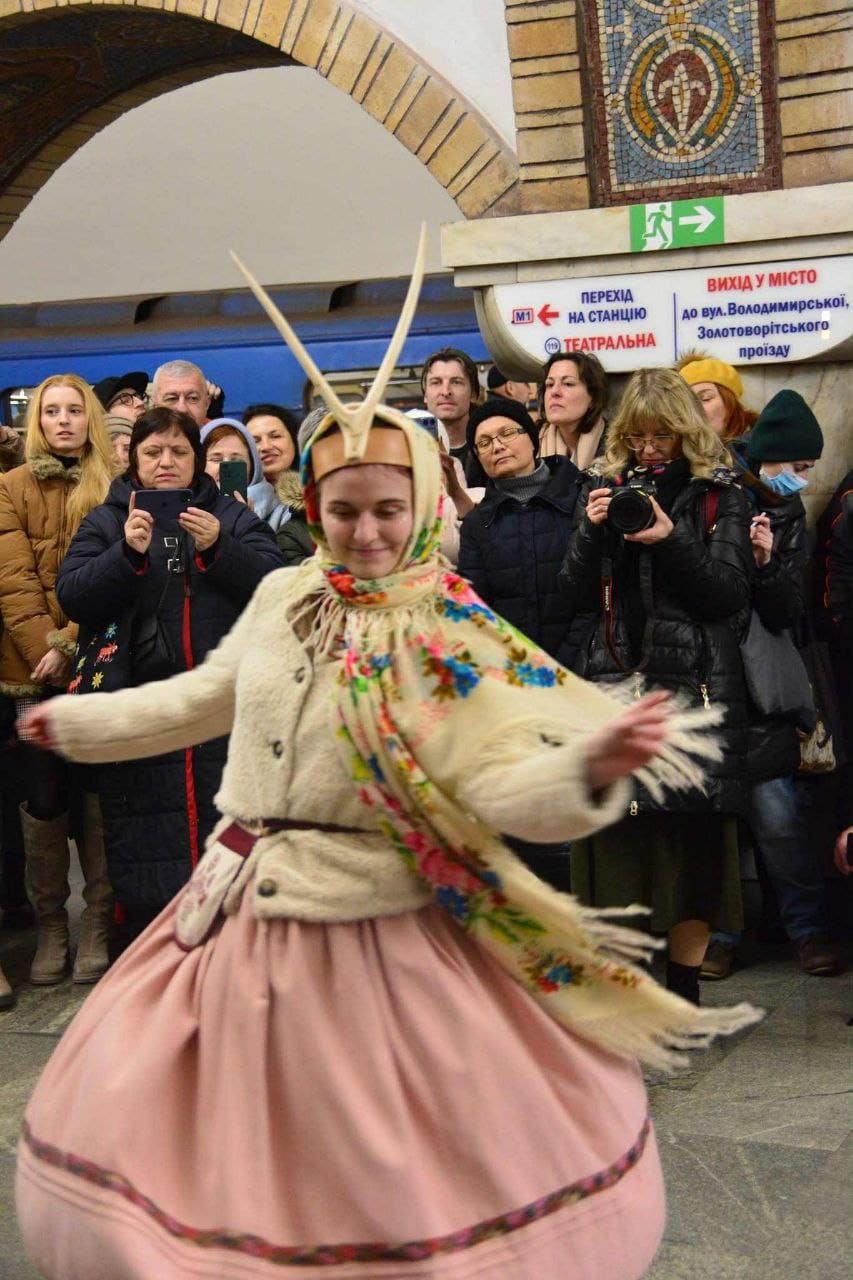
For the past three years, Laima Daukshas has been a part of theatrical performances on the holidays of Malanka and Vasyl.
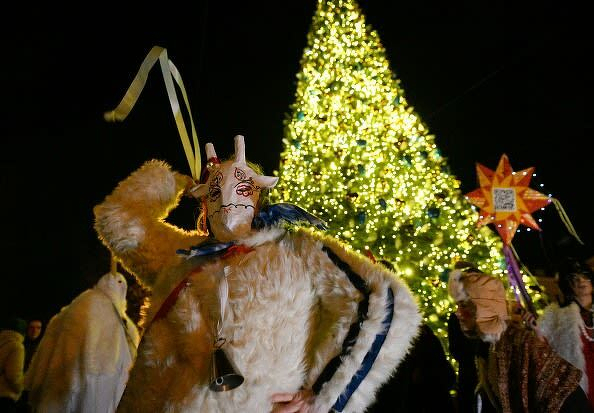
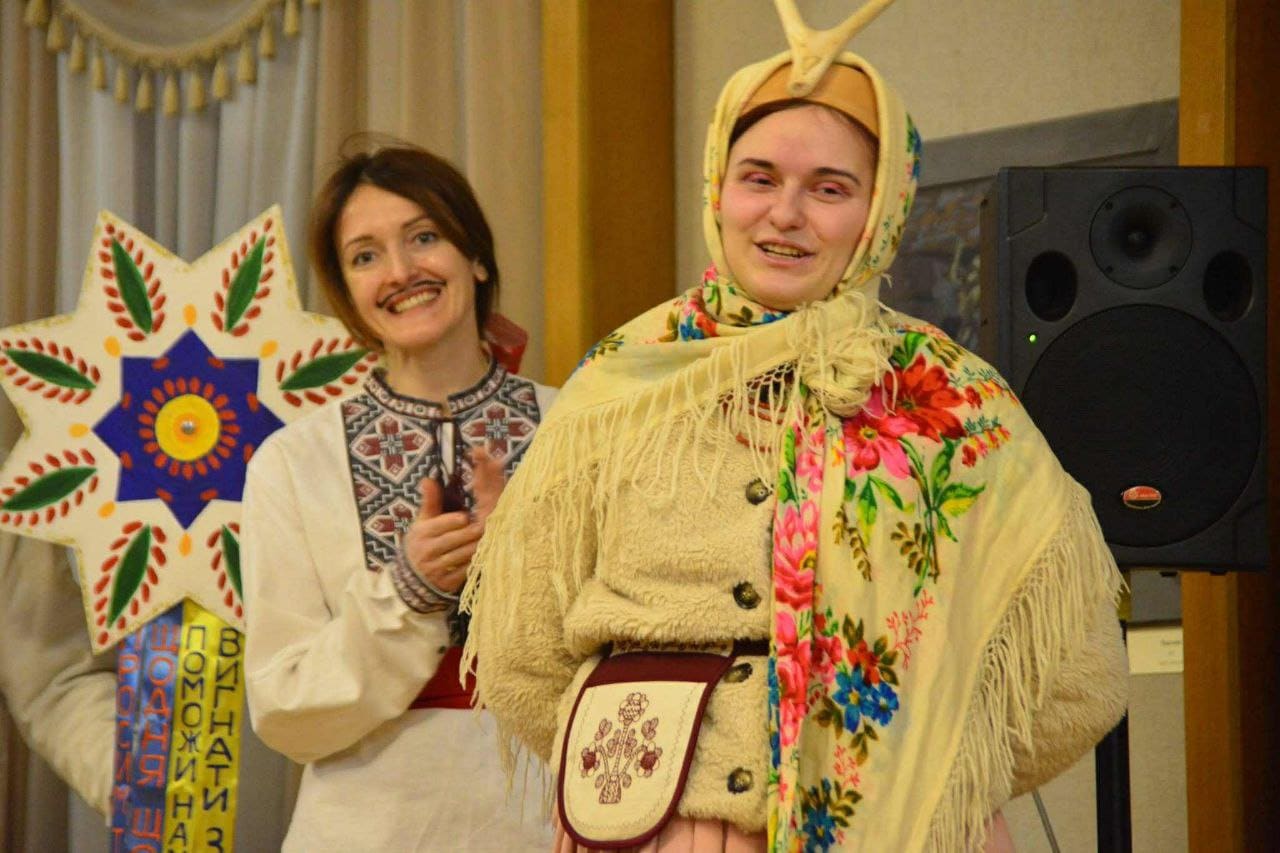
She plays the goat: the life of the party who wards off evil spirits and brings luck and prosperity to the audience.
The day of Malanka, named after the pagan goddess of spring, marks the end of the year, while the day of her husband Vasyl starts it anew.
The celebration itself takes place around New Year’s Eve but feels very much like Halloween. People dress up and visit their neighbors to wish them a happy new year, performing short plays along the way. While the tradition may seem playful, it was originally intended to honor deceased ancestors, ask for fertile ground and a successful marriage in the new year.
Celebrating Malanka and Vasyl is about reclaiming the part of the Ukrainian identity erased by decades under Soviet rule. The custom of ‘walking the goat,’ as the festive performances are also called, is deeply rooted in Ukrainian traditional lifestyle, which has circulated for more than a thousand years. It asserts a unique Ukrainian identity, the preservation of which is especially important during this existential war.
For Laima, the winter holidays were always a time to bond with her family. Her interest in authentic celebrations didn’t come until later in life. Before that, her only experience of Koliada, a tradition of singing carols in exchange for gifts on Christmas, was somewhat disappointing.
As teenagers, Laima and her friend tried to sing Christmas carols to her neighbors, but only two out of six opened the door, and they were not especially generous.
“We dreamt of returning with full bags of gifts, but they only gave us a few sweets and a banana,” Laima recalled. “I didn’t want to repeat the experience anymore.”
But in 2014, after the Revolution of Dignity, when preserving Ukrainian identity came at tremendous risk, she consciously chose to observe traditional Ukrainian holidays.
Now, as a researcher of Ukrainian Language at the Kyiv National University of Borys Hrinchenko, Laima draws on her background in linguistics to deepen her knowledge of authentic Ukrainian traditions.
Laima’s interest in literature is what eventually led her to the Kyiv Koliada, a team of actors that stages performances on Malanka and Vasyl.
At the time, she was leading theatrical excursions to parts of Kyiv where famous writers lived and worked, and hosting festivals for traditional Ukrainian culture. At one of the festivals, Laima’s friend introduced her to Koliada, where she was offered a prized role: the goat.
“I just looked at it with such big eyes. Three years ago, when they asked me to play the goat, I didn’t expect it. But the men who could do that are on the frontline. They do not sing with us anymore, and that’s how I got here,” she said.
The character she plays is the central figure of Shchedryi Vechir, Ukrainian New Year’s Eve. During the performance, the goat traditionally dies and comes back to life.
Video: Laima’s goat dies
This way, it embodies the meaning of the whole celebration dedicated to Malanka, when the year ends, and Vasyl, which starts it anew.
While this act of a dying goat may sound violent, it has two deeper meanings. First, it is a pagan symbol of fertility, which brings blessings for a generous harvest in the next year.
“Not only in Ukraine, but in many other countries, a goat is a totem which has to die, welcoming a year of birth and some kind of well-being,” Laima explained.
Second, the goat, who is led by Did (“the grandfather” or “an elderly man” in Ukrainian), symbolizes respect for the ancestors. Death of the old, birth of the new.
The goat’s revival is Laima’s favorite moment of the performance.
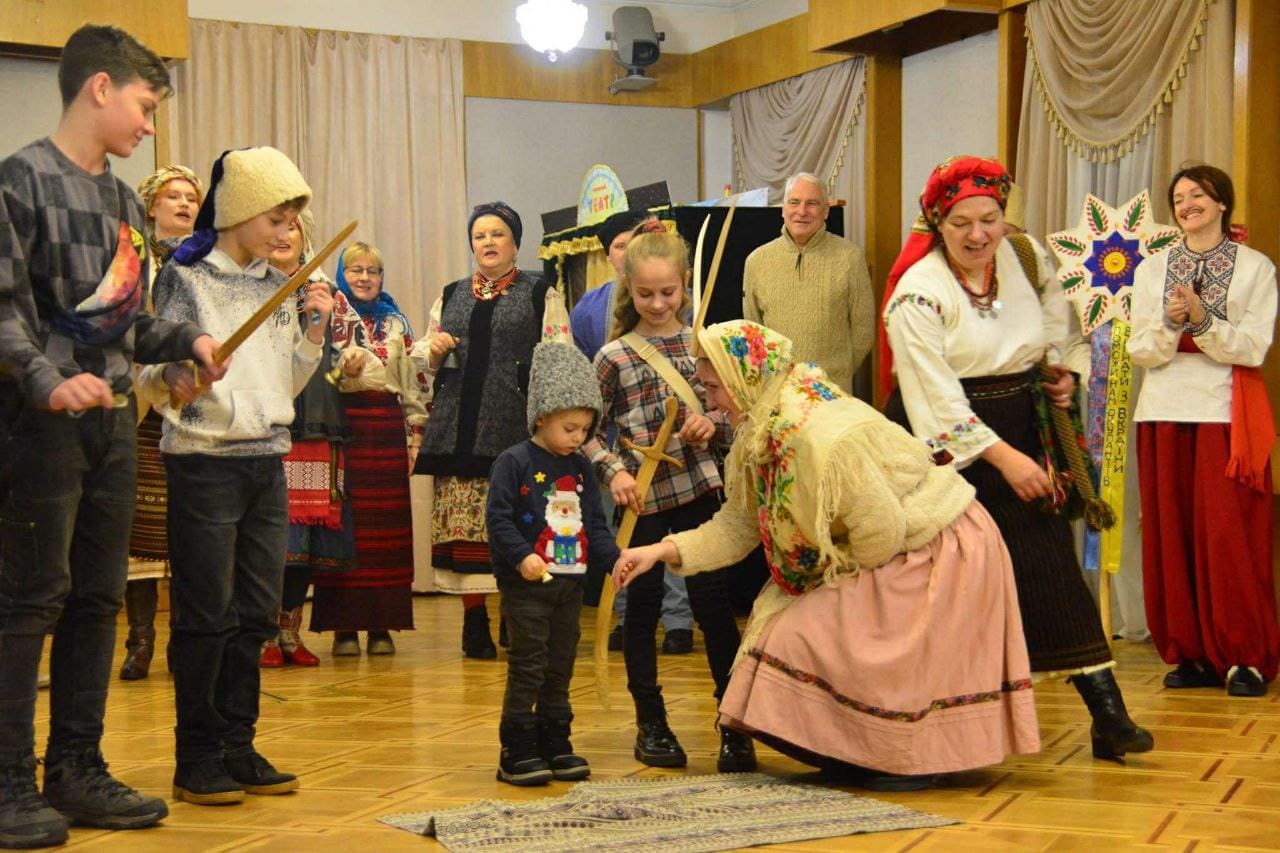
“To revive our goat in Kyiv Koliada, children sing or ring the bells to wake it up. And when the goat “comes alive,” I usually thank the kids for reviving it, shaking their hands and wishing the goat a happy birthday.”
Video: Kids bring Laima’s goat back to life
Still, she warns that most goats are not as lovely and kind as hers. Historically, on Shchedryi Vechir, the night when performances happen, the actors were considered messengers between the living and the dead. Symbolic gifts, like sweets or money, which the festive crowd gets for their performance, were offerings for the ancestors so that they protect them from any kind of evil.
“There are even some records that goat masks were made to look very scary, so children would cry when the goat entered the house,” Laima recalled.
To confuse the dead, the performers dress up and act in ways that contradict their usual behaviour. For instance, the goat wears her coat inside out, while other characters, Vasyl and Malanka, are represented by people of the opposite genders.
The goat, which Laima plays for Kyiv Koliada, differs from the others in one more respect. Traditionally, this character is played by a male actor, but her example reflects the broader picture of modern Ukrainian society, where women gradually take on masculine family and professional roles, as more and more men are getting conscripted to the army.
Apart from the goat, there are many other noteworthy characters in these festive plays. For instance, Did, accompanied by Baba (“an elderly woman” in Ukrainian), brings the goat with him and ‘kills’ it at some point in the story.
Malanka and Vasyl take their names after the saints celebrated on these days after Christianity spread in Ukraine, but the tradition itself originates from paganism. According to legend, Malanka, the goddess of spring, was stolen by an evil giant serpent and later rescued by the strongman Vasyl, who then married her. The story symbolizes the triumph of light over darkness and the belief that spring will ultimately prevail over winter. That is why young people traditionally ask for a successful marriage during the celebration, and why many symbols and rituals, like the goat itself, are dedicated to fertility, wealth and renewal.
Celebrating Shchedryi Vechir in the traditional sense was mainly preserved in remote villages. During Soviet times, it was under threat, as the USSR aimed to build a secular society. That’s why it made the New Year the central winter holiday, leaving traditional celebrations like Malanka and Vasyl out of the picture.
This Soviet policy affected Laima’s family, too. When Laima’s grandmother was young, she was ashamed of whatever made her look like a villager, an embarrassment she learned from Soviet propaganda. Authentic New Year’s traditions were never preserved in her family.
“Wearing traditional clothing and following other Christmas traditions was not the norm for her. She did not do it and did not like it,” Laima said.
Today, the tradition of Shchedryi Vechir is getting a new life in Ukraine, as people reclaim the lost parts of their national identity in the face of Russia. Even the original date of the celebration, the night of December 31, has been restored from January 13, which used to create a lot of confusion.
Modern-day performances change with Ukrainian society itself to reflect familiar problems and the latest trends. The Kyiv Koliada tries to make its plays fun and relatable amid the darkest days in Ukraine.
“Last year, we showed how a woman hit a drone with a jar of salted tomatoes and made Malanka clean her house with an electric broom…This year, we will show Trump’s 28-point plan for Ukraine and how Malanka will do her makeup with no electricity,” Laima said.
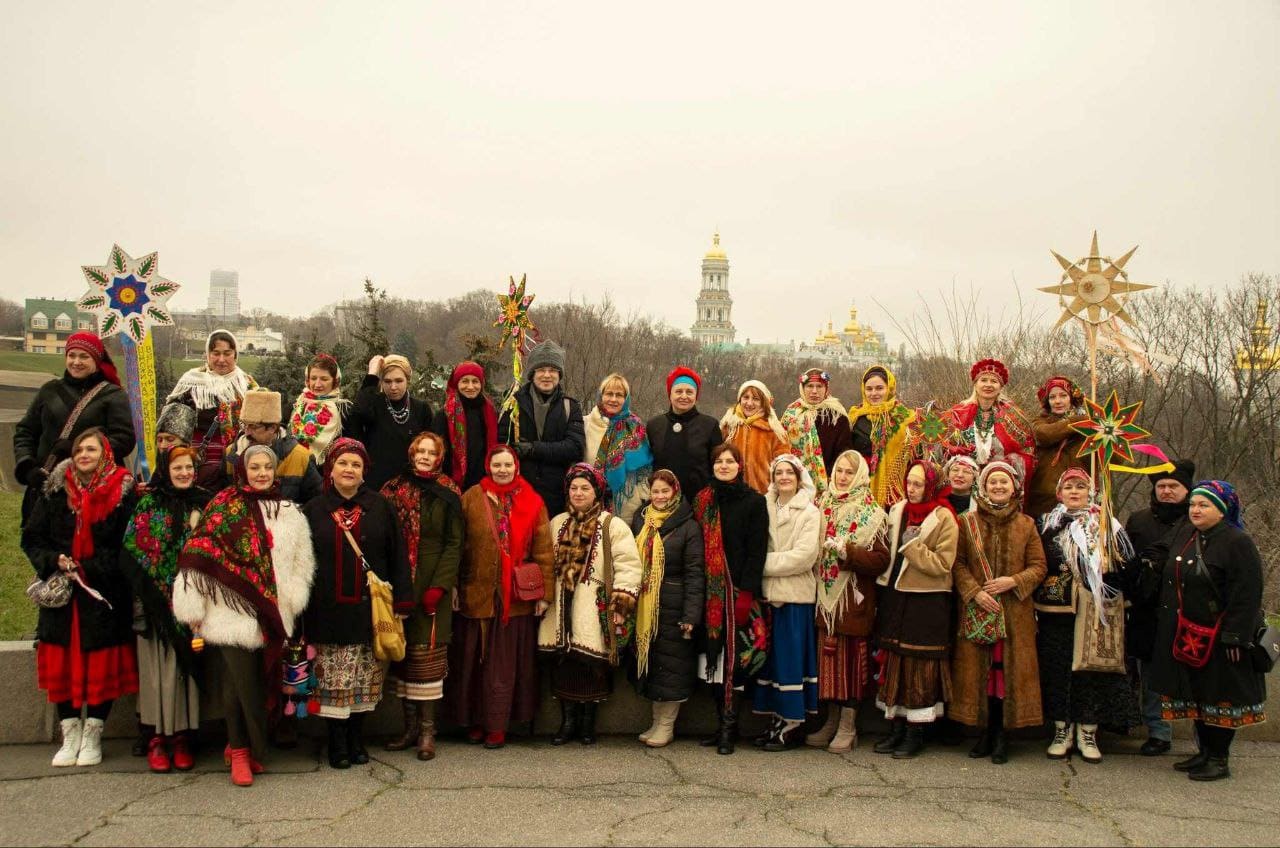
For the last three years, during the war, Koliada has been performing underground at the metro station to stay safe from the constant risk of drone and missile attacks.
To Laima’s great pleasure, no matter how distant and exhausted the passers-by might look, someone always stops to watch.
“Children really like to take pictures with us, especially costume characters. Even parents come up to me and ask for a photo. It’s very pleasant,” she explained. “I often catch myself thinking that if I ever have children, I would like to introduce them to all these traditions.”
Editor’s note:
D’oh! In a recent email, we included the wrong URL to upgrade to a paid subscription.
When we tried to fix it, the whole website crashed, preventing upgrades.
This is the peril of operating a small independent news organization!
Are you able to upgrade now? PLEASE consider clicking here.
NEWS OF THE DAY:
By Viktoria Kriukova, Oksana Stepura
Good morning to readers; Kyiv remains in Ukrainian hands.
ZELENSKYY REITERATED THAT UKRAINE CANNOT WITHDRAW FROM ITS TERRITORIES: He made the remarks after his meeting with Donald Trump in Florida, adding that a 20-point draft of the revised peace plan to end the war is now almost complete.
Zelenskyy described the meeting as productive and expressed hope that the war could be over in the next year.
He also underlined that while Ukraine and Russia hold opposing views on territorial issues, the United States understands the positions of both sides and “tries to find a compromise.”
BELARUS DEPLOYED RUSSIAN NUCLEAR-CAPABLE MISSILE SYSTEM: The hypersonic Oreshnik missiles could enhance Moscow’s ability to deliver missiles across Europe.
Belarusian President Alexander Lukashenko, an ally of Vladimir Putin’s, announced the deployment of the intermediate-range ballistic missiles on Belarusian territory earlier in December.
Several Western experts say that this deployment would make it slightly faster for Russian nuclear missiles to reach European targets.
Two U.S. researchers added that, according to their research of satellite images, Moscow is likely stationing the missiles and their mobile launchers at a former airbase in eastern Belarus.
SECURITY GUARANTEES INCLUDE U.S. MILITARY PRESENCE IN UKRAINE: For the first time since Russia’s full-scale invasion of Ukraine, the U.S. included the deployment of American troops in Ukraine in security guarantees.
Zelenskyy said that Trump assured these guarantees would be voted on in U.S. congress.
This is the first time that the U.S. has explicitly confirmed willingness to send American troops in the event of a peace deal.
KHARTIIA DRONES BRING CHRISTMAS JOY TO FRONTLINE SOLDIERS: Even while spending Christmas on the frontlines, soldiers of Ukraine’s Khartiia brigade strive to find small moments of joy. One drone crew came up with a creative way to lift spirits — using Vampire drones to deliver surprise gifts to their fellow soldiers.
The parcels arrive tightly wrapped in layers of tape, turning the slow unwrapping into a moment of playful banter. Inside, they found simple comforts: bread, tea, candy and even Stollen cakes. The soldiers were particularly delighted by the cakes and eager to share them around.
The drone crew delivered something far more special than supplies — a genuine Christmas moment for their brothers in arms.
DOG OF WAR:
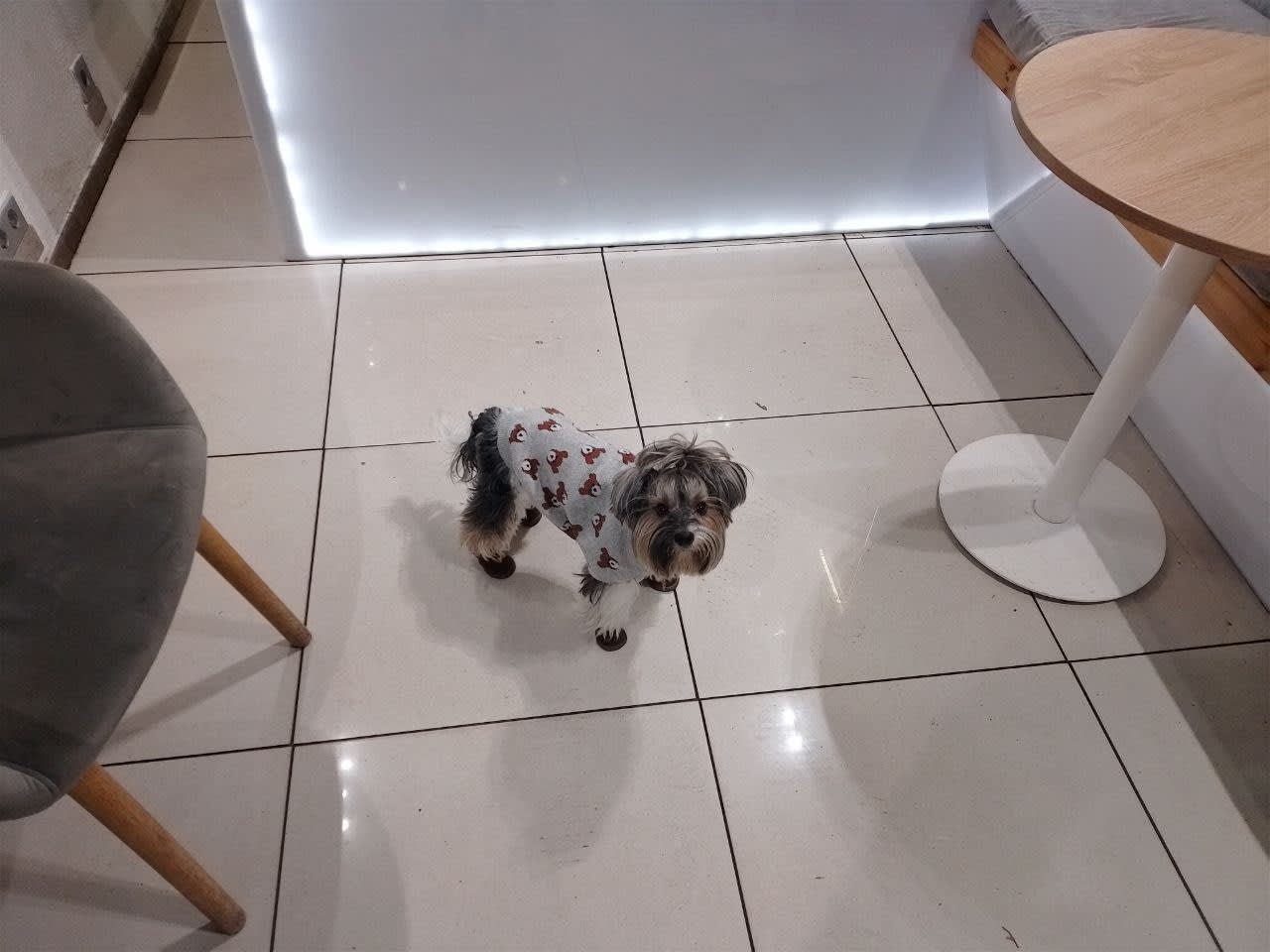
Viktoriia met this dog near the coffee shop a week ago. This little puppy was waiting for her owner when he was having a coffee. Then she joined him and jumped onto his legs.
Stay safe out there.
Best,
Oleksandra