
Editor’s note:
Our team is struggling to adapt to plunging temperatures without heat or power.
Your subscription goes in part to supporting all the reporters at The Counteroffensive, who we’ve provided with batteries, hot water bottles and blankets.
Recognize our team’s courage: upgrade to a paid subscription today!

I don’t know what I hated the most this week.
The stinging cold on my hands as I retrieved my third blanket from the post office, waking up to biting air inside my own home, or nearly vomiting in a cafe after hours of breathing in gasoline fumes from a generator.
I offer myself a bitter smile — was this what you wanted all along?
I always found calm in the cold.
There was something mesmerizing about it, as if nature were reclaiming the authority we had only borrowed.
I found calm in the cold. Until now.
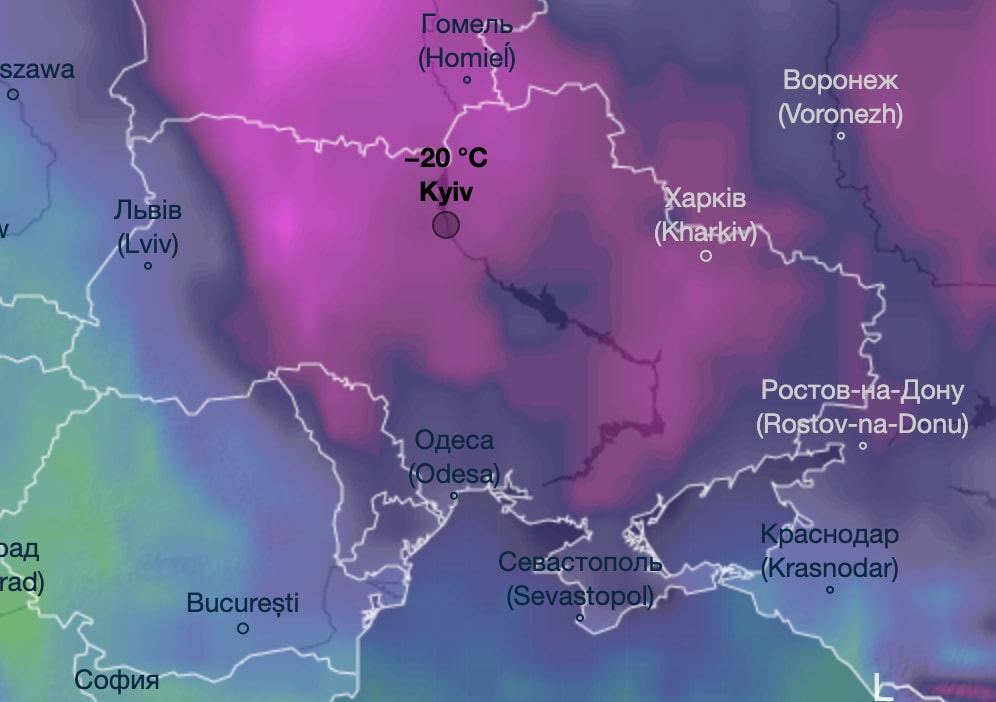
It began last week, when Russia once again struck Kyiv’s entire energy system, plunging the city into its deepest darkness since the start of the war.
Ukraine plans to declare a state of emergency in the energy sector and review curfew rules so that people have greater access to points of invincibility, places where people can have access to the internet, heat and electricity, Zelenskyy announced just yesterday.
Residential buildings are now left without electricity for more than 20 consecutive hours, broken only by brief nighttime power intervals. Public transport is repeatedly disrupted, and indoor temperatures are reaching between 5 and 10 degrees Celsius. All of this unfolded as an Arctic air mass stalled over Ukraine and much of Eastern Europe, bringing the coldest winter in several years.
Russia has weaponized the cold as a tool of terror against civilians, reinforcing what this war has shown repeatedly: its primary target is not territory or military positions, but civilian life itself. A large-scale humanitarian crisis is now unfolding in the heart of Europe, met with a muted global response that exposes the inability of international systems to prevent catastrophe.
Winters in Ukraine, as I remember them, were always cold until recently. During my school years, that cold felt like a happy time, when we trudged through knee-deep snow to a hill to slide down on plastic sleds…
Paid subscribers get access to the full reporter’s notebook. After the paywall:
How Mariana saw icebergs but was not prepared that ski pants would save her in Ukraine;
Why frost makes it difficult to stabilize the energy catastrophe in Kyiv;
How does Mariana survive in the cold.