

Editor’s Note:
This is our monthly supplemental issue on Taiwan!
We believe that empathy and authoritarianism can’t mix – that when we tell deeply-reported human stories of people threatened by dictators, it compels people to act against injustice.
Agree with us? Upgrade now to support our work.
A little Chinese boy watched Taiwanese shows every night before he went to sleep.
They speak the same language as he does, but it is a different world — freer, more diverse. It was a world he craved.
“As a minority growing up in China, this is the real Chinese culture I dream about,” said Light, a Chinese man who married his Taiwanese partner Eason in 2025.
The couple has been married for less than a year and describes their relationship as love at first sight. But Eason now faces the risk of being forced out of Taiwan, this safety haven, as tensions between his homeland and the island steadily escalate.
Taiwan legalized same-sex marriage in 2019, making it the first Asian country to do so. Compared to other cross-national couples, Taiwan, with less of a language barrier, attracted more same-sex couples from China, who may have felt more repressed in their home country.
Some dreamed of staying in Taiwan permanently, but now face challenges as the Taiwanese government weighs national security concerns, fearing that Beijing is sending undercover agents to the island.
Those anxieties hardened into policy after a series of incidents involving couples like Light and Eason. In 2025, three Chinese migrants living in Taiwan, all married to Taiwanese men, publicly supported the Chinese government using force to reunify the island, prompting Taiwanese authorities to take hard actions against them. The Taiwanese government accused them of violating immigration law and deported them.
Many Taiwanese people praised the government’s action, but some questioned if it was a violation of freedom of speech. The public discussion became intense, creating strong resentment in society, especially towards Chinese migrants. If Taiwan limits access for the Chinese minorities coming in, they could risk losing one of the most critical safe spaces in the Chinese-speaking world.
This is a delicate line that democratic countries must walk — balancing human rights obligations and national security.
In December 2024, Light met Eason on Tinder and sparks immediately flew, but they could only see each other once a month. In 2019, the Chinese government severely limited permission for its citizens to go to Taiwan, even though more than 2 million tourists were coming to the island in the years prior. It forced Eason to fly to China periodically to see his partner.
Due to the unique cross-strait relations, the Taiwanese government doesn’t allow Chinese citizens to apply for a work visa, but allows them to stay for a short term, such as for travel and study.
The long distance was unbearable to Light. “I want to be with my partner all the time, and take care of each other,” Light said.
Moving to Taiwan felt like a win-win for Light, particularly as he grew increasingly disillusioned with what he described as China’s male-dominated society and limited social diversity. The Chinese government has been accused of suppressing LGBTQ+ related rights, at one point banning them from raising rainbow flags on campuses, among other restrictions.
“Most people in China are very conservative about this topic,” explained Light. “Especially if you’re working for the government, you wouldn’t want to express your identity.”
Within a few months, Light and Eason decided to get married.
Light considered himself a lucky person growing up. His mother was more open-minded than most Chinese families were.
“I need my mom to sign our marriage legal document. She saw the picture of us and joked, ‘Your wife looks like a man, “ Light said. “She knew it already.”
In the art performance industry, he had always worked alongside some of the most diverse people in China; he could live comfortably with his identity and know who to trust.
“Check if the person uses an iPhone or a Huawei. If the person uses an American phone, it tells you something,” said Light, referring to how he identifies open-minded strangers.
Many Chinese minorities have already had to go through a thorny path before settling down in Taiwan. The Cross-Strait Act requires Chinese citizens to provide a marriage certificate in China before getting married in Taiwan, but Chinese law does not recognize same-sex marriage, which makes this nearly impossible.
After civil rights groups and same-sex couples filed lawsuits against the Taiwanese government, it finally opened a path to allow cross-strait same-sex couples to stay in Taiwan by recognizing their marriage approval in a third country.
It’s a hassle, and an expensive process. Light and Eason had to travel to Thailand, where same-sex marriage is legal, before moving together to Taiwan. It cost them thousands of dollars and took five months for Light to get his Taiwanese residency approved.
Taiwan’s embrace of diversity came through painful lessons. In 2000, a 15-year-old Taiwanese boy, Yeh Yung-Chih, was bullied to death in the school bathroom after being ostracized for his supposedly feminine characteristics.
Eighteen years after his death, Taiwanese pop star Jolin Tsai memorialized his tragedy in the song ‘Womxnly,’ transforming this story into a cultural reckoning over gender, sexuality and acceptance.
“Who put this soul into the wrong body?”
“Who made this body a jail for me?”
“What kind of beauty attracts jealousy?”
“You’re not guilty, but the world is.”
It is one of Light’s favorite songs, and also went on to resonate quietly with listeners in mainland China. It hit the top 20 on KKbox (a Chinese version of Spotify) and won the Golden Melody Award for Song of the Year in 2019. The song became a beacon of hope for the LGBTQ Chinese-speaking community in Asia.
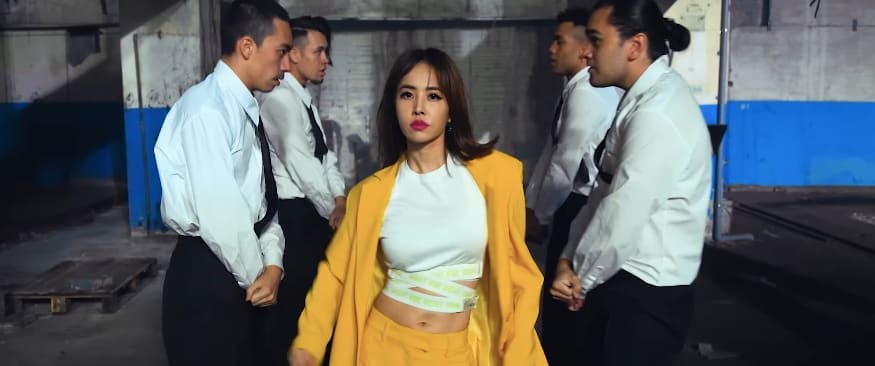
Taiwanese pop culture has had a huge impact on Chinese-speaking communities in Malaysia, Indonesia, the Philippines, and China since the 90s. It often served as a cultural pioneer for audiences navigating relatively conservative societies.
In the 2000s, male Chinese pop stars who might be considered more traditionally effeminate gained popularity in the mainstream market. However, that ended up clashing with the values of the Chinese government.
In 2021, the Chinese Communist Party (CCP) announced a national policy asking all media, entertainment business associations and gaming platforms to end what they called “sissy men” culture.
Light felt he could easily become the Chinese government’s target.
“I’m not good at hiding my identity,” Light said. He is a straightforward person who would prefer his friends accept and know the truest version of him.
The party wanted to revive masculinity and promote the image of powerful Chinese culture. It denounced Western culture infiltrating the minds of Chinese men with men wearing makeup and androgynous clothing.
Many minorities in China watched silently as their safe spaces vanished. In the same year, multiple feminist and LGBTQ-friendly clubs, forums, and online accounts were removed on WeChat, the most popular social platform in China.
In 2025, the two biggest same-sex dating Chinese apps, Blued and Finka, were quietly removed from both Apple and Android app stores. People were forced to use secret codes to post about their identities online.
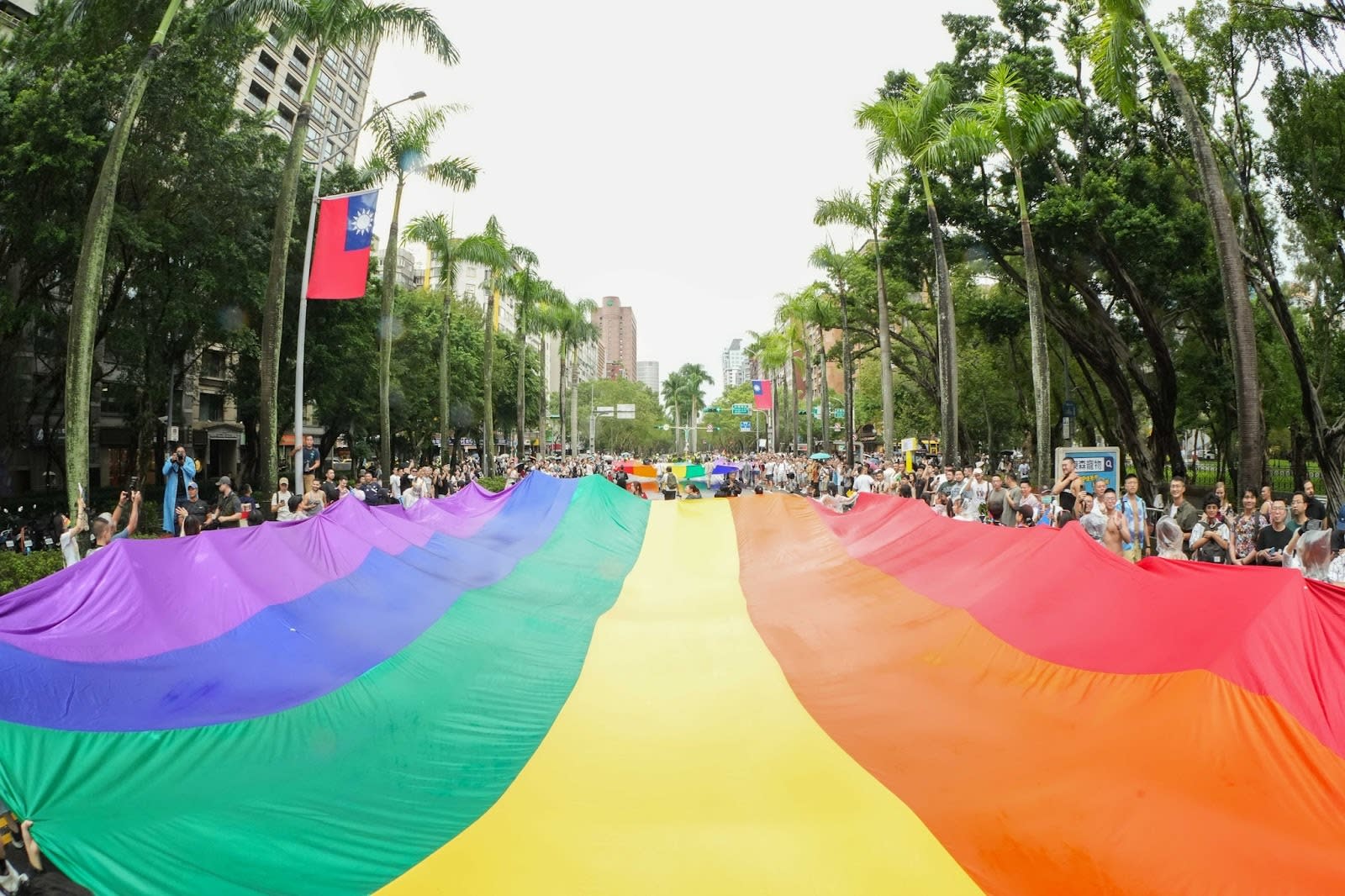
Though Light finally could legally stay in Taiwan, the tension between China and Taiwan continued to rise, and he faced another challenge: being judged not for his identity, but for his place of origin.
Light experienced this deep-rooted suspicion firsthand.
“One time, I sent a post to a few Taiwanese friends. It was about the Chinese government’s new policy to benefit Taiwanese tourists,” said Light. The purpose of the policy is to attract more Taiwanese bonding with China, making his Taiwanese friends suspicious of his motive.
One replied, “I would never never never go to China in my life.” Later, they blocked Light.
Last March, Ya-ya, who supported the CCP using force to reunify Taiwan, was the first Chinese migrant deported by the Taiwanese government. The hostility towards the Chinese migrants in Taiwan reached a peak. Crowds went to the airport to send Ya-ya off and praise the action of their government.
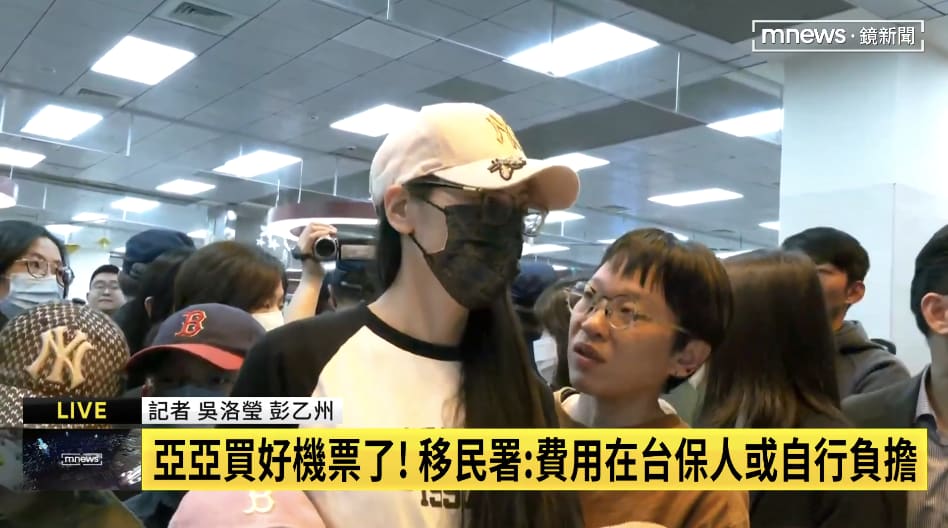
The negative impression of Chinese migrants in Taiwan could lead some people to suspect that Light is a Chinese spy.
To Light, his marriage was worth the risk of fleeing China. “I don’t agree with what those Chinese migrants say or do, and I think I need to respect the country if I want to stay here,” said Light.
But, of course, doubt can creep in. “As a Chinese migrant, I’m not sure if the Taiwanese people would recognize me as part of their society.”
Editor’s Note:
This is our monthly supplemental issue on Taiwan!
We believe that empathy and authoritarianism can’t mix – that when we tell deeply-reported human stories of people threatened by dictators, it compels people to act against injustice.
Agree with us? Upgrade now to support our work.
NEWS OF THE DAY:
By Anastasiia Kryvoruchenko
Good morning to readers; Kyiv remains in Ukrainian hands.
EU GAS RESERVE AT THEIR LOWEST: Despite the fact that gas levels in Europe’s gas storage system have fallen to their lowest point since 2022, gas prices are not responding to the shortage, Reuters reported.
Current storage levels stand at 44%, and if current trends continue, they could fall to 30% by March. This would mean that around 60 billion cubic meters of gas would need to be added to match the gas levels before last winter.
Europe is set to phase out Russian gas completely by next year, meaning that keeping these reserves filled will be even more problematic. Europe is increasingly relying on liquefied natural gas (LNG) to replenish its underground gas storage.
TAIWANESE DEFENSE TRAINING FOR CHINESE ATTACK: Taiwan’s military conducted drills in preparation for a potential Chinese attack, using missiles, drones, and coastal patrol boats. Taiwan regularly holds exercises ahead of the Lunar New Year, but this was the first time such drills were opened to the media since last December when China intimidated the island with military drills, Reuters reported.
During the drills, Taiwan simulated a scenario where an unidentified boat was detected and the military dispatched drones to conduct reconnaissance.
LUKOIL SEEKS TO SELL FOREIGN ASSETS TO THE U.S.: Russia’s second-largest oil producer, Lukoil—which accounts for 2% of global oil production—has agreed to sell most of its foreign assets to the U.S. investment company Carlyle. The deal still requires approval from the U.S. Treasury Department, Kyiv Independent reported.
In October last year, the U.S. imposed sanctions on the company, froze its assets, and threatened additional sanctions on firms cooperating with Lukoil, aiming to pressure Russia into peace negotiations with Ukraine.
CAT OF CONFLICT:
Today’s Cat of Conflict is Frosia, Nastia’s parents’ cat. In her youth she was feisty, but her old age has softened her and now she is really affectionate and purrs every time you pet her.

Stay safe out there.
Best,
Elaine