

Featured subscriber comment:
“I believe in the importance of on-the-ground reporting, bringing home to us who are far away the reality of what things are like in Ukraine.”
By Caitriana NicNeacail
Upgrade now to support our work and get full access to all our writing.
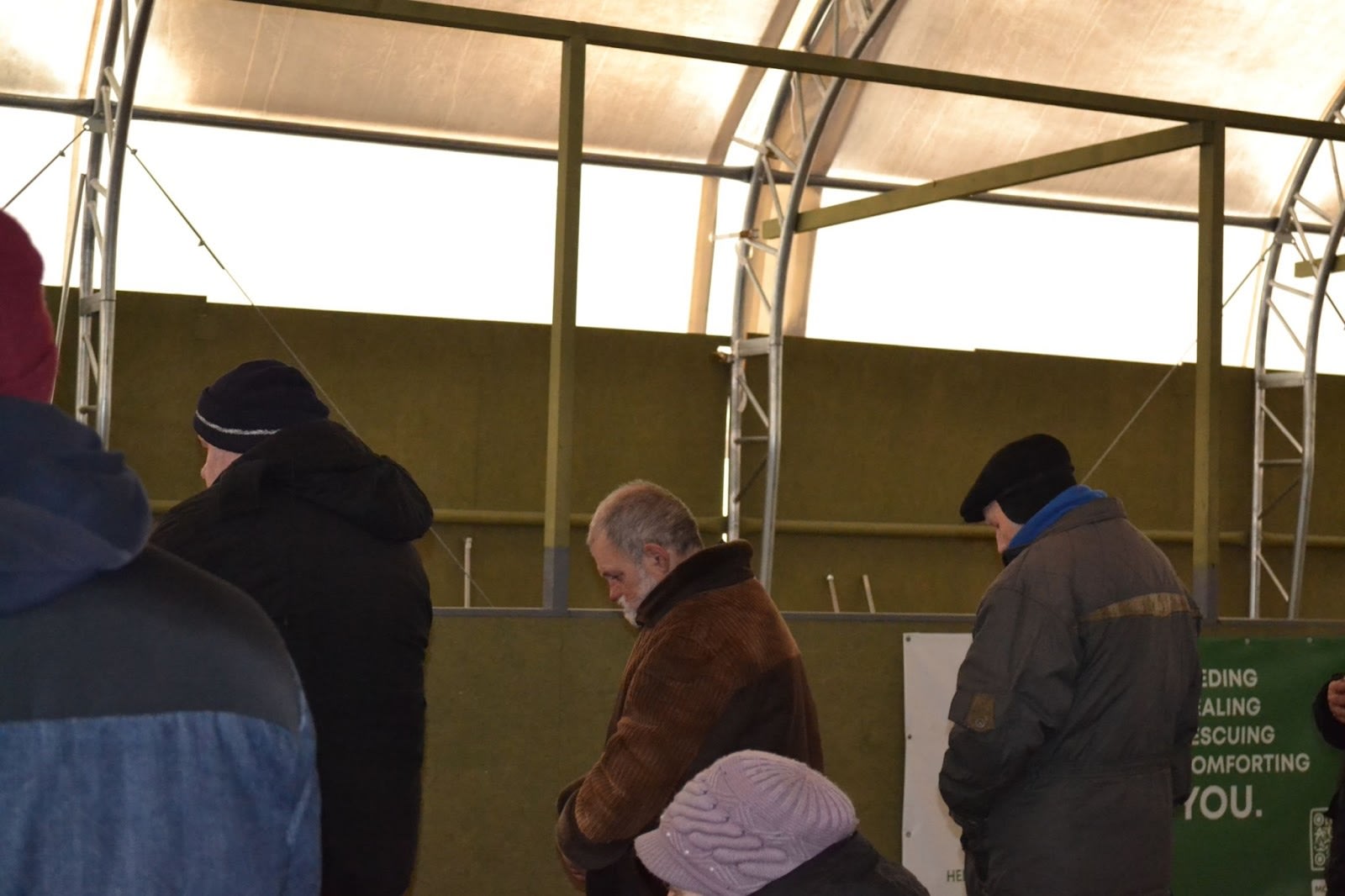
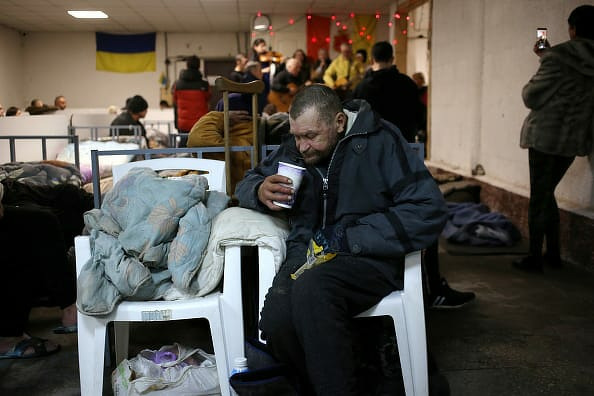
Standing in line for free lunches from a Christian charity organization, the cold bites relentlessly at fingers and faces. Windburn sucks the moisture from the skin of people waiting, leaving their hands chapped and raw.
Ivan* is 37; by the look of it, he is one of the youngest and most active people here.
A quick gait, charismatic demeanor, and questions for the volunteers set him apart from the others. While still in line, he chats cheerfully with the elderly women who also came here for lunch.
The last time he was at home in Crimea was in 2011.
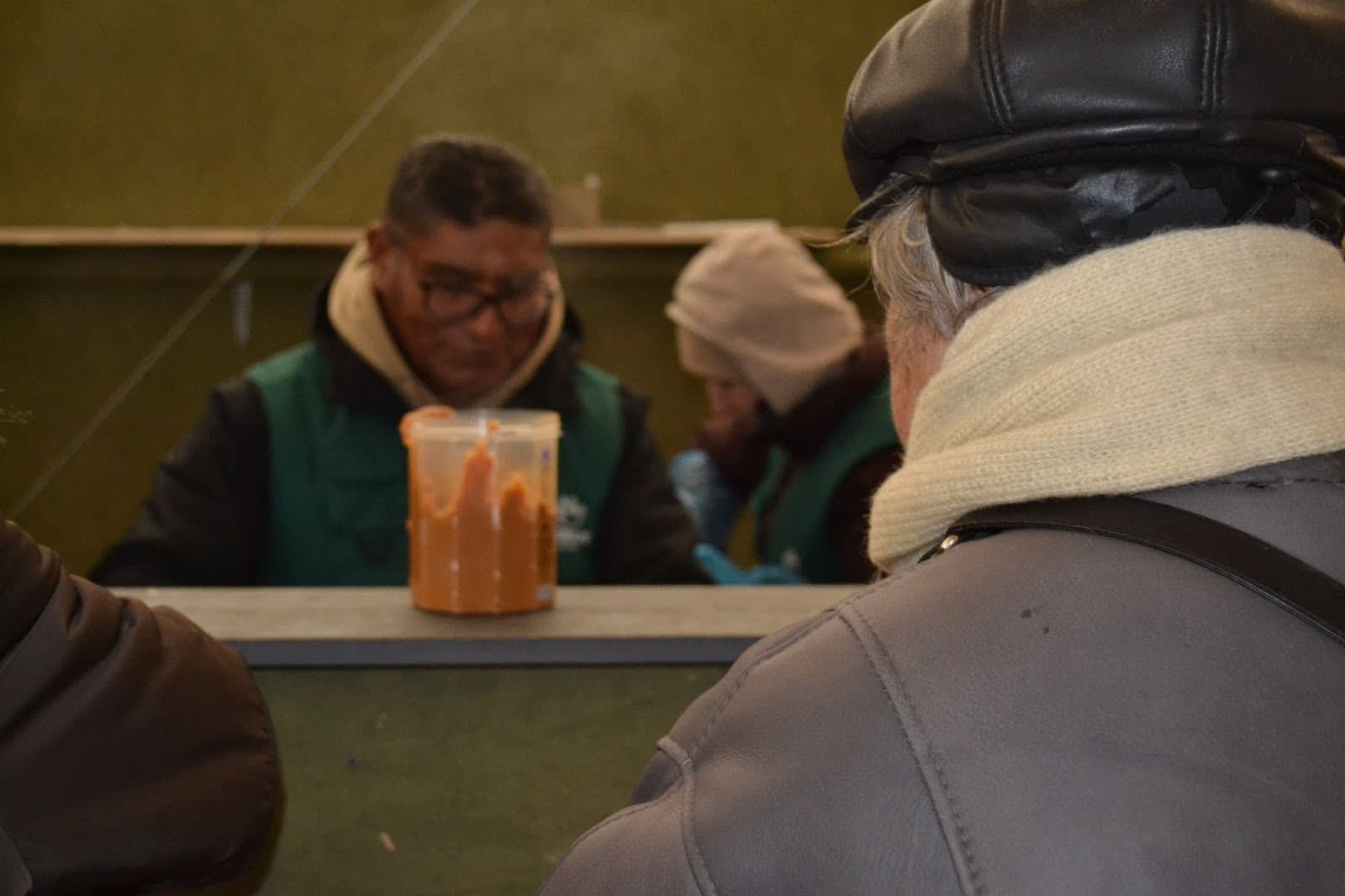
Today mashed potatoes, chicken nuggets, and salad are on the menu. After a prayer over the meal, people line up for food, served by Spanish and Peruvian volunteers who came to Ukraine to help.
“I haven’t eaten for almost two days,” Ivan says after the tasty meal. We had asked him for the secret to his good mood.
As Russia weaponizes the winter by targeting Ukraine’s energy and heating infrastructure, people already living on the margins are being pushed beyond survival. While about 600,000 Kyiv residents have been able to leave the capital, homeless people have few ways to escape freezing temperatures, which this weekend could reach -22°C / -7.6°F.
There’s no precise data on the number of homeless people, but according to Depaul Ukraine, an organization that supports homeless people, the population was around 150,000-200,000 in Ukraine even before the full-scale invasion. Since the invasion began, the number of shelter applicants has tripled.
Deliberate attacks on civilian systems can fracture an entire city and the most vulnerable are often the first to pay the price. For people without shelter in Ukraine, the loss of heat in shelters and stores turns an already dangerous winter into a life-threatening one.
The war extends beyond the battlefields, affecting vulnerable people far from the frontline, making their lives even harder – widening the gap between social classes to a huge chasm.
Ivan left Crimea after committing a crime and being transferred to a hospital in the Dnipro region, and for the next six years, he could hardly recognize himself: drugs, alcohol, crime, prison, hospitals. Homelessness.
For a while, after he got sober, he lived with a friend in the Zhytomyr region, but it didn’t work out. The friend got into drugs while Ivan strove to stay sober, which led to a falling out. Ivan spent the summer in Zhytomyr, sleeping at the bus station and taking any job he could get.
“I had friends whose interest was addiction. And so, when I got rid of it, then the friends left,” Ivan shared.
Ivan has been in relative sobriety for 10 years now. He quit smoking entirely. He drinks occasionally, but just a little, he said.
“I’m almost 40, but I can do 70 push-ups on a bet, if needed. And if I smoked, for example, I wouldn’t be able to do so many push-ups. It motivates me,” Ivan said.
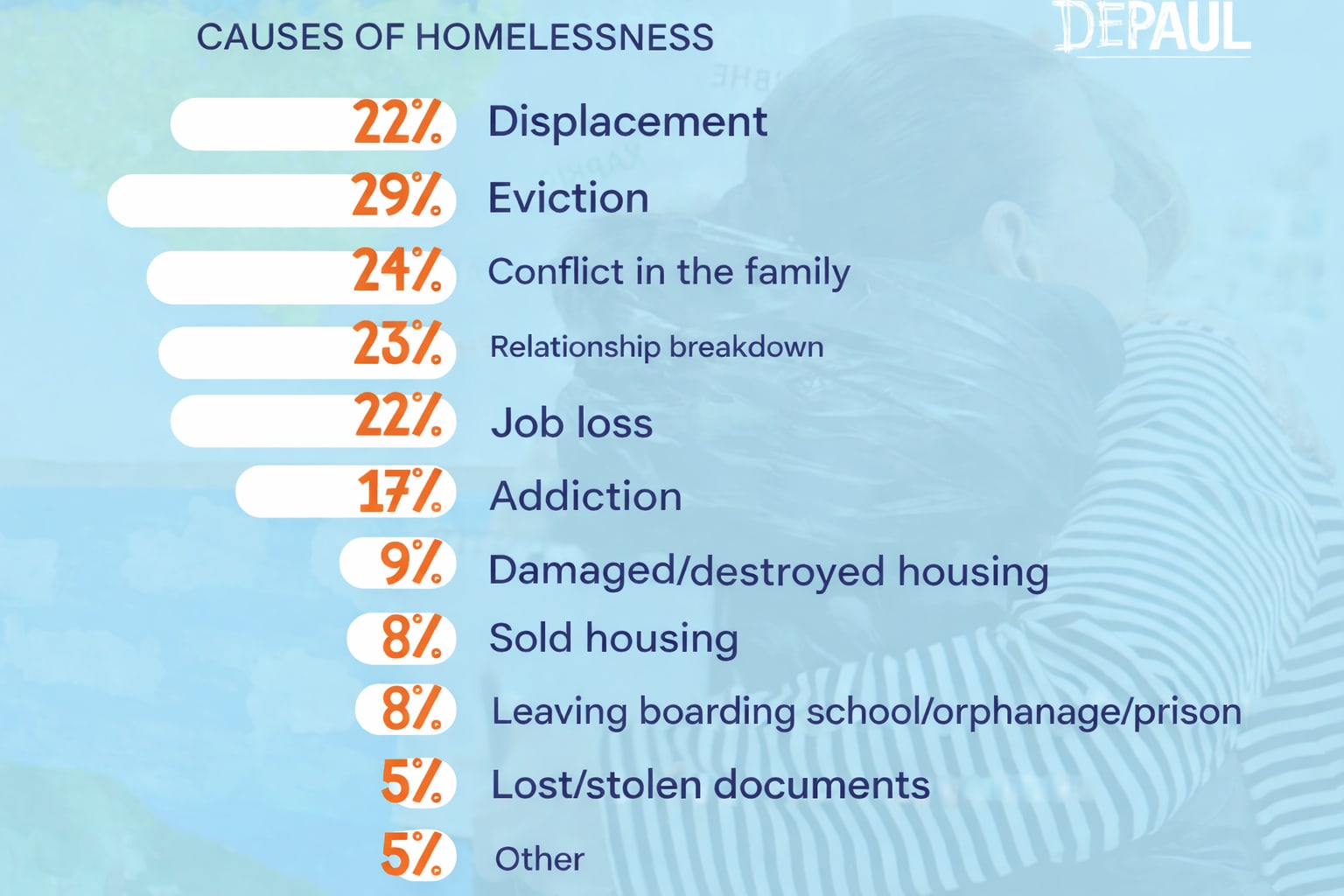
The Russian invasion highly exacerbated the homelessness problem in Ukraine, according to a study by Depaul Ukraine.
Those who were forced to leave their homes because of occupation or their home being located near the frontline account for almost a quarter of the homeless population, making them particularly vulnerable to homelessness.
“I have no experience of a good family life,” said Valentyna*, who was in the same lunch line as Ivan, and who has also been living on the street for many years.
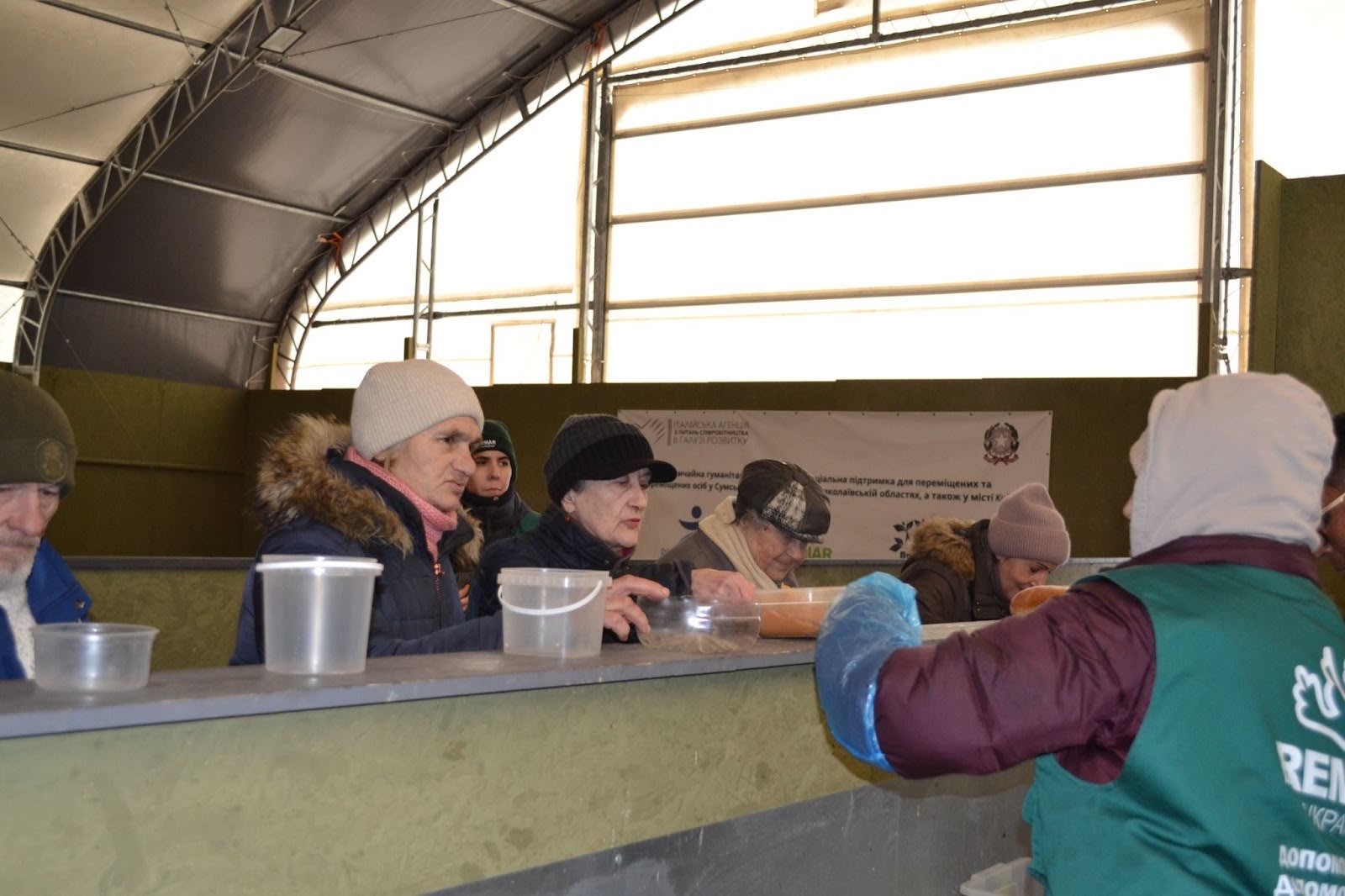
During these cold times, she usually warms up at railway stations, which are way warmer than sleeping outside.
Valentyna once worked on the railway herself, on the ‘Ural’ electronic computing machine, an ancestor of the modern computer. Once she finished college, she left Ukraine to live in Northern Russia for 18 years. However, when she decided to take her family back to Ukraine, the economic crisis in Ukraine shattered her life.
“There was no work for me. I worked a little here and there. There were some savings, enough to last two years,” Valentina said, explaining the economic situation when she was back home.
The savings she had earned in Russia were gone, and she could no longer provide for herself and her sons.
“Then my ex-husband came and took [our sons] back [to Russia]. And of course, I didn’t go with him. I didn’t get divorced to start all that mess again,” Valentyna said.
That is how Valentina ended up on the street. She has not spoken with her sons since the start of the war. Set against the tragedy of her family, blackouts feel insignificant to her.
The full-scale invasion has also deepened economic instability for Ukrainians. Many businesses shut down or relocated, followed by widespread job losses.
At the same time, the destruction of housing, rising inflation, and growing demand for rentals have pushed the cost of rent and utilities significantly higher, making housing increasingly difficult to afford.
This problem becomes especially acute in winter, when cold exposure can lead to severe injury or death. During the winter of 2025-2026, more than a thousand people across Ukraine sought emergency medical care for frostbite and hypothermia, according to the Ministry of Health.
Ivan found refuge this autumn at a rehabilitation center run by religious organizations in Fastiv, a small town in the Kyiv region. The organization provides people with drug and alcohol addictions with housing and food. Ivan said he also helped out at the church.
“I have a pass that allows me to ride electric trains for free. You can warm up there, you know,” Ivan said. He added that after leaving the rehabilitation center, he traveled across different regions by commuter train for a few days.
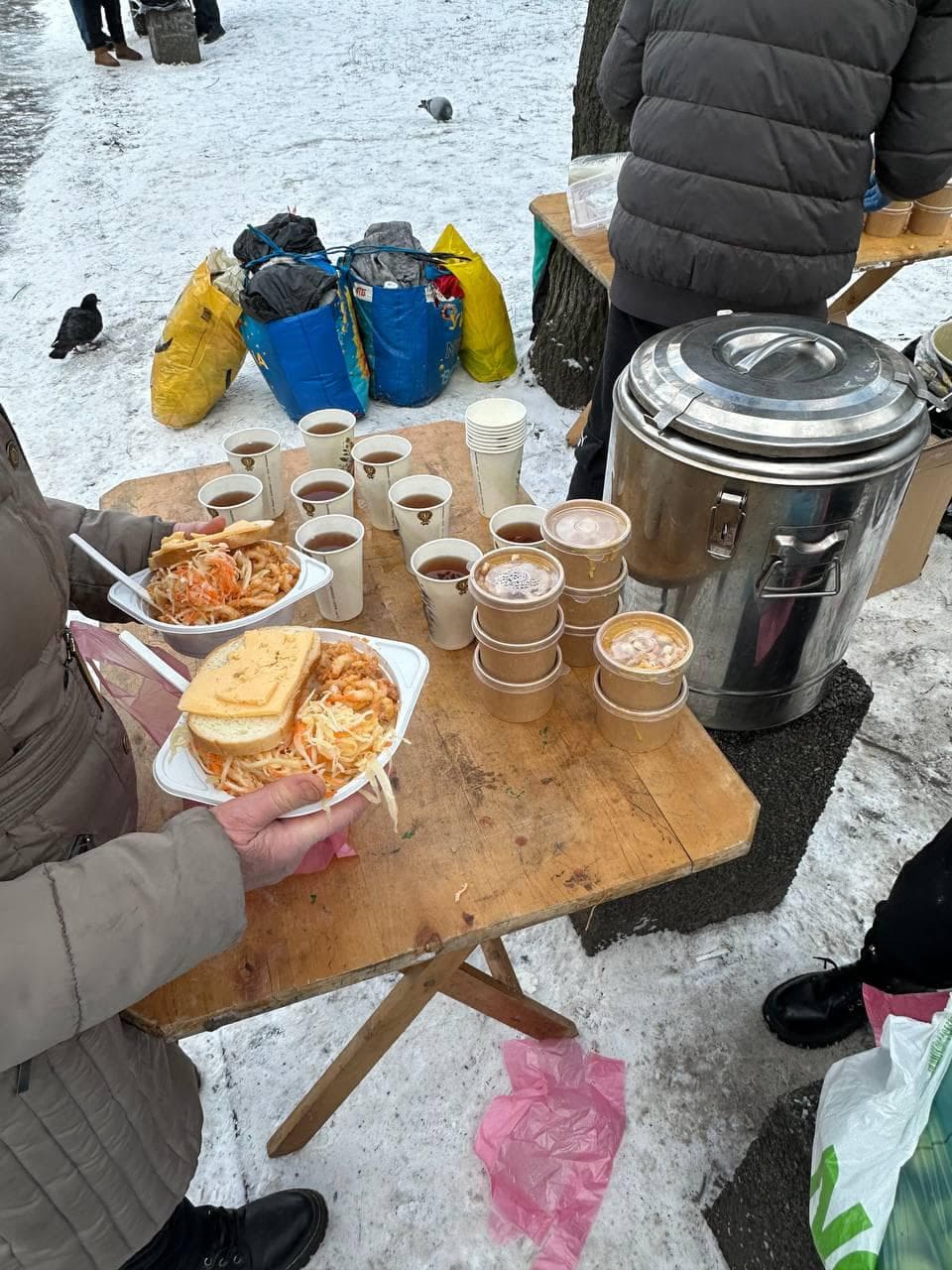
Many night shelters refuse to admit people with addiction issues, making recovery even harder. Depaul’s study points to the need for closer collaboration between shelters and rehabilitation centers to ensure people can be redirected to appropriate treatment.
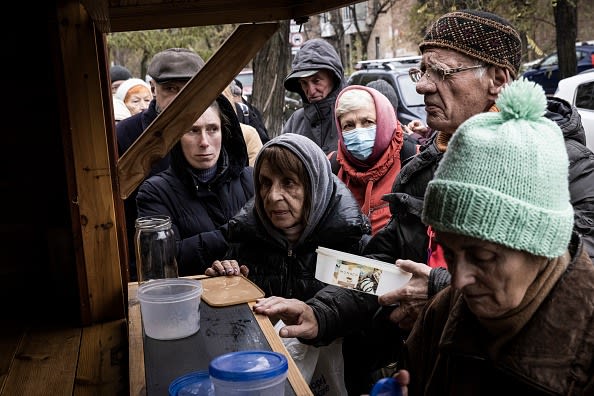
Recently, Ivan learned that his mother died in Crimea. He has no family left. But every time life gets very hard for him, he thinks of the soldiers, for whom it is even harder.
Despite the freezing cold temperatures and the excessive power and heat blackouts, Ivan wants to stay in Kyiv.
A big city means more opportunities, more work. He plans to apply for an Internally Displaced Person (IDP) certificate and receive state benefits, which would allow him to rent affordable housing and start working.
Ivan also wants to see the famous Motherland Monument because he had never been to the capital before.
“When I arrived here, I had 3% on my phone, I had no charger, things, nothing. And I didn’t know where I was at all,” he said. “But now I have a full battery charge, I’ve eaten, I have a few things, even construction gloves if I need to work as a loader.”
Ivan pulled a pair of nice blue gloves out of his backpack to show us.
“They are clean, I washed them,” he said.
*We haven’t given the full names for our characters due to their vulnerable position.
Featured subscriber comment:
“I believe in the importance of on-the-ground reporting, bringing home to us who are far away the reality of what things are like in Ukraine.”
By Caitriana NicNeacail
Upgrade now to support our work and get full access to all our writing.
NEWS OF THE DAY:
By Oksana Stepura
Good morning to readers; Kyiv remains in Ukrainian hands.
UKRAINE AND NATO OUTLINE COOPERATION PRIORITIES: Ukraine and NATO have agreed to collaborate on strengthening air defense systems including the use of Patriot, F16, and HIMARS systems, the Ukrainian Ministry of Defense announced.
This partnership comes as EU and NATO increasingly rely on Ukraine to provide unique insight from their experience of nearly 5 years of full-scale war with Russia as they scale up their military production and preparation.
SPACEX BLOCK STARLINK USAGE FOR RUSSIAN MILITARY: At the request of the Ukrainian Ministry of Defense, Elon Musk’s SpaceX has taken steps to block Russian forces from using Starlink. The measures are temporary but will be replaced by more permanent measures later on, an advisor to the new Ukrainian Defense Minister said.
Starlinks allow the Russian military to improve drone target accuracy and to avoid Ukraine’s electronic warfare.
RUSSIA STRIKES MATERNITY HOSPITAL: Russia attacked a maternity hospital in Zaporizhzhia on February 1, injuring at least six – two of whom were patients.
Russia has repeatedly attacked maternity hospitals – in the first year of the war Russia attacked a different maternity ward in the same region and killed a newborn. Estimates from mid-2025 already put the number of damaged or destroyed hospitals by Russia at over 1000.
CAT OF CONFLICT:
Oksana’s Mary used to resist the attempts to cover her with a blanket, but since Russian attacks on Ukrainian infrastructure took out the heating in her apartment, Mary started to actually enjoy blankets.
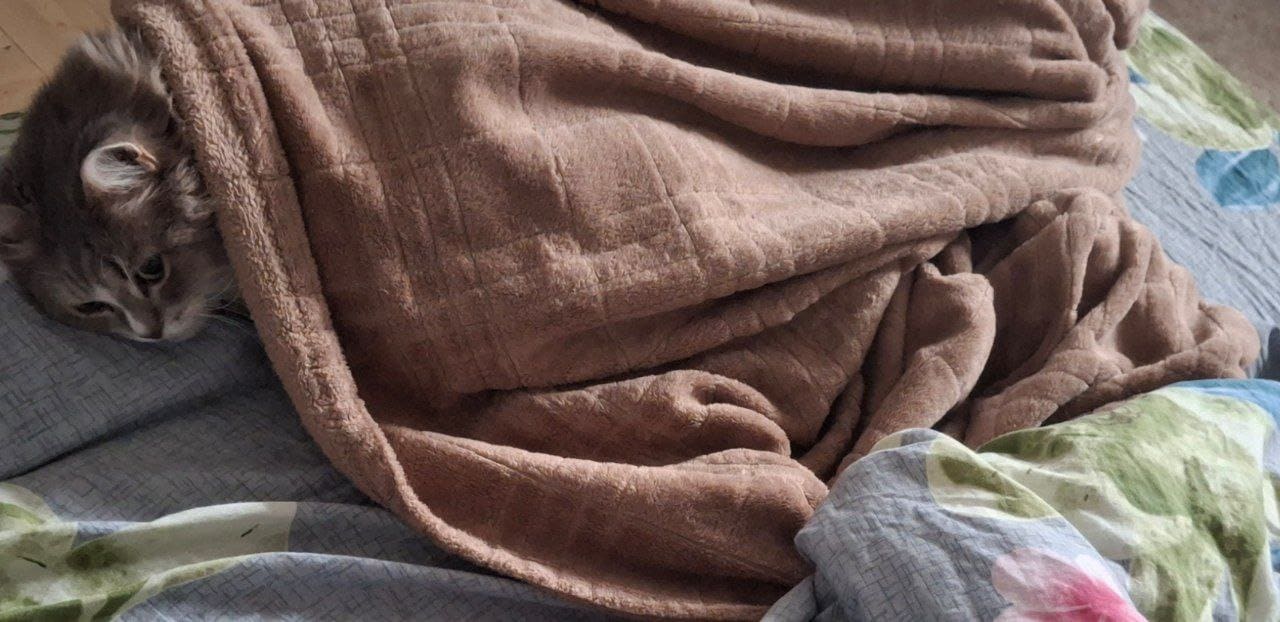
Stay safe out there.
Best,
Tania and Oksana