

Featured subscriber comment:
“Thank you for the excellent job you all do providing us with a glimpse of real life beyond the headlines. I hope more people reading this will appreciate the importance of becoming paying subscribers to support your work.”
By Matthew Fawcett
Upgrade now to support our work and get full access to all our writing!
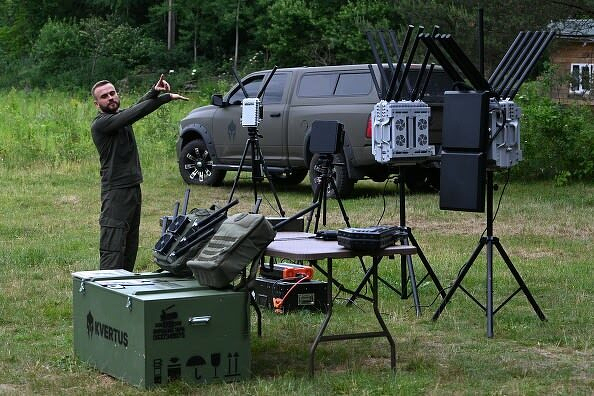
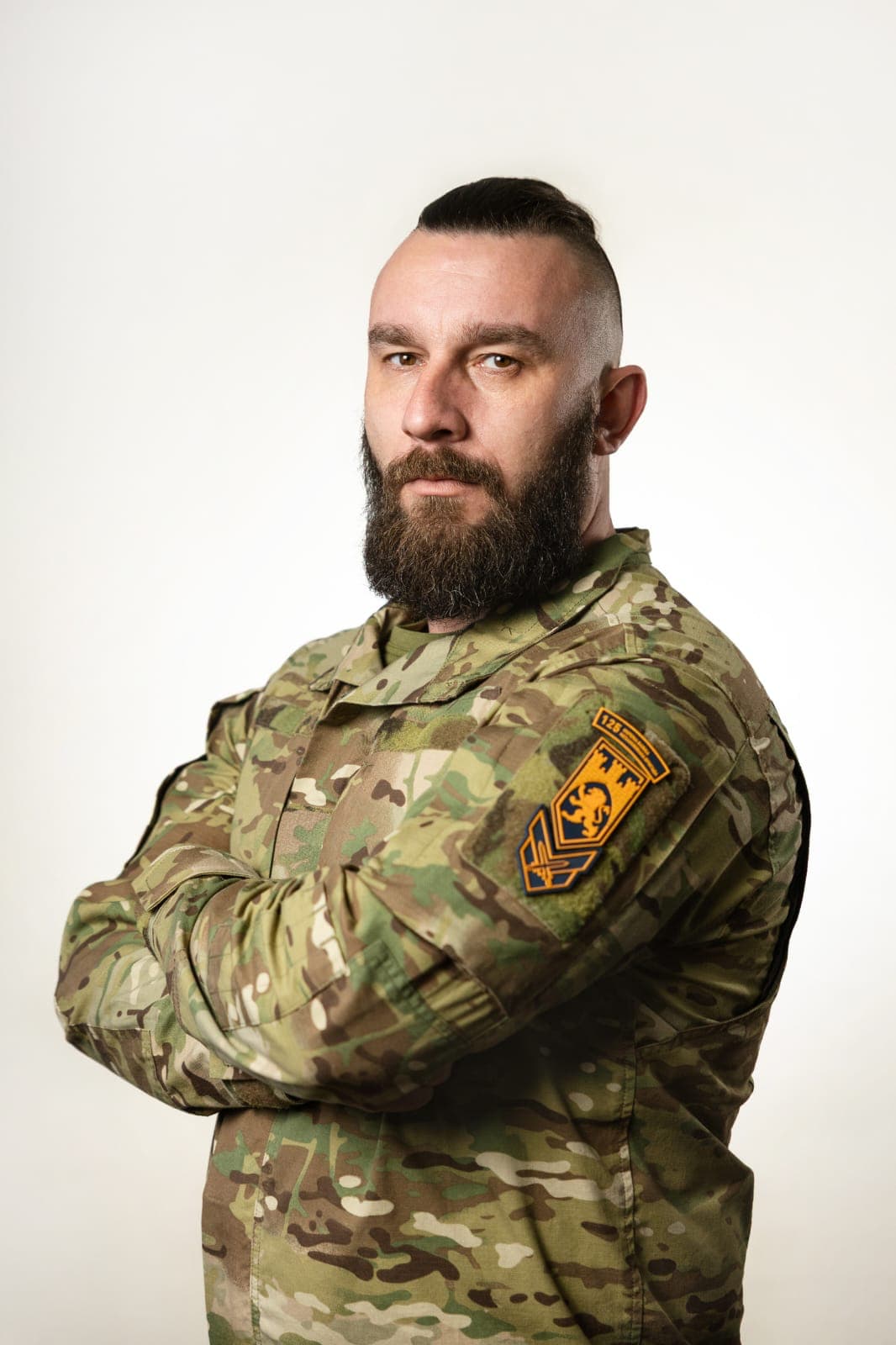
“Humans constantly try to find ways to kill their own kind more efficiently,” said ‘Friend Barber’, head of the electronic warfare group of the 125th Separate Mechanised Brigade.
He’s asked to be identified by only his callsign for security reasons.
Over more than eleven years of war, he’s seen enough of how Russian forces constantly adapt to the battlefield. Each time, it has forced him to search for ways to counter the enemy — seeking creative solutions to protect what matters most: his people.
But recently, Russians tried to provoke a massive shift on the battlefield that could have been disastrous for the Ukrainian army.
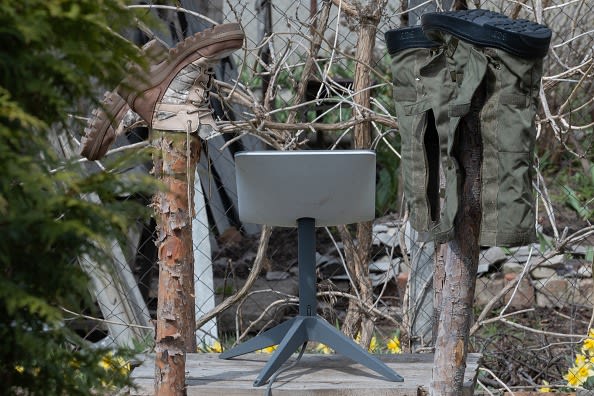
About a month ago, Ukraine recorded the first cases of Russians using Elon Musk’s Starlink terminals on strike drones, allowing them to bypass Ukrainian efforts to jam their signals. Previously, the Ukrainian army could disrupt the drones’ navigation so they would fail to reach their target. With Starlinks, however, Russia can operate the drones live to avoid disruption.
This time, Ukraine managed to respond to this new upgrade before it could be scaled, blocking the use of communication terminals for Russian forces on the front line.
Russian forces then lost their connectivity, leading to chaos within their ranks, and they even experienced a temporary halt to assault operations. Ukrainians also launched a counterattack that, according to ISW analysis, may have exploited this Starlink blackout, yielding about 201 square kilometres of recaptured territory.
Russian forces are now actively trying to restore Starlink connectivity by any means necessary. They’ve now begun blackmailing the families of prisoners of war, pressuring them to facilitate a workaround to new Starlink restrictions by registering Starlink terminals in their own names.
This constant adaptation to new circumstances on the battlefield and search for non-linear solutions is the only effective way of fighting an enemy with a significant resource advantage.
Friend Barber has been taking part in asymmetric warfare against Russians for more than a decade. It’s a form of combat where unconventional tactics are used to fight back against an adversary who has more resources or manpower.
Before joining the army, he led a regular civilian life: he worked in furniture assembly and car repair, for example.
After completing his mandatory military service around twenty years ago, he decided he really liked the army. He signed a contract in 2011. He’s been in the military ever since.
“When the war began [in 2014], I could have left the Armed Forces, but I didn’t, because I believed the war had to be seen through to the end. We’ll rest later,” Friend Barber recalled.
After the full-scale invasion, he grabbed his bags and kissed his wife before setting off for the frontline. He performed various roles, from combat missions to training others in technical surveillance. For him, the turning point was when he realised the war would not end on its own. On the contrary, it required him to stay and learn new skills.
“In 2023, I was badly wounded during an assault, and after that, my career as an assault soldier ended. I got an assignment from the squad commander to start developing a new area of countering enemy small UAVs. In short, it’s electronic warfare,” he explained.
It’s difficult to explain electronic warfare in a way that everyone can understand. Friend Barber accomplishes this through everyday metaphors, just like he used when giving briefings to infantrymen.
“If we take a flashlight and shine it in someone’s eyes, they stop because they can’t see anything. Or it could be the headlights of a car, making it very challenging to drive. This is exactly what electronic warfare devices do when they emit their radio waves; they ‘blind’ the control elements.”
So think of electronic warfare devices, or ‘jammers,’ as emitting chaotic and powerful signals that make it difficult for drones to understand the genuine information they should be receiving.
In reality, it’s not that simple, and the Russians always try to figure out ways to make sure “the high beams from oncoming cars don’t get in the way.”
In these conditions, electronic warfare experts like Friend Barber have to deal with new challenges all the time. And the most recent one — with potentially devastating ramifications for Ukraine — was the use of Starlink-enabled strike drones.
Starlink is SpaceX’s satellite internet service, built on a large network of satellites in low Earth orbit. The main difference between such systems and traditional satellite communications is significantly faster internet and potentially greater stability in dynamic conditions.
Elon Musk opened access to Starlink for Ukraine in the early days of the full-scale invasion after an appeal from Kyiv, and it became a crucial communication channel.
During the Ukrainian counteroffensive in the Kherson region in the fall of 2022, Starlink helped the military maintain stable communications on the battlefield.
Russia has no official access to Starlink, and SpaceX does not operate there.
But Russians have made a habit of acquiring contraband terminals by having devices registered in countries where the service is permitted, and then physically transporting them to the front lines.
The first signs of Starlink use by Russia were detected some time ago, with analysts tracking Russian drones equipped with Starlink gear since 2024.
But in early 2026, things escalated when BM-35 drones, which are similar to ‘small’ Shaheds and can fly up to 500 kilometres, were discovered for the first time in the city of Dnipro, a sign that Russia could soon use Shahed-drones with Starlinks to make attacks on civilians even deadlier. A BM-35 drone with a Starlink was also used in Kyiv in late January.
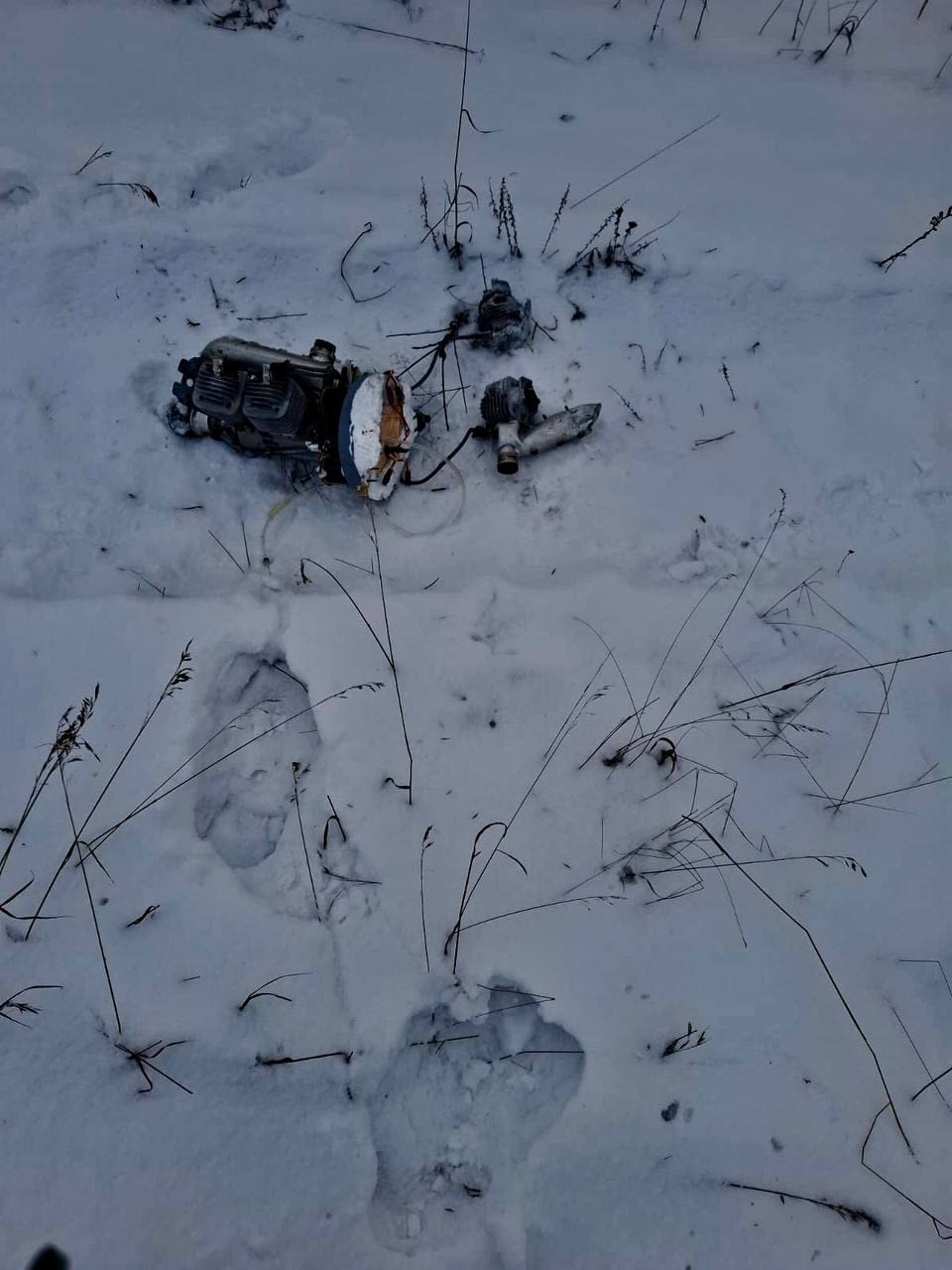
Previously, many drones could be blinded using electronic warfare, jamming their navigation or control channels.
But this isn’t possible with Starlink since the connection is – without getting into all the technical details – less vulnerable to electronic warfare methods. The drones can therefore fly at low altitudes, adjusting their route mid-flight to avoid air defence.
“That makes it harder to shoot down, complicates its route, and it transmits data directly to the operator’s screen… the operator can see exactly where it is, what it’s flying over, and gather intelligence in real time,” an air-defence serviceman in Kyiv with the callsign ‘Kit’ (‘Cat’ in English) told The Counteroffensive.
Friend Barber said he has not directly encountered Shaheds equipped with Starlinks in his work, but Russia has used the terminals in other types of drones that operate within smaller ranges near the frontline.
He works against small drones — such as FPVs — protecting infantry units on the Kharkiv front.
“The enemy uses a large number of drones in combined attacks, and we are taking losses because of this. The hardest part is when I lose a brother-in-arms to the very thing I am now fighting against. It leaves a certain weight, a sense that I failed to do something that was within my power,” he said.
Not a single day goes by that Friend Barber does not experience drone attacks on his positions in the Kharkiv region. But there are times when even the infantrymen don’t fully realise how much effort he puts into keeping his comrades safe.
“Some infantrymen holding positions say: ‘Come on, guys, there were tons of FPV drones flying. So what were you even doing?’ But when you start explaining it to them, and show the numbers — how many drones actually reached their positions versus how many were launched overall — their attitude changes a bit,” he said.
On February 2, 2026, the Ukrainian government sought to block Russian access to the network by introducing a “white list.” The idea is simple: only verified devices can operate in the country, while all others are disabled. In early February 2026, Kyiv reported that the Starlink terminals used by Russian forces had been deactivated.
But Barber doesn’t believe in permanent decisions.
“There will be an analogue of Starlink that Russians will try to use for further strikes against Ukraine…I’m ready to work with the consequences,” he explained.
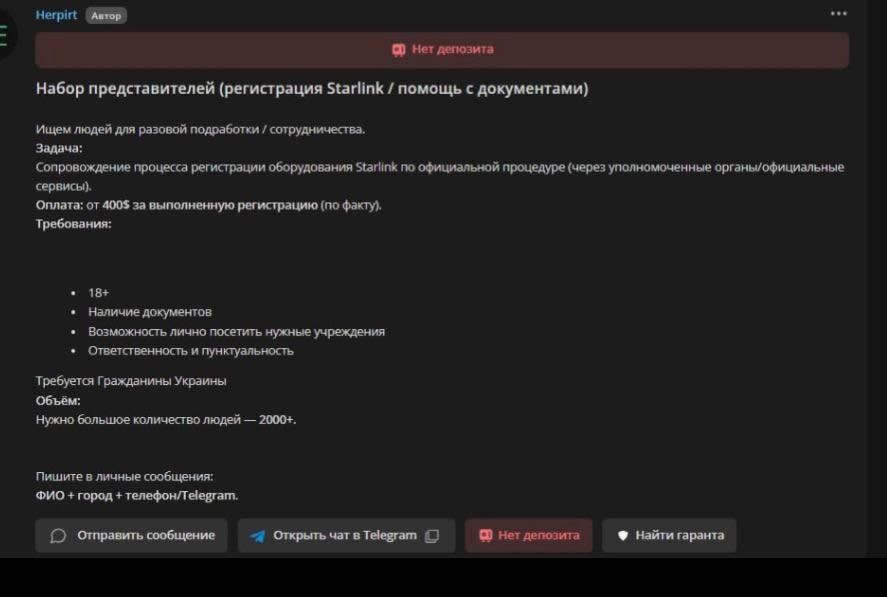
After Ukraine began to disconnect illegal Starlink terminals, the Russians turned their attention to the vulnerability of prisoners’ families, according to the Coordination Headquarters for the Treatment of Prisoners of War.
The headquarters reported cases of threats and demands to officially register Starlink terminals so they could be used for attacks against Ukraine.
Friend Barber has stayed in the army even after being wounded, since for him it’s not just a job or profession, but a way to regain a future for himself and his family that Russia is trying to take away.
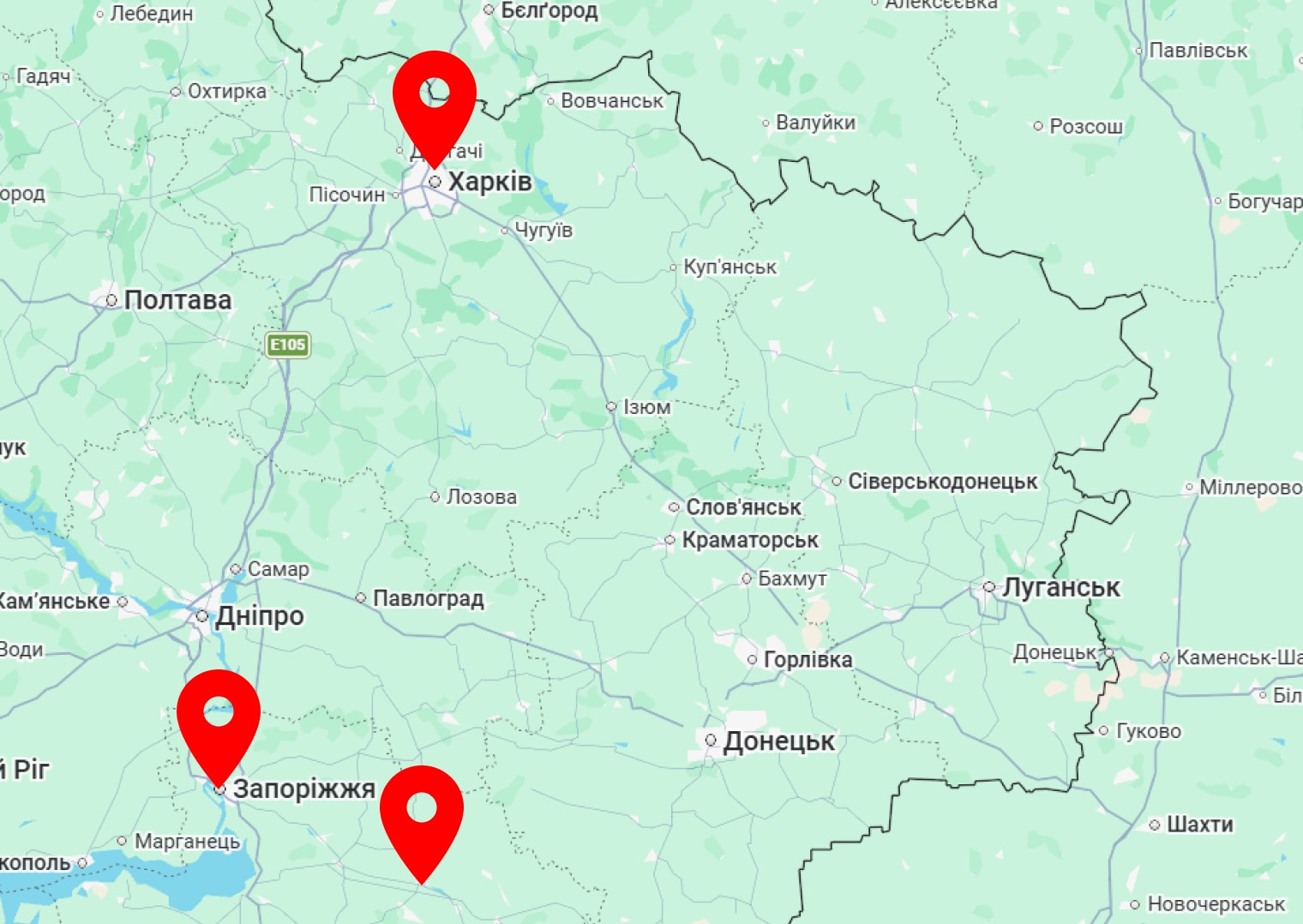
Every time he sees an FPV drone strike in his native Zaporizhzhia region, he feels the urge to drop everything and go there to help. But he knows he is ultimately fighting for his hometown of Polohy, even though it’s hundreds of kilometres away and under Russian occupation.
Right now, he’s needed in the Kharkiv region.
The war forced Barber not only to adapt to constant military upgrades but also to keep his own life in limbo. Whenever he talks about his future and kids, it sounds like a dream that’s bound to come true.
“I want children. First, we need to end this war. And we must restore our territories, we will have to... After all, this is my country, my home, and I want my children to live here.”
Featured subscriber comment:
“Thank you for the excellent job you all do providing us with a glimpse of real life beyond the headlines. I hope more people reading this will appreciate the importance of becoming paying subscribers to support your work.”
By Matthew Fawcett
Upgrade now to support our work and get full access to all our writing.
NEWS OF THE DAY:
By Tania Novakivska
Good morning to readers; Kyiv remains in Ukrainian hands.
RUSSIA PREPARES TO DRAFT RESERVISTS: On 18 February, the Russian State Duma passed a bill in its first reading that would strengthen preventive measures against draft evasion, according to the latest ISW report.
The bill is likely intended to provide a legal basis for prosecuting Russians who criticise conscription of reservists.
ISW analysts believe that the forced conscription of reservists indicates Moscow’s desire to compensate for the almost complete exhaustion of voluntary recruitment in 2026.
UKRAINIAN DEFENCE INDUSTRY GREW 50-FOLD DURING THE WAR: The sector’s production capacity increased to $50 billion- multiplying 50 times compared to pre-war levels, enabling Ukrainian manufacturers to supply more than half of the Ukrainian army’s weapons needs, said Defence Minister Advisor Hanna Hvozdar at the Munich Conference.
IRAN STRENGTHENS PROTECTION OF NUCLEAR FACILITIES: Amid tensions with the US, Iran is rebuilding facilities destroyed by American and Israeli strikes and strengthening their security, Reuters reported after analysing changes in satellite images of key facilities in Iran’s nuclear programme.
At the same time, CBS News sources report that the military is ready to launch full-scale strikes on Iran as early as this Saturday, as senior National Security officials have informed Trump.
However, Trump has not yet made a final decision on whether to strike.
DOGS OF WAR:
Tania spent her weekends babysitting these three good boys. Their names are Mike, Ron, and Kyi, and their favourite things to do are playing, eating and competing for a place nearest to Tania in bed.

Stay safe out there!
Best,
Oleksandra and Mariana