

If you value our work, consider upgrading to support us and get full access to all our writing.
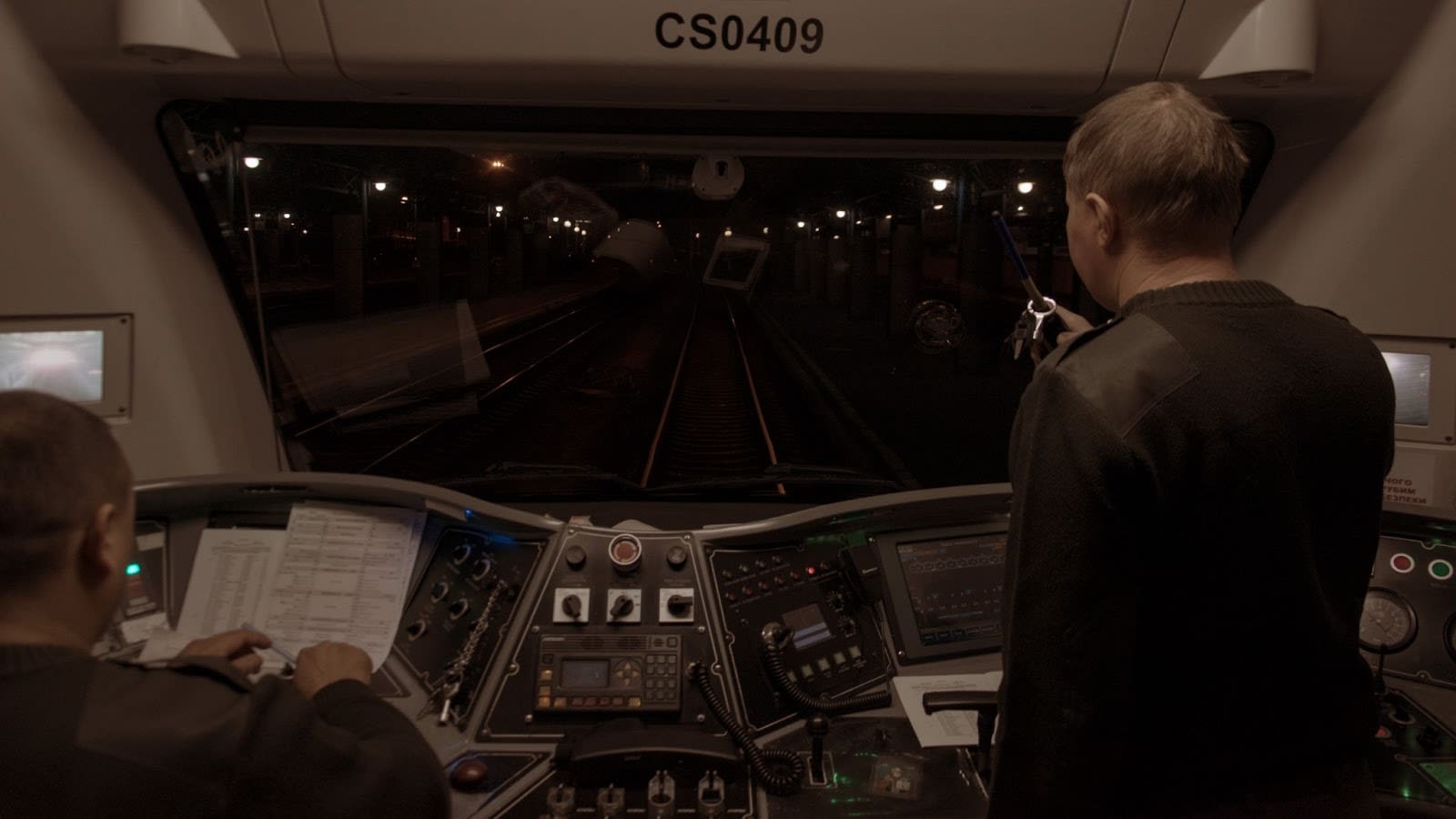
Little Oleh steps into the train driver’s cab — hundreds of buttons and levers surround him, each serving a vital function. His father, with steady and confident movements, guides the train forward. For Oleh, these were moments of pride and awe.
“Not every child can say, ‘I was in the driver’s cab and saw how everything works,’” Oleh said.
His father used to take him on trips to Mariupol, where they would go to the sea together after his shift.
Today, about 50 years later, Mariupol is occupied, and the driver’s cab no longer means magic for Oleh, but responsibility for hundreds of lives behind his back and the rescue of civilians from Russian missiles.

This harsh winter, Russia has struck not only energy infrastructure, but also transportation sites. The Russians are targeting the railways because they remain critical for moving across the country and abroad.
This week alone, Russians hit railway infrastructure in the Donetsk, Sumy, Dnipropetrovsk, and Chernihiv regions. In some of those regions, train traffic has been restricted or replaced with bus transfers. Ukraine’s airspace was closed with the invasion in 2022, and since then the railway has become the only means of transportation — apart from buses and private cars — allowing travel across the country and abroad.
Disrupting railway operations could paralyze the means by which millions of Ukrainians evacuate, receive humanitarian aid, and transport foreign delegations.
A woman was filming a selfie video and captured the moment a missile struck near a train in Dnipro in June 2025. The video was published by Kyiv Post.
Oleh first stepped into a train driver’s cab as a child, together with his father, who worked as a locomotive driver in his native Donetsk region. Later, he followed in his father’s footsteps.
“These are very emotional moments: you’re sitting in the locomotive cab, and behind you there are 4,500–5,000 tonnes of metal, and you’re in control of all of it. Later you get used to it, but the first trains stay in your memory for a lifetime,” said Oleh.
Twice, the war intruded on his work. First in his native Donetsk region, and later in Kyiv. Both experiences underscored the importance of his work for the country.
In 2014, Russia did not use terror against critical infrastructure in its invasion, but Oleh recalls that several strikes landed near his train depot in Donetsk.
“I think they were hitting wherever… There was a goal to fire, no matter where,” Oleh said.
“Hearing explosions somewhere nearby brought out anxiety, you don’t know what might happen to you when you travel to another city [one closer to active fighting],” Oleh said.
Back then, Oleh did not know that the same helplessness he saw in 2014 in the eyes of strangers would haunt him again in another invasion. In the first six months of the war, about 4 million people were evacuated by train from active combat zones.
The railway also transported around 300,000 tons of humanitarian aid and organized medical evacuation trains equipped with the necessary medical equipment to transport injured people.
Humanitarian aid that was sent from Lviv to Kharkiv by train. Video shot and provided by Oleh Panov.
There was no official train schedule. Departures were arranged over the phone, Oleh recalled. The depot would simply receive calls telling them where and which train needed to be prepared for departure.
People gathered for evacuation in March 2022 at the Kyiv depot, where Oleh Panov works. Video provided by Oleh Panov.
“The trips were very difficult – there was absolutely no free space on the trains, and a lot of luggage was left on the platforms. The choice was simple: either the suitcase or a person,” Oleh said.
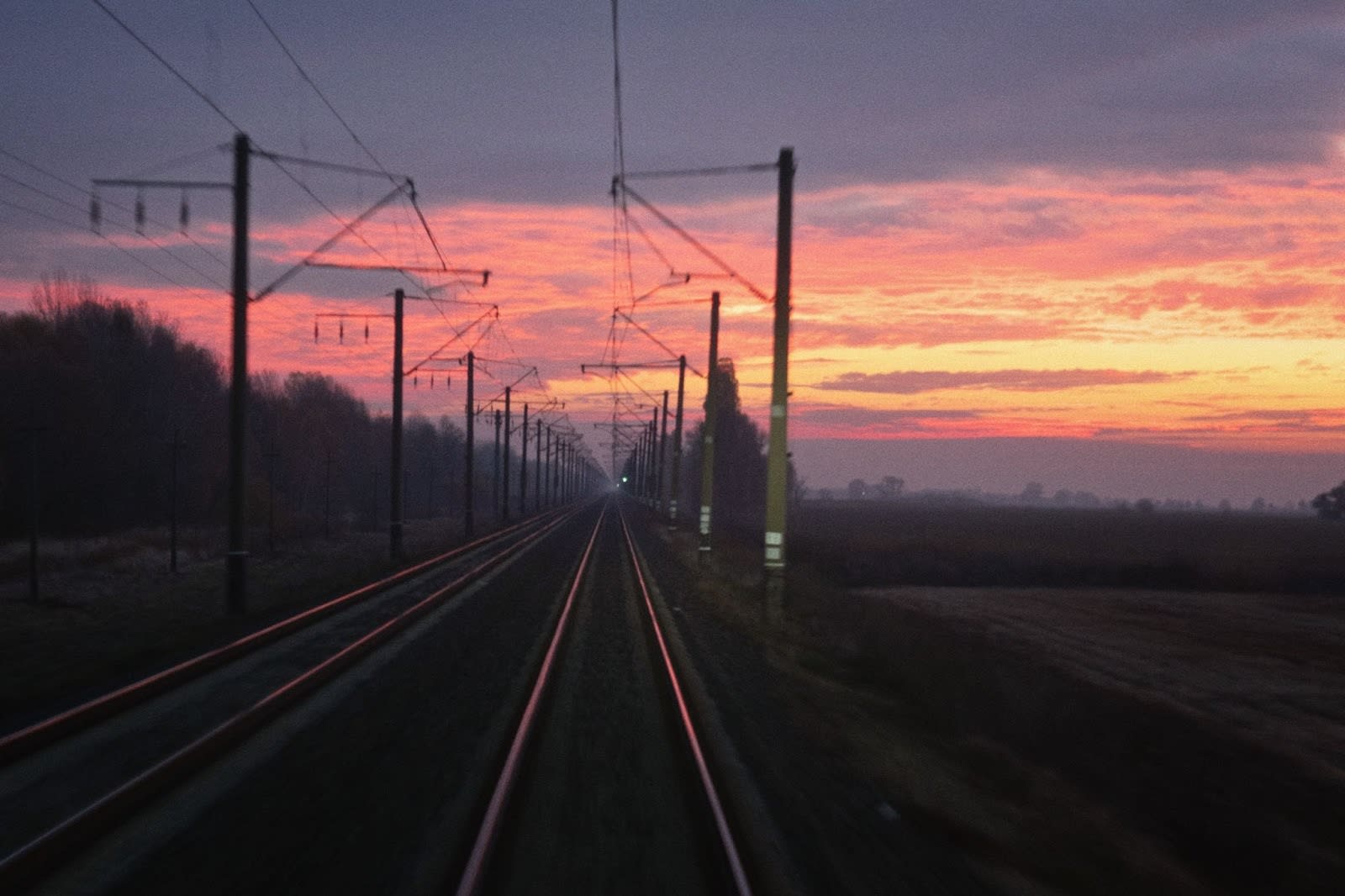
He took his last trip as a driver about three years ago. He remembers the colorful frosty dawn that he saw during that trip.
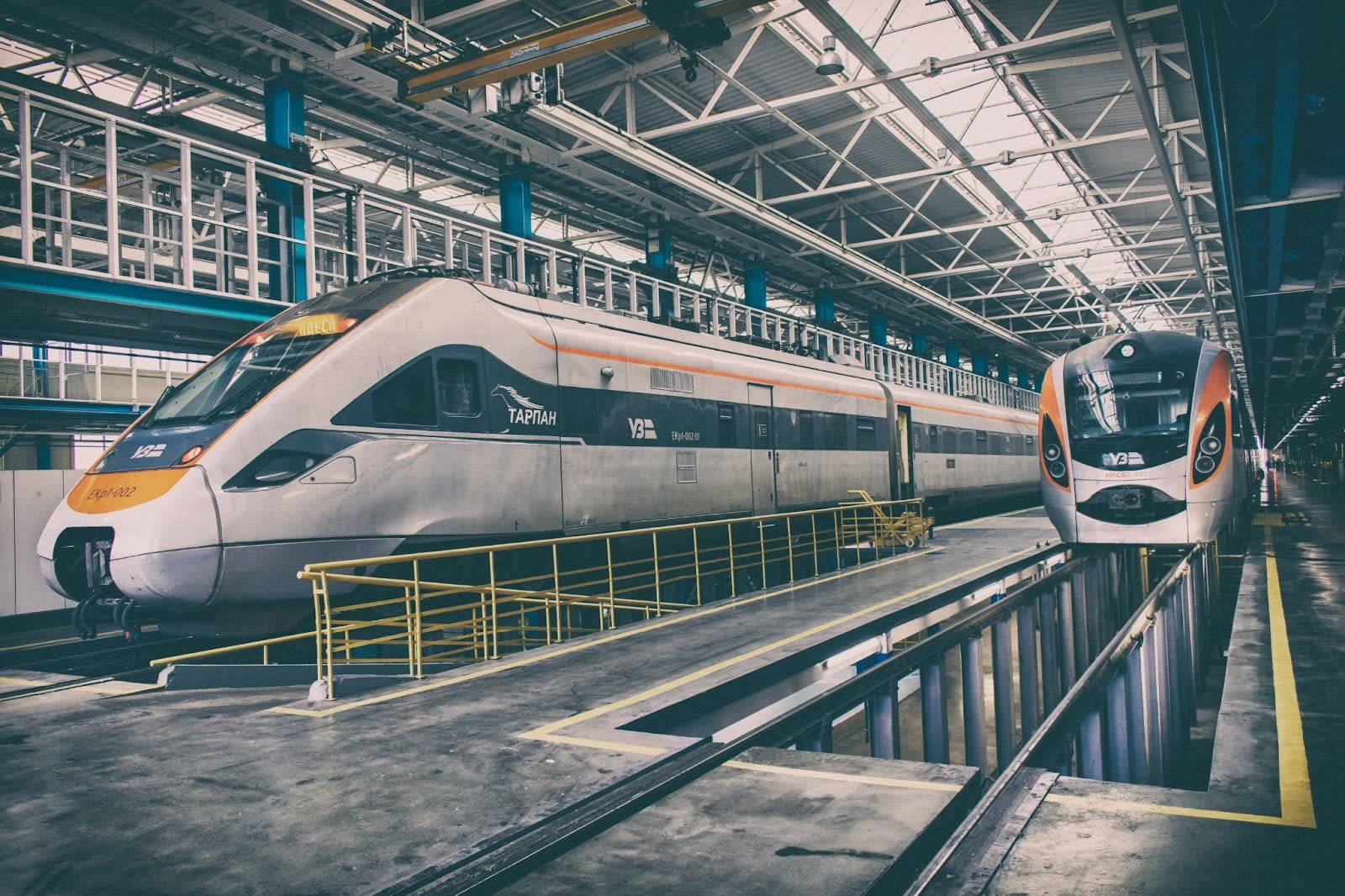
After that he retired, but at the age of 55, kept working as an electromechanic at his depot.
Oleh’s depot in Kyiv was also attacked during the war, although he was not at work at the time. One of the depot’s locomotives was hit with a Shahed drone.
“There was a sense of danger, but there was practically nowhere to take cover. Thoughts were all over the place, but I had long been aware of the inevitability of such an event,” Oleh said.
Despite the danger, the depot workers rushed to extinguish the fire that had broken out and to ensure the safety of the remaining trains. After this situation, the safety protocol changed — at night, trains were moved to other depots, and in the morning they were brought to Kyiv station ready for passenger departures, Oleh said.
At the start of the war, it was harder to hit a moving target, so keeping trains in motion was safer.
Russia has now learned to attack trains with Shahed drones equipped with a thermal camera and an internet modem, through which a live video feed is transmitted to the pilots from a distance. Previously, Shahed drones flew with GPS-programmed coordinates and could not adjust their targeting in real time.
This development has helped to target moving objects in Ukraine more often. In the period of August to October 2025 Russia targeted railways about 300 times, ten times per week on average.
Before that, strikes were primarily carried out against static railway infrastructure — stations, substations, and other fixed facilities. One of the deadliest attacks was the missile strike on the Kramatorsk railway station in the Donetsk region in April 2022, where more than 50 civilians were killed.
Burning locomotive after Russian drone attack in Sumy region. Video from Facebook page Shostka-News.
About 100 railway workers have been killed since the beginning of Russia’s full-scale invasion of Ukraine.
“The very concept of danger has become part of everyday life. Once the train departs, all attention is focused on the work. This is our job, and everyone understands the responsibility,” Oleh said.
Once the train is en route and there is a threat from the sky, passengers and workers have nowhere to hide.
“You try not to think about what might happen to you or the passengers. Many factors are beyond your control... The driver’s task is to keep a cool head... The safety of the people depends on this,” Oleh said.
The strikes at the end of January, during the period when Ukraine was negotiating an energy ceasefire with Russia, introduced the first restrictions on train movement in frontline regions, as Russia switched its focus from energy grid to logistics.
Vadym Busurulov is the head of the Dnipro station, where bus transfers from Zaporizhzhia now go. He remembers when the railway in the Zaporizhzhia region was under attack for nearly a full day.
“The main problem is that it is very inconvenient for people to have to transfer. Overall, everything is organized; the staff handling the bus transfers have adapted as well, and the buses arrive on schedule, in advance of the train’s arrival,” Busurulov said.
At first, buses transported 500–800 people, with about 8–12 trips per day in one direction. As of February 15, with some connections restored, that number has decreased to around 300 passengers, according to Busurulov.

“The first impression of Zaporizhzhia being cut off from the railway was that it was a harbinger of not very good news. Just like in Mariupol [before occupation]. That’s why we were afraid,” said Natalia Samura, who was sending her daughter to study in Lviv via bus transfers.
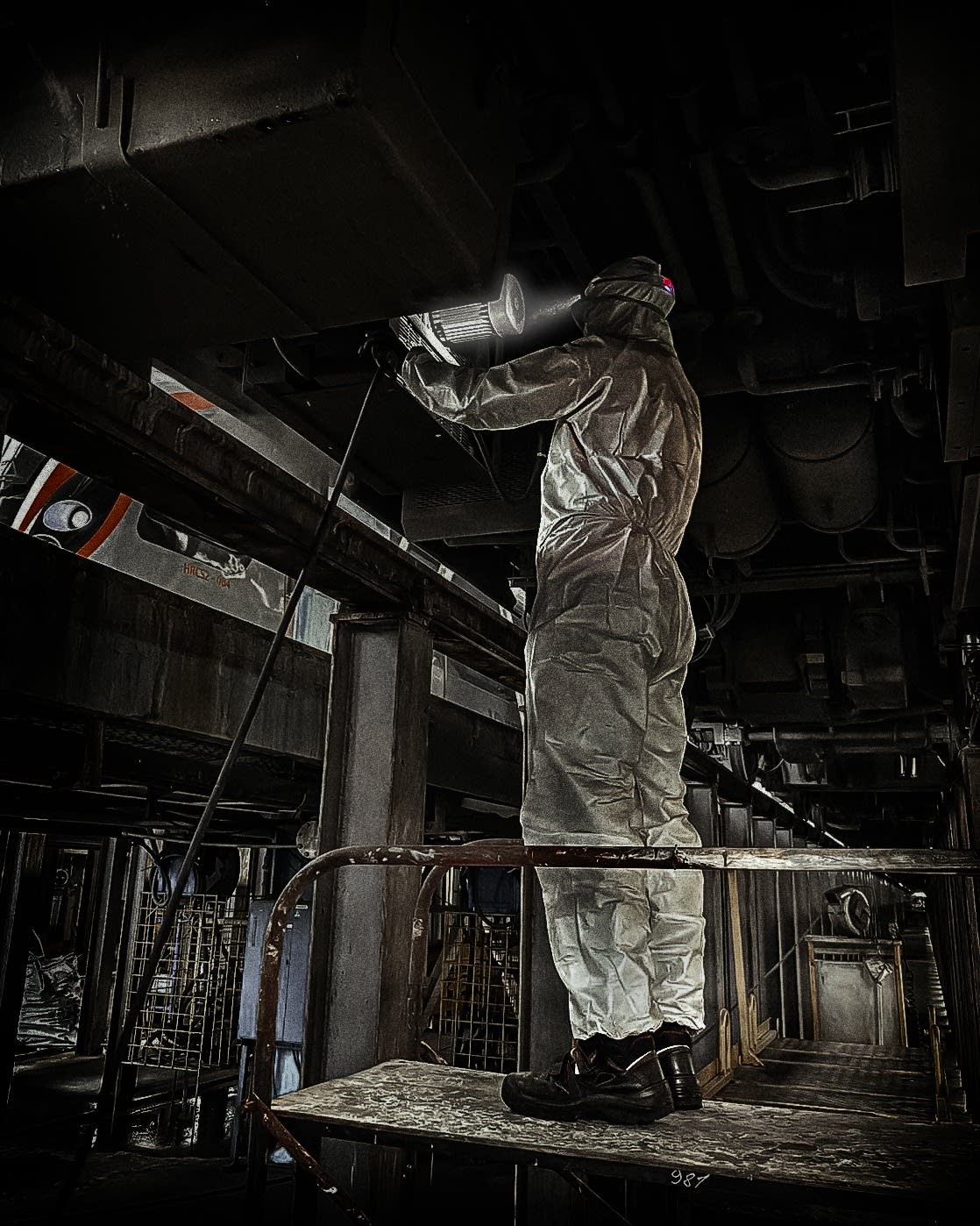
Oleh says that the attacks and the resulting energy shortages negatively affect the equipment that depot mechanics work with.
All the equipment used to repair trains runs on electricity — this includes computers and other sensitive devices. When there are voltage fluctuations, the equipment can also break down. The workload grew this year for his team because of power shortages and the need to keep trains up to working condition.
Oleh finds comfort in photography and his special hobby, which is writing songs with artificial intelligence about working on the railway. This has become something that lifts the spirits of both him and his colleagues during difficult workdays.
One of Oleh’s AI songs called ‘Express of Hope’.
Here’s a translation of a couple of lines:
“The wind howls, and the train rushes through dark days.
This crystal path is not for the weak, but for hearts that are strong.”
In addition to his main duties of repairing and preparing trains for departure, there is another task at Oleh’s depot that, fortunately, rarely occurs. The task is dismantling damaged locomotives and carriages.
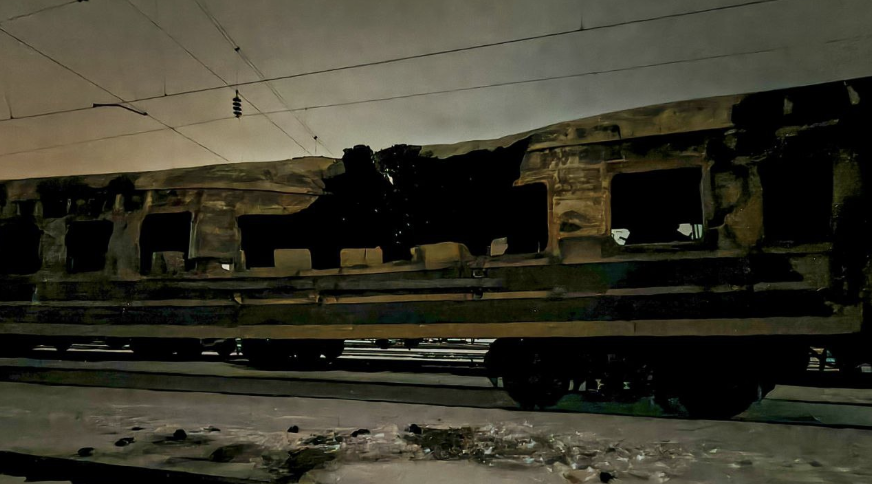
Recently, a passenger carriage destroyed with Russian Shahed drones arrived at Oleh’s work.
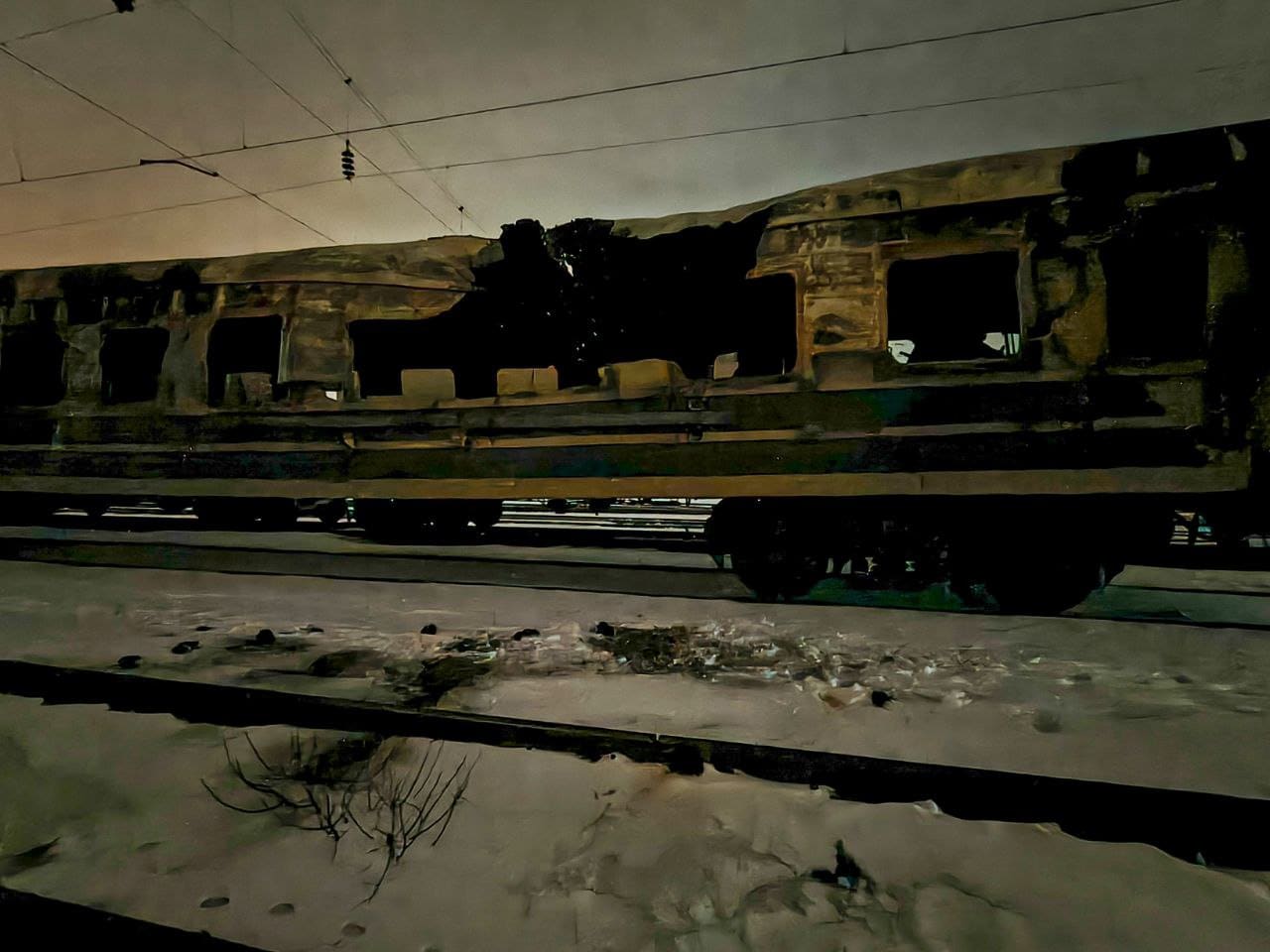
Oleh never looked back or allowed fear to take over.
“Whatever the circumstances may be, a train driver in the cab thinks first and foremost about safety. Everything else inside you just switches off. You get into the cab and do your job, because behind you there are very, very many people,” Oleh said.
Editor’s Note:
Your support allows us to keep reporting from Ukraine with care and honesty, even in the most difficult moments. Being part of this community means these stories continue to be told.
If you value our journalism, consider upgrading your subscription to support our work and get full access to everything we publish.
NEWS OF THE DAY:
By Oksana Stepura
Good morning to readers; Kyiv remains in Ukrainian hands.
UKRAINE’S BIGGEST TERRITORIAL GAIN SINCE 2023: Ukraine’s defense forces have regained control of 300 square kilometers along the southern frontline, claimed Zelenskyy.
If true, this would be the largest territorial advance made over such a short period of time since Ukraine’s June 2023 counteroffensive.
The success of the most recent advance is attributed to the recent deactivation of the Russian military’s Starlink terminals, which enabled the occupying army to fly drones into Ukraine.
This statement came as US-mediated talks in Geneva reportedly made no progress on territorial issues.
FICO THREATENS TO CUT ELECTRICITY AID FOR UKRAINE: Slovakia’s President Fico has threatened to halt emergency electricity supplies to Ukraine, unless Kyiv allows Russian oil to transit to Slovakia through the Druzhba pipeline, which is located partially in Ukraine’s territory. Slovakia is a key provider of energy for Ukraine.
Russian oil has been cut off since late January, after Kyiv claimed the pipeline was damaged by a Russian drone attack.
As an alternative to the Druzhba pipeline, Ukraine has proposed using the Odesa-Brody pipeline that runs through Ukraine as an alternative route to supply Russian oil to Hungary and Slovakia.
RUSSIAN VOTKINSK MISSILE PLANT WAS HIT: Russia’s Votkinsk Machine Building Plant was hit in the Udmurt Republic, OSINT telegram channels reported. The plant is a critical facility for Russian military production, producing Iskander and Oreshnik missile systems.
Kyiv has not officially claimed responsibility for the attack.
If Ukraine is behind the attack, this would be one of the deepest strikes into Russian territory – reaching about 1,500 kilometers from the Ukrainian border.
CAT OF CONFLICT:
Oksana’s Mary likes to inspect grocery bags. She looks like a fluffy TSA officer.

Stay safe out there.
Best,
Anastasiia